Published : 26 Aug 2025, 10:56 PM
Updated : 21 Aug 2026, 01:42 PM


Bangladesh’s tax-to-GDP ratio has dropped to 6.6 percent, which is roughly half of Pakistan’s, amid a steady decline, according to the chairman of the National Board of Revenue (NBR).
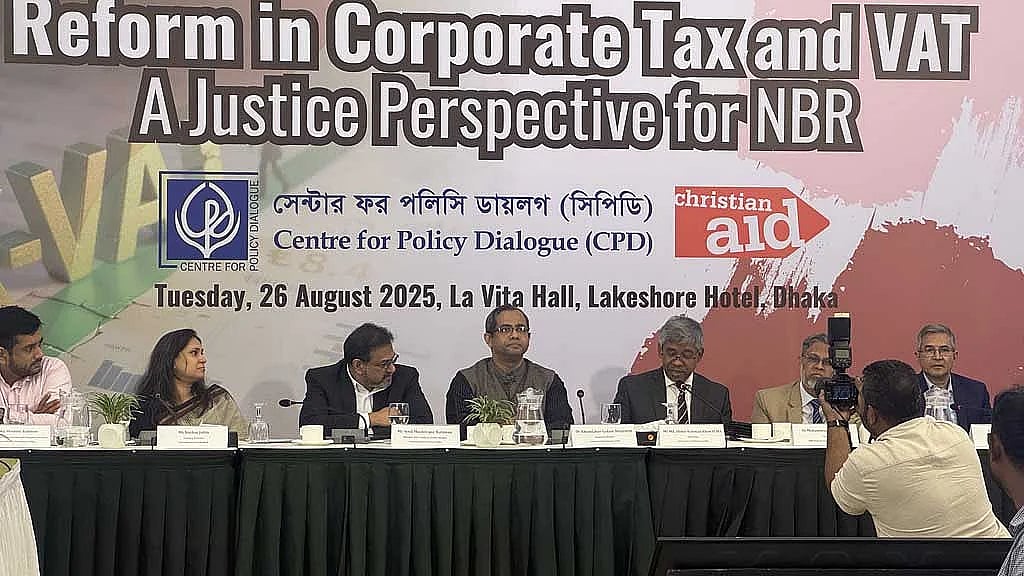
Md Abdur Rahman Khan described the situation as “very alarming” while speaking at a dialogue organised by the Centre for Policy Dialogue (CPD) in Dhaka on Tuesday.
“Our tax-to-GDP ratio is steadily going down, which is very alarming. Pakistan’s deputy prime minister [Ishaq Dar] told me their ratio is 12.2 percent. Ours was 7.4 percent last year, and now it has fallen further, to 6.6 percent,” Khan said.
The NBR chairman warned that with such a low ratio, it would be “challenging” to sustain the development people expect or to service the country’s mounting debt obligations.
“We already have a huge amount of debt, and paying the interest and principal has become a big challenge. That’s why we must raise more taxes,” he said.
Khan said widespread tax exemptions for local and foreign investors had eroded revenues to the point that the tax-to-GDP ratio could no longer rise.
“The volume of tax holidays has become so widespread that we simply cannot raise the tax-to-GDP ratio."
Acknowledging leakage and inefficiency within the revenue system, he said: “If we don’t admit that, we cannot move forward. We must recognise we have many problems, and solving them requires systemic reform.”
At the same event, CPD presented a study estimating that the NBR lost around Tk 1.88 trillion in FY2022-23 due to VAT exemptions and tax evasion.
The think tank also reported that many companies view corruption, unfair tax rates, and lack of accountability among officials as major challenges.
Khan said reforms were under way, including efforts to automate VAT audits to reduce corruption.
“There will be no VAT audits until they are automated. If needed, they will remain closed till doomsday. Businesses must feel they are being selected neutrally, not unfairly targeted,” he said.
Reiterating his call for a uniform VAT rate, he added: “There is no alternative. At most we can have two rates, but a single rate is essential.”