Published : 11 Dec 2025, 05:08 AM
Updated : 21 Aug 2026, 02:52 PM


The world has tipped into a level of inequality that fewer than 60,000 people now control three times as much wealth as the bottom half of humanity, according to the World Inequality Report 2026.
The Guardian reported that the study, compiled by 200 researchers, depicts a world in which financial power has concentrated at unprecedented levels, leaving billions with only a sliver of global income and wealth.
The study paints a stark picture of an economic system where the richest 10 percent earn more than the remaining 90 percent combined, while the poorest half of the world captures less than 10 percent of global income.
According to the study, wealth -- the value of assets -- is even more concentrated than income: the richest 10 percent own 75 percent of all global wealth, while the poorest 50 percent hold just 2 percent.
The authors, led by Ricardo Gómez-Carrera of the Paris School of Economics, describe a world drifting towards unprecedented imbalance.
“The result is a world in which a tiny minority commands unprecedented financial power, while billions remain excluded from even basic economic stability,” they were quoted by The Guardian.
According to the study, the share of global wealth held by the top 0.001 percent has risen from nearly 4 percent in 1995 to over 6 percent today. The wealth of multimillionaires has increased at roughly 8 percent a year since the 1990s -- almost twice the growth rate seen among the poorest half of the population. The report also notes that in almost every region, the richest 1 percent now hold more wealth than the bottom 90 percent combined.
One of the report’s authors, the French economist Thomas Piketty, argues that inequality has “long been a defining feature of the global economy” but by 2025 had “reached levels that demand urgent attention”.
Such extreme imbalances, the authors argue, are no longer compatible with stable economies, functioning democracies or a climate-secure planet.
Produced every four years with the UN Development Programme, the report draws from the world’s largest open-access database on global inequality and has become a reference point in international debates.
In his preface, Nobel laureate Joseph Stiglitz repeated his call for an international body similar to the UN’s IPCC to “track inequality worldwide and provide objective, evidence-based recommendations”.
The report goes beyond income to look at disparities in opportunity. It found that education spending per child in Europe and North America is more than 40 times higher than in sub-Saharan Africa -- a gap three times wider than GDP per capita differences. This, the authors said, “entrench[es] a geography of opportunity”.
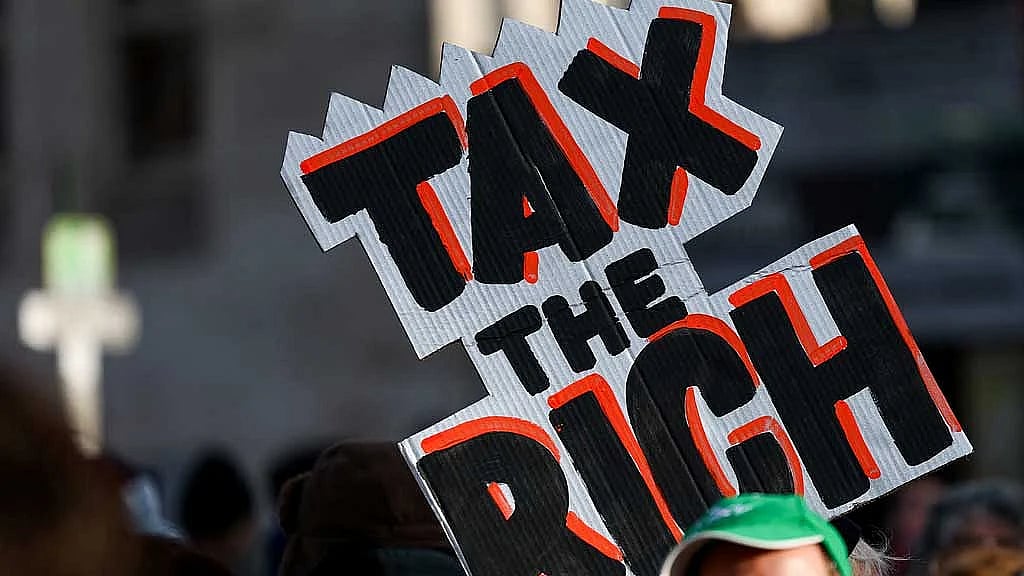
A global 3 percent tax on fewer than 100,000 centimillionaires and billionaires, the report estimates, would raise $750bn annually -- equivalent to the education budgets of all low and middle-income countries combined.
Inequality is also driven by a financial system tilted towards richer nations. About 1 percent of global GDP flows from poorer to richer countries every year through net income transfers, nearly triple the amount of global development aid.
The gender pay gap “persists across all regions”, the report said. Excluding unpaid work, women earn just 61 percent of what men earn per working hour; including unpaid labour, the figure drops to 32 percent.
On climate inequality, the authors warned that “wealthy individuals fuel the climate crisis through their investments even more than their consumption and lifestyles”. The wealthiest 10 percent are linked to 77 percent of carbon emissions from private capital ownership, while the poorest half account for only 3 percent.
“This disparity is about vulnerability,” The Guardian quoted them.
The report concludes that reducing inequality is ultimately a political choice.
“Effective income tax rates climb steadily for most of the population, but then fall sharply for billionaires and centimillionaires,” it noted. “The tools exist. The challenge is political will.”