Published : 02 Apr 2026, 04:26 AM
Updated : 21 Aug 2026, 03:33 PM


Global stocks rallied and oil prices reversed gains on Wednesday as hopes of a de-escalation in the Iran conflict fuelled the biggest rebound in regional equities in more than three years.
President Donald Trump said the US could end its military attacks on Iran in two to three weeks, and could return for "spot hits", if needed.
The US dollar softened against a basket of other currencies, while US Treasury yields rose from their lows after a pair of reports underscored resilience in the US economy, affirming expectations the Federal Reserve will hold off cutting interest rates for some time.
On Wall Street, Dow Jones Industrial Average rose 0.55 percent to 46,594.37, the S&P 500 gained 0.63 percent to 6,569.57 and the Nasdaq Composite climbed 1.01 percent to 21,808.66.
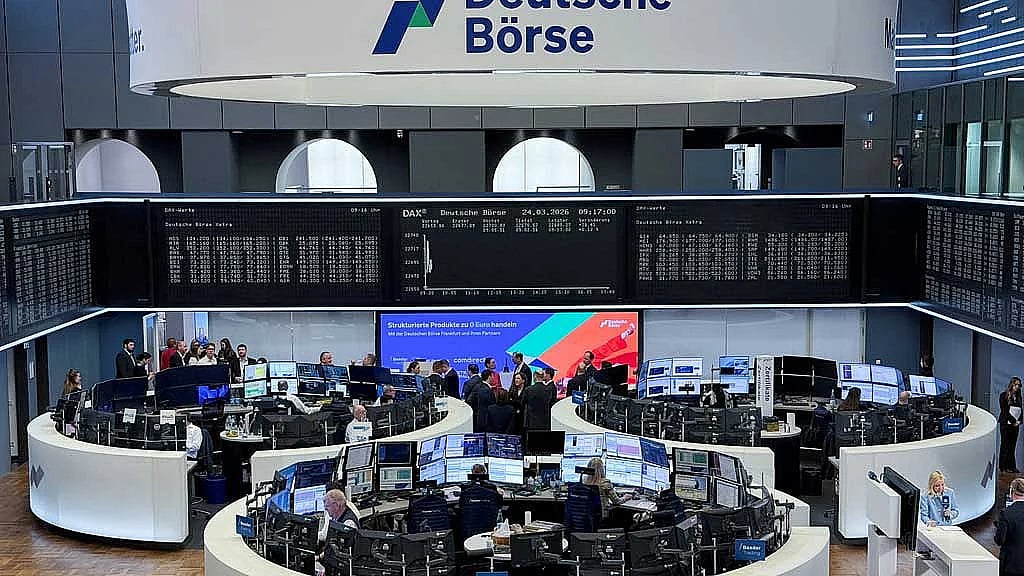
In Europe the STOXX 600 jumped 2.24 percent on strength from travel and aerospace and defence stocks.
Earlier, MSCI's broadest index of Asia-Pacific shares outside Japan closed up 4.57 percent and Japan's Nikkei rallied 5.24 percent
"Markets are trading this narrative that the war could be over, or at least that the US could withdraw. That is creating this positive sentiment in risk assets," said Evelyne Gomez-Liechti, multi-asset strategist at Mizuho, though she added she is more inclined to be sceptical about the rally.
Iran War Developments
The rally shrugged off a report in the Wall Street Journal that the UAE may enter the conflict and is lobbying for a UN Security Council resolution to authorise it to take part in military action to force open the Strait of Hormuz. US Secretary of State Marco Rubio said Washington will have to reexamine its relations with NATO after the war ends.
Trump will provide an update on Iran in an address to the nation at 9pm ET on Wednesday (0100 GMT on Thursday), White House spokeswoman Karoline Leavitt said on X.
Brent crude futures fell 2.23 percent to $101.65 a barrel and US crude dropped 2.19 percent to $99.16.
Euro zone bond yields dropped on hopes of de-escalation in the Middle East. Germany's 10-year yield, the benchmark for the euro zone, dropped to a two-week low of 2.93 percent in early trading and was last at 2.96 percent.The US dollar index slipped 0.3 percent to 99.43, extending losses from the prior session's biggest one-day drop in two weeks.
The yield on benchmark US 10-year notes rose 0.8 basis points to 4.319 percent. The 2-year note yield, which typically moves in step with Fed interest rate expectations, rose 0.2 basis points to 3.803 percent.
Fed funds futures are pricing an implied 17.9 percent chance that a 25-basis-point cut to interest rates could come at the Fed's two-day meeting ending on Jul 29, up from a 7.5 percent chance a day earlier, according to the CME Group's FedWatch tool.
Even so, swaps pricing indicates the odds of a cut by April next year are viewed as little better than a coin toss.
A PMI survey showed euro zone manufacturing growth bounced to its strongest in nearly four years in March as supply chain disruptions inflated growth figures.
The International Energy Agency head Fatih Birol said on Wednesday that oil supply disruptions from the Middle East will rise in April and begin to impact Europe's economy as the closure of the Strait of Hormuz severely curbs supplies.
The euro was close to a three-week high versus the dollar.
In commodities, gold rose for a fourth session as the dollar slipped, making the metal less expensive to holders of other currencies. Spot prices rose 1.57 percent to $4,742.70 an ounce.