Published : 04 Sep 2025, 09:13 AM
Updated : 28 Aug 2026, 01:26 AM


As Bangladesh shifts into election gear for parliamentary polls, top public universities are also preparing for long-awaited student union ballot.
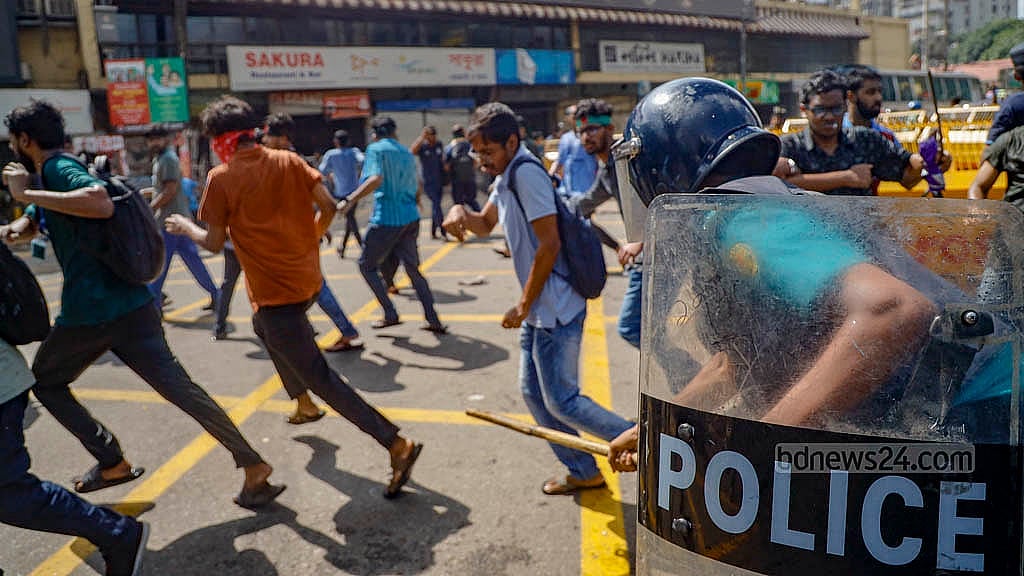
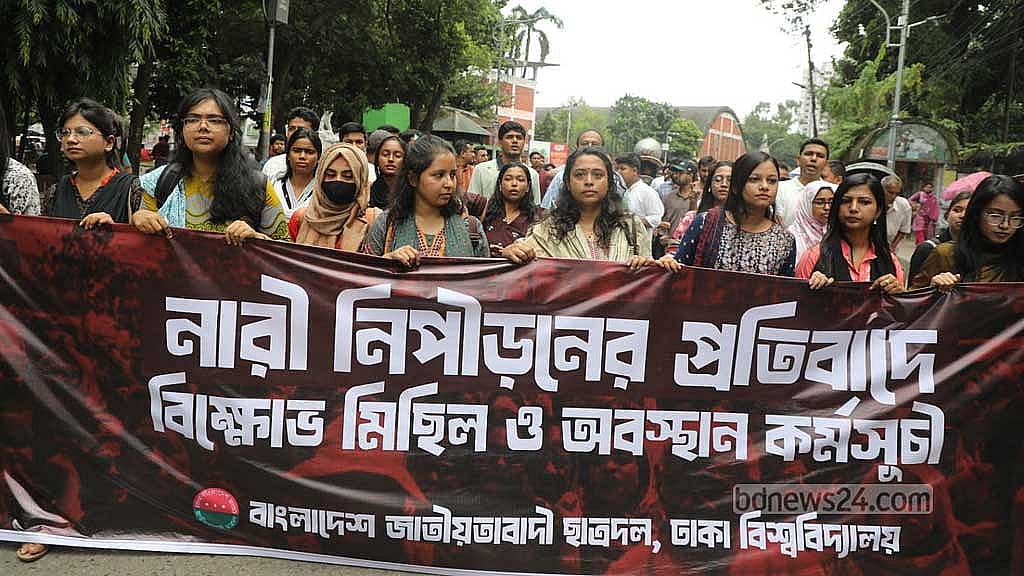
But a wave of protests, unrest, and violence has cast a shadow over campus life, sparking nationwide concern about the volatile state of higher education institutions.
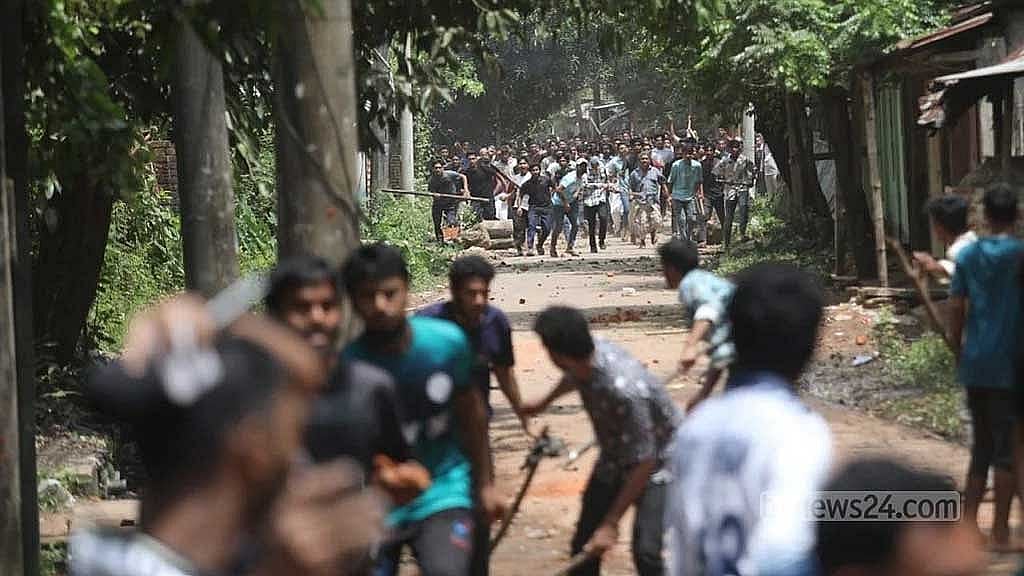
At Chittagong University (CU) and Bangladesh Agricultural University (BAU), academic activities have come to a standstill following violent clashes involving students and outsiders, raising fresh questions about campus security and political interference.
Classes and examinations at CU were suspended after clashes between students and residents of nearby Jobra village, prompting the authorities to impose Section 144 restrictions on public gatherings on the campus and surrounding areas.
At BAU, tensions escalated when protesting students besieged teachers and administrative staff and were then attacked and dispersed by a group of outsiders.
In response, the administration closed the residential halls and suspended academic activities. Some students defied the order and continued their demonstrations.
Classes and examinations at CU resumed on Wednesday. But at BAU, academic activities remain suspended, though the administration has assured students that classes and examinations will restart within the coming week.
Meanwhile, the Rajshahi University (RU) and Dhaka University (DU) campuses have made headlines surrounding the polls for their central student union elections.
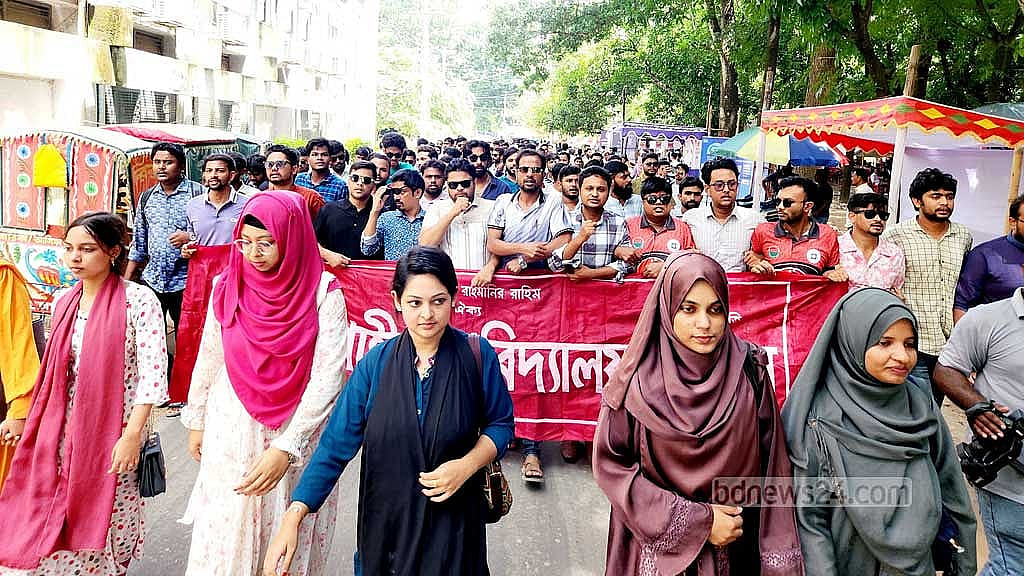
The RU campus saw unrest as the Chhatra Dal – the student wing of the BNP - launched a protest movement demanding that first-year students be allowed to vote in the Rajshahi University Central Students’ Union (RUCSU) polls. The administration has since accepted the demand.
The DU campus saw protests break out as the High Court suspended the Dhaka University Central Students’ Union (DUCSU) polls scheduled for Sept 9 after a female candidate of a leftist student panel filed a petition challenging the general secretary candidacy of a student backed by the Islami Chhatra Shibir – the student wing of Jamaat-e-Islami. The Appellate Division eventually suspended the High Court’s decision, clearing the way for the election to be held next week, but tensions on campus remained high as a “gang rape threat” against the female candidate by a student sparked backlash and criticism. Disciplinary action has since been taken against the student who allegedly made the threat.
Students at engineering universities across the country have also held protests recently, boycotting classes and exams and observing a shutdown programme. Students from the Bangladesh University of Engineering and Technology (BUET), Rajshahi University of Engineering and Technology (RUET), Khulna University of Engineering and Technology (KUET), and the Chittagong University of Engineering and Technology (CUET) took part in the programme from Aug 28 to Sept 1 to push for a set of professional demands.
Central student union elections are also scheduled to be held at three more universities soon.
The flare-ups of protests and violence at public universities comes amid a period of uncertainty in Bangladesh’s broader political sphere. The interim government has announced the next general election will be held in the first half of February and the Election Commission has also issued a roadmap accordingly. But many parties remain divided over the timing and preparations for the polls, as well as which political groups and parties should be allowed to participate.
Under the circumstances, many have begun to question whether there are political motivations and influence behind this spike in instability.
WHAT ANALYSTS SAY
Some analysts believe the unrest on university campuses is being fuelled by political motives.
Prof A Al Mamun, who teaches mass communication and journalism at Rajshahi University, believes political instigation is certainly behind the instability in public university campuses.
Speaking to bdnews24.com, he said: “There is definitely political instigation behind the unrest at public university campuses. One possibility is that sympathisers of a fugitive ‘fascist’ are trying to destabilise the country. On the other hand, those trying to obstruct the country’s democratic process -- they too could be instigating it.”
He also blamed the unrest partly on teachers’ “incompetence and lack of discernment”.
“Students don’t listen to their teachers anymore. Teachers no longer carry the personality or presence they once had. They also suffer from a lack of perspective. If a university teacher can verbally abuse a female student in crude language, what can we expect from the public?”
Expressing concern that unrest on campuses may be aimed at disrupting national stability, the professor said: “The country is now progressing towards a democratic process. That is a good thing. But due to the presence of a 'deep state' and geopolitical factors, there's a risk the country may veer away from that path into instability. If that happens, this unrest will intensify -- that could also be a motive behind the unrest on campuses.”
Asked if any political faction is playing a role in the unrest, Prof Mamun said: “Outside Dhaka, Jamaat-leaning teachers have settled near many universities, and Jamaat-Shibir activists have married and established families there. Many of them now hold administrative positions at these universities. The same situation exists in villages surrounding Chattogram University.
“My question is: why couldn’t they calm the situation? Did they not try, or are they themselves instigating it? These are questions we must ask.”
Prof Kamrul Hassan Mamun from the Department of Physics at Dhaka University believes university unrest is increasing because political parties prioritise their own interests over the national interest.
“There are many reasons behind the unrest at universities,” he told bdnews24.com. “Political groups are playing their own games on campus. According to the laws of physics, any major change leads to instability.
“But following the mass uprising, political parties have not acted responsibly. When, during a volatile situation, party interest overrides national interest, unrest is inevitable.”
When asked about the role of university administrations, he said: “Those who came into power in university administrations after the July Uprising did so based on political considerations. So whichever political ideology a university administration supports, that faction dominates the campus. How can such an administration control unrest? They are part of the same political group active on campus.”
Sayeed Iftekhar Ahmed, a Bangladeshi-origin academic at the School of Security and Global Studies under the American Public University System in the United States, however, does not believe every instance of campus unrest has a political motive.
Speaking to bdnews24.com, he said: “The incident at Chattogram University does not appear to have a significant political motive behind it. But the underlying tension at Dhaka University is definitely political. Meanwhile, what happened at the Agricultural University reflects a breakdown of mutual respect between students and teachers.”
He added, “After independence, Shibir never really gained a foothold on the Dhaka University campus. But in this DUCSU election, they are participating openly. This has created unease among students who see DU as an anti-Shibir campus. This discomfort won’t disappear after the election -- no matter the result.
“The progressive values cultivated at DU over the past 54 years are inherently at odds with the ideology of a religion-based student group. That’s why even those who marched with Shibir in July are now taking an anti-Shibir stance.”
The former Rajshahi University professor said, “What happened at BAU is a manifestation of mutual disrespect between students and teachers. It could be that a teacher favoured a student from a political group he supports, which others perceived as discrimination.
“On the other hand, some students believe that after the July uprising, they were the ones who installed the administration. As a result, they are not respecting teachers in the same way. This is what has created the crisis at BAU.”
WHAT EDUCATION MINISTRY SAYS
Repeated attempts to reach Education Advisor Chowdhury Rafiqul Abrar on Tuesday and Wednesday were behind the campus unrest were unsuccessful.
A text message was also sent to his mobile phone on Wednesday morning asking whether political instigation was involved in the campus unrest, but no reply came. He remained unreachable by phone throughout the morning, afternoon, and evening.
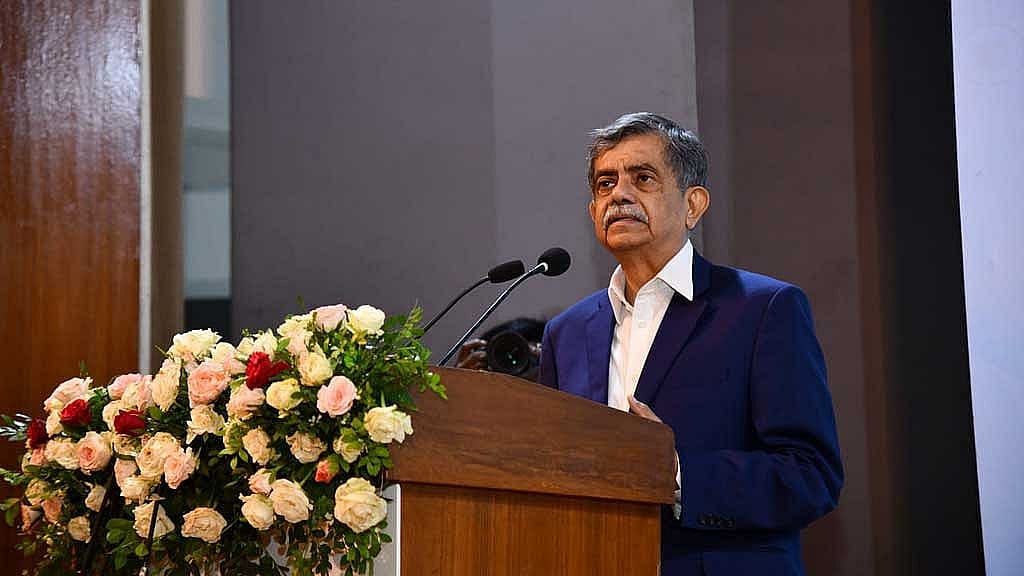
However, during a media interaction at the Secretariat on Tuesday afternoon, the advisor expressed “concern” over the unrest at several universities and hoped for a prompt resolution.
He said, “We are aware of the recent incidents at several universities. These unfortunate events are indeed disrupting normal academic activities. We are very concerned about this.”
“We believe that any problem can be solved through discussion. That process has begun and is moving towards resolution. We hope the matter will be settled quickly. We expect all parties to understand each other’s positions and arrive at a consensus as soon as possible -- the sooner, the better.”
Highlighting the ministry’s communication with universities, Abrar said: “We’re in constant touch with the institutions. Should they require any assistance, the ministry will extend its support.”
He appealed to all involved to remain calm and patient. “Let us all approach this with tolerance and work toward finding solutions.”
Calling the situation undesirable for all parties, he said: “Teachers, students, and administrators -- no one wants this unrest. That’s why we are calling for the quickest possible resolution. Local communities are also engaged, and we are hopeful of a speedy resolution.”
In a statement on Monday, the education ministry said it had instructed the University Grants Commission to identify existing problems in ensuring a proper learning environment at Chittagong University and other public universities, and to propose specific measures to resolve them.
[Writing in English by Shoumik Hassin and Shiekh Fariha Bristy]