Published : 14 Sep 2025, 08:14 AM
Updated : 28 Aug 2026, 01:27 AM


The long-anticipated Jahangirnagar University Central Students' Union (JUCSU) election, held after a 33-year hiatus, was marred by irregularities, delays, and accusations of mismanagement, raising questions about its credibility.
Despite a 67 percent voter turnout from 12,000 voters in just eight hours, the counting process took a staggering 48 hours, with the final results taking three days to be announced.
This unusual delay and lack of transparency sparked public criticism.
Tragically, a teacher involved in the vote-counting process passed away, adding to the chaos. Two election commissioners and three other election officials resigned in protest, further undermining the election’s credibility.
Hours after the voting began, allegations emerged of the purchase of vote-counting machines (OMR machines) from a Jamaat-e-Islami-linked organisation and accusations of collecting CCTV cameras and ballots from questionable sources.
As a result, the Election Commission decided to manually count the votes. Despite these concerns, a wave of “irregularity” and “tampering” accusations led five political panels to boycott the election, and the counting process stretched on for hours, with repeated postponements of results.
At the heart of this controversy was the question of neutrality and acceptance of the election.
By Saturday evening, Election Commission Secretary Professor AKM Rashidul Alam, while beginning the announcement of the results, claimed that no irregularities had been observed, though he admitted that there were some “discrepancies” during the vote management and counting process.
Similarly, Chief Election Commissioner Prof Md Maniruzzaman said that he would resign if irregularities were proven, though no such resignations came to light.
Political analyst Professor Zobaida Nasreen of Dhaka University spoke to bdnews24.com, pointing out a troubling video where a teacher seemed to encourage vote theft.
She said, “When someone involved in the voting process makes such statements, it ultimately renders the election unacceptable.”
On the other hand, Prof Dil Rowshan Zinnat Ara Nazneen from Dhaka University felt that such allegations are common in any election, but she believed the election process was fine.
Some students also expressed disillusionment with the dominance of a single political faction, citing mismanagement and irregularities as their reasons for disappointment.
SHIBIR’S DOMINANCE
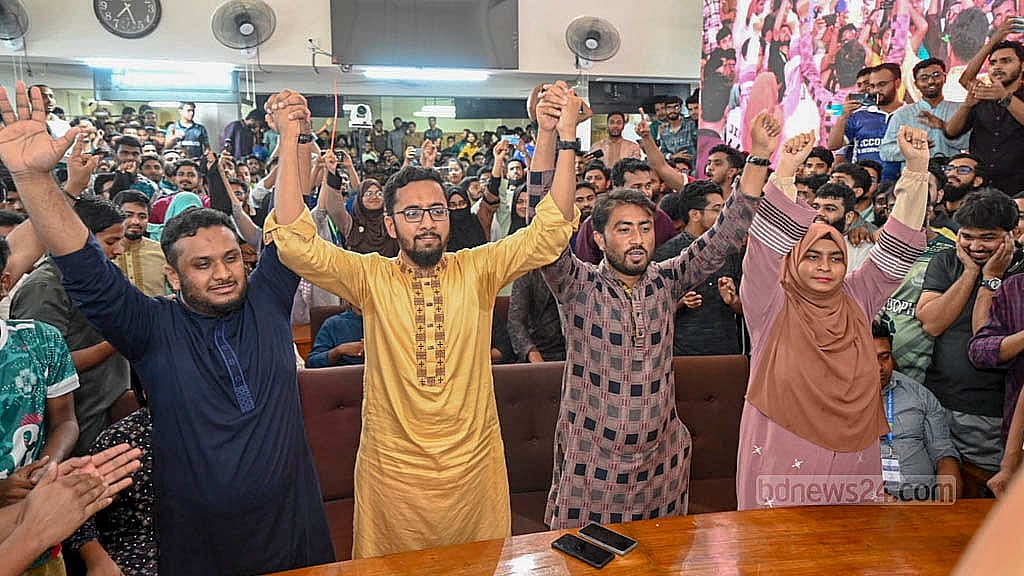
After the voting ended, the announcement of the JUCSU results began 48 hours later, in the Senate Hall at 5:15pm. The process was lengthy, concluding at 7:30pm after the results for the central union were announced, starting with the Hall Union.
At 5:45pm, the official results for the Hall Union were announced, with overwhelming cheers from supporters of the Islami Chhatra Shibir-backed student panel, “Samannito Shikkharti Jote”, who claimed 15 out of the 19 secretariat positions.
The remaining four seats, including the vice-presidency, went to independent candidates, with one seat taken by a Bangladesh Democratic Students’ Union (BGCS) candidate.
Jahangirnagar University’s campus, known for its strong emphasis on free thought, culture, and progress, has now become the focal point of discussions on how the Shibir-backed group managed to secure such a sweeping victory.
Students have speculated that the winning group’s influence and strategic positioning, particularly in the wake of their involvement in the 2024 July Uprising, played a significant role in their success.
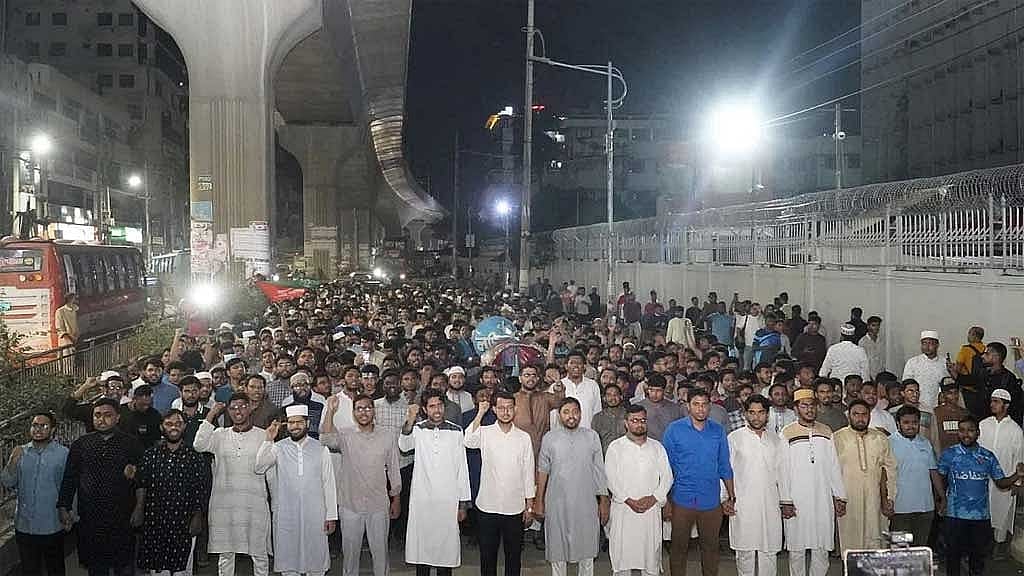
Many students said they voted for candidates who were able to clearly outline their plans, appealing to their sense of purpose and direction.
Despite the controversy surrounding the election, the Jamaat-backed group’s victory was expected by many after the significant progress made by them at Dhaka University.
As one professor noted, “We’ve always known that left-wing politics dominate here, but this time the Shibir-backed group has emerged victorious.”
Prof Roushan pointed out that the Shibir-backed group’s extensive campaigning over the last year at both universities made the result predictable.
She mentioned, “We’ve seen how Jamaat worked at Dhaka University, and similarly, they worked here at Jahangirnagar, so their victory was to be expected.”
ALLEGATIONS PILE UP
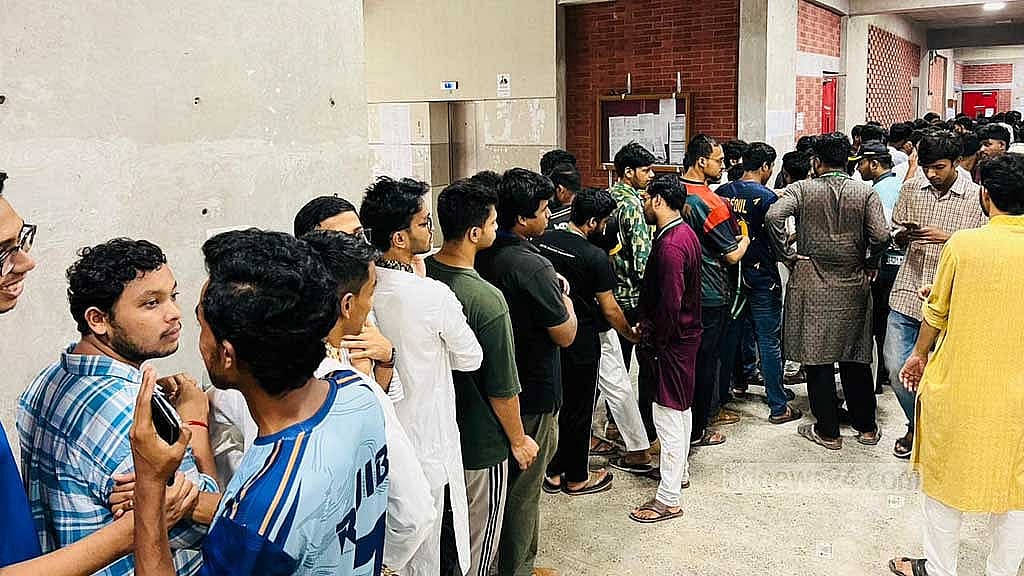
Voting for the JUCSU election began shortly after the scheduled time, with very few voters seen at the polling stations at the start of the day.
Voting was supposed to start at 9am on Thursday at 21 polling stations across different halls and buildings of the university. The process, however, was delayed by 15 to 20 minutes as ballot papers and other necessary equipment were brought in.
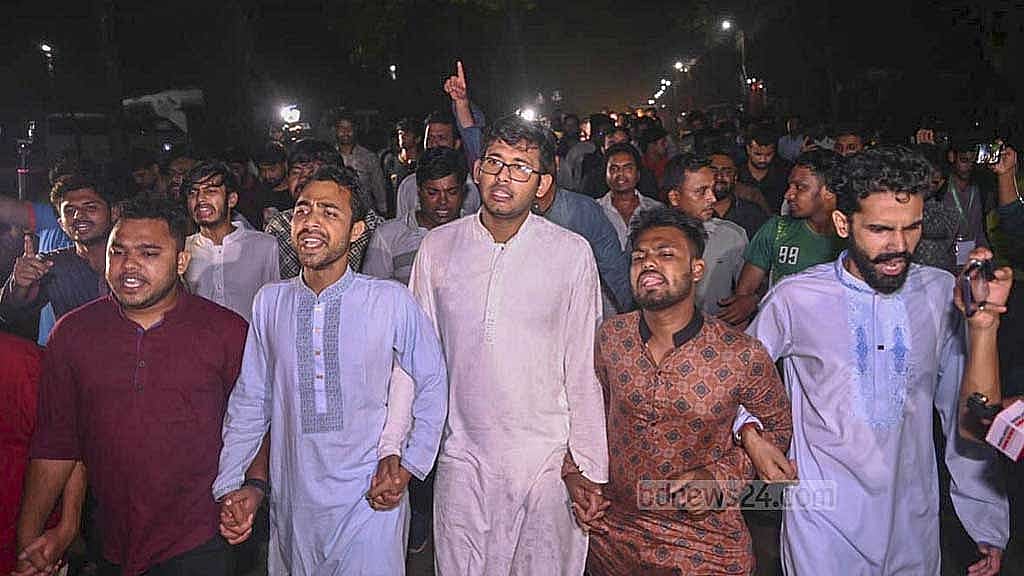
Soon, reports of “irregularities” began to surface. In the Kazi Nazrul Islam Hall, news emerged of errors on the ballots. Voters claimed that, although three candidates were to be chosen for the executive member positions, the ballot instructions stated that voters were only to tick next to one name.
“The issue has come to our attention,” said polling officer Ujjol Kumar Mandal of the hall.
The accusations continued to escalate as candidates from different panels began to raise complaints about violations of the election code.
By midday, accusations were also being levelled against the Election Commission itself. Sheikh Sadi Hasan, the vice-president candidate of the student body backed by the Jatiyatabadi Chhatra Dal, alleged “partiality” by the Election Commission in the JUCSU and hall elections.
He accused the commission of procuring ballot papers and OMR machines for the election from an unknown company linked to Jamaat, bypassing proper procurement procedures.
This accusation, linked to the purchase of the two key materials, namely the ballot papers and vote-counting machines, threw the entire election process into disarray.
After the issue became public, the election commission, under pressure, decided to manually count the votes instead of using OMR machines.
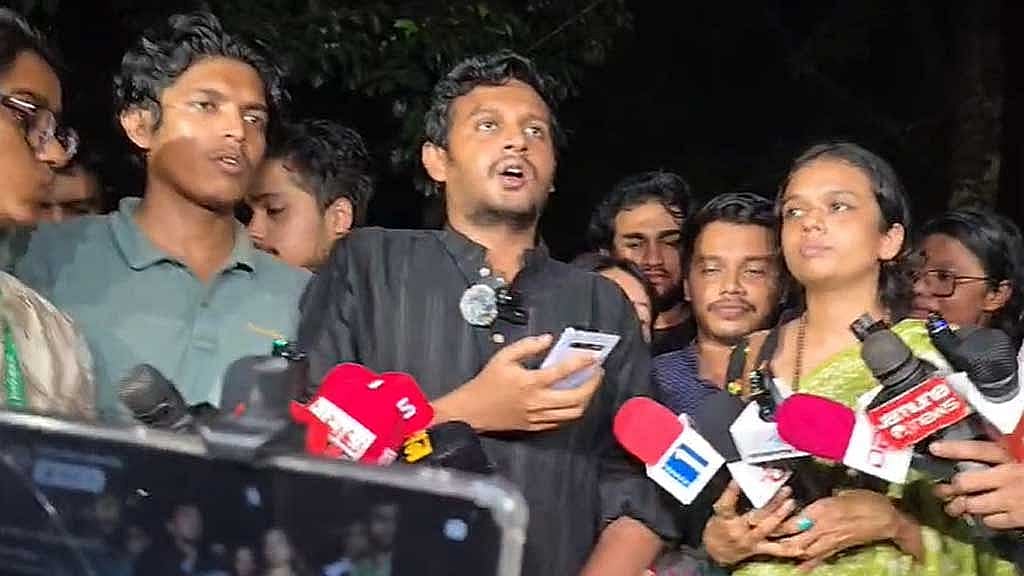
However, counter-accusations came from the Jamaat-backed panel as well. Both panels pointed to various social media posts by the CEO of the company involved.
About an hour and a half before the voting concluded, the Chhatra Dal announced that they would boycott the election, claiming that Shibir had been given undue advantage, with allegations that the group had supplied video cameras, CCTV, and telecasting equipment to monitor the entire election process.
Tanzila Hossain Boishakhi, the general secretary candidate for the Chhatra Dal-backed panel, accused the administration of colluding with Jamaat-Shibir to “engineer” the election, preventing the genuine reflection of student opinion.
“This election does not represent the true will of the students, and we are compelled to boycott it,” she said.
At this point, accusations of voting irregularities escalated further, including reports of indelible ink being wiped off voters’ fingers and ballots being found on the floor of one hall, resulting in a two-hour suspension of voting.
In another hall, a complaint was lodged claiming that the VP candidate from the Chhatra Dal panel was denied entry to the polling station.
However, the Shibir panel dismissed these claims as “ridiculous” and rejected allegations of vote-rigging, with their general secretary candidate, Mazharul Islam, describing the accusations as “baseless”.
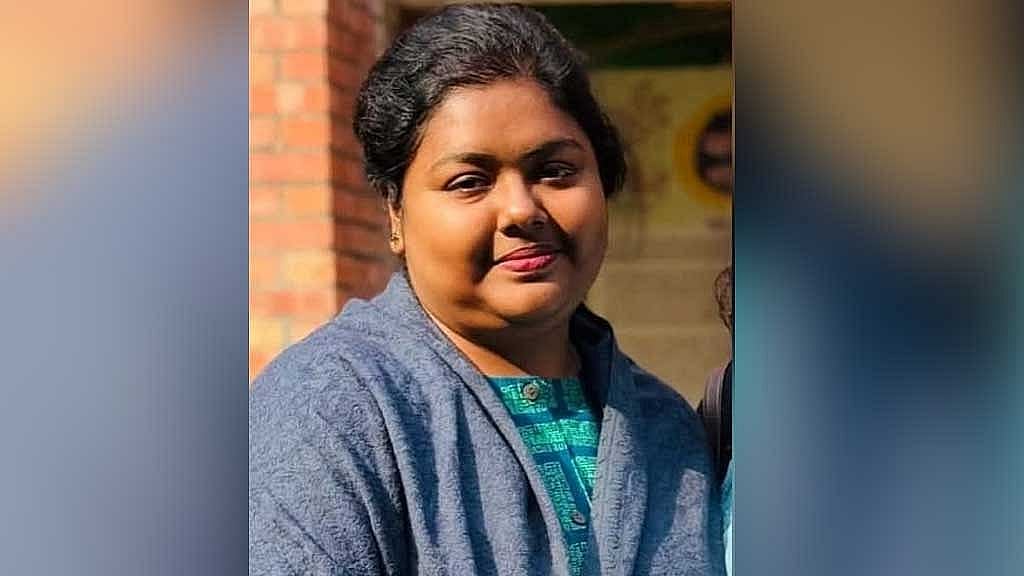
Shortly thereafter, three teachers involved in the election management, including Professors Nazrul Islam, Nahreen Islam, and Shamima Sultana from the Department of Mathematics, resigned in protest, citing irregularities in the election process.
Prof Nazrul Islam said, “The ballot papers and machines we were supposed to use for counting were procured from a company linked to Jamaat. Evidence of this will be presented to the Election Commission.”
He also said following the discovery, the commission abandoned the use of machines for counting votes.
A student named Md Robiul Islam from the Department of Accounting and Information Systems claimed that his vote had already been cast before he arrived to vote.
“I waited in line for 20 minutes only to find out that my vote had already been cast. I never imagined my first vote would be wasted like this,” he said.
Left-progressive student groups also announced their decision to boycott the election, citing allegations of irregularities. They called for a fresh, fair election process.
A statement was issued by Shoron Ehsan, general secretary candidate from the Sampriti Oikya panel, backed by a faction of the Bangladesh Students’ Union.
The statement was supported by several other progressive student organisations, including the Songshoptok Parshad, Swotontro Ongikar Parishad, and Socialist Chatra Front panels.
These groups joined in condemning the irregularities and demanded a new election process.
UNPRECEDENTED BALLOT COUNTING, DEATH OF A TEACHER
A total of 11,843 voters were eligible to vote in this JUCSU election, with 6,115 male voters and 5,728 female voters. Each voter was required to cast votes for 40 positions: 25 for the central union and 15 for hall unions.
A total of 178 candidates contested for 25 central union seats, with 132 male candidates and 46 female candidates. For the 21 hall unions, there were 315 positions, with 447 candidates running, including 316 from 11 male halls and 131 from 10 female halls.
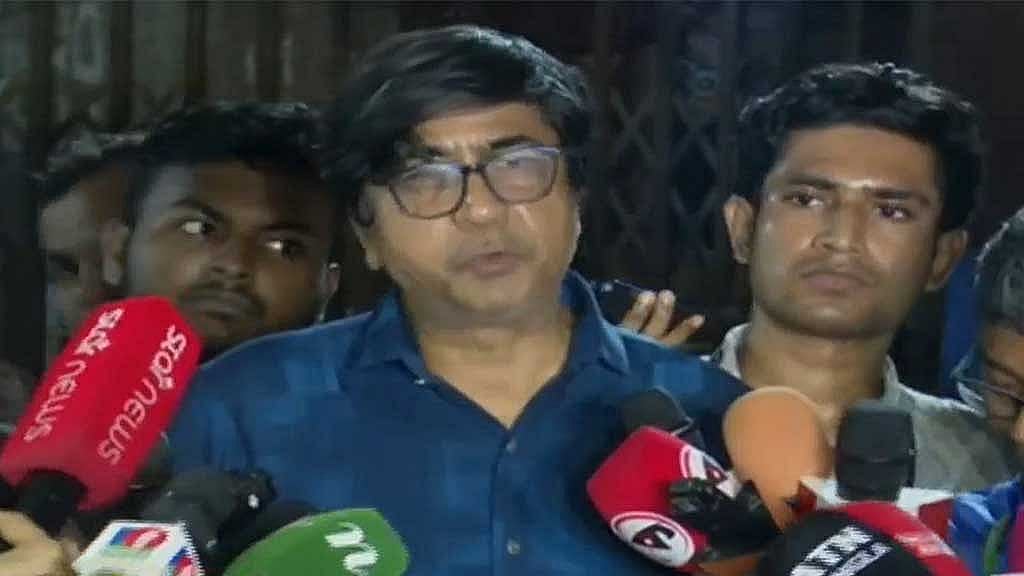
The counting process started at 10pm on Thursday, but it moved at a snail’s pace, with very little progress through the night. By Friday morning, the polling officer, Assistant Professor Janatul Ferdous from the Department of Fine Arts, fell ill and couldn’t arrive on time.
When she eventually arrived, she slipped while climbing the stairs and passed away before reaching the hospital.
On her death, Returning Officer Sultana Akhtar said: “She had been working tirelessly under immense pressure. Perhaps due to exhaustion, she could not sleep, and when she arrived, she slipped and fell.”
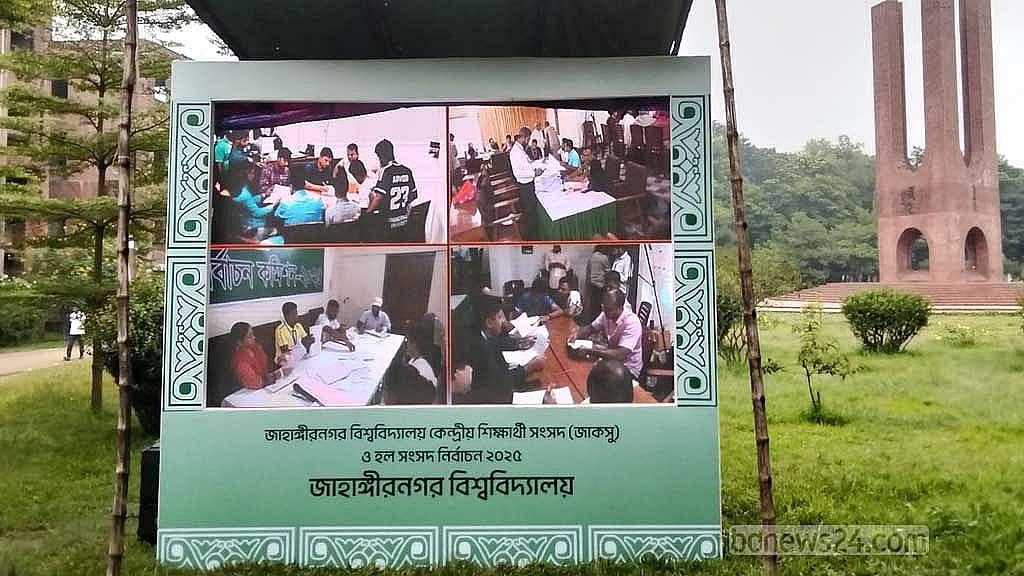
Abdur Rasid Zitu, the VP candidate from the Independent Student Alliance panel, said the teacher’s death could have been avoided had the election used machines for counting.
Late on that night, the Nationalist Teachers’ Forum of the university referred to the JUCSU election as a “farce” and demanded a fresh election. They accused certain election commission members, who they claimed held “political affiliations”, of manipulating the process before it even began.
Despite these claims, the counting process could not be completed by Friday evening. Amid growing allegations of mismanagement and irregularities, Prof Mafruhi Sattar, an election commission member, resigned and publicly announced his departure.
On Saturday, the Chief Election Commissioner Maniruzzaman revealed that several election commission members had fallen ill due to the stress of the counting process.
While discussions swirled about completing the process using machines, the administration decided to stick to manual counting to avoid further criticism.
By midday, another election commission member Associate Prof Rezwana Karim Snigdha from the Department of Anthropology also announced her resignation. This was confirmed by the university’s Pro-Vice Chancellor Prof Mohammad Mahfuzur Rahman.
HOW ‘ACCEPTABLE’ WAS THE ELECTION?
In conversations with bdnews24.com, two Dhaka University professors, JUCSU General Secretary-elect Mazharul, and several university students shared mixed reactions to the election.
Mazharul does not believe the JUCSU election lost its “credibility” due to the widespread allegations.
“We saw that nearly 70 percent of the students voted,” he said.
He acknowledged the transition from the originally planned OMR machine-based counting system to a manual one, which took three days to complete.
“Our teachers and staff worked tirelessly, and despite the manual counting process, no discrepancies were observed,” he added.
Prof Roushan, however, felt that while many complaints had been made, no concrete evidence had been provided to substantiate these claims.
“I have not seen any concrete evidence supporting the allegations. The administration is saying everything went smoothly.
“I think with the first election happening after so long, there will always be complaints. But I believe the election process was conducted properly,” she said, though she did acknowledge some organisational shortcomings.
She added, “This is the first election after many years, and there may have been a lack of preparation. But I don’t think the issues were significant enough to invalidate the election.”
Roushan also suggested that there could have been misunderstandings or errors by the administration due to their inexperience with the election process, as they had not participated in elections for 16 years.
However, Dhaka University Prof Zobaida, in her observation, questioned the legitimacy of the election process, particularly after the resignation of two election commissioners and the death of a teacher.
She said, “When election commissioners themselves speak out about the election process, it raises serious concerns about the fairness of the process.”
She also said, “The election process doesn’t end when the votes are cast. It’s the entire process from the announcement of the election to the declaration of results that defines the election.
“So, it’s not just about the voting, but about whether the process was conducted fairly, impartially, and without external pressure. The allegations that emerged in JUCSU, including the three-day vote-counting delay, make it hard to accept this election as legitimate.”
She also pointed out the shift from machine voting to manual counting, and questioned whether this move acknowledged the truth of the accusations.
“The election took place after 33 years. Managing an election is a learning process. It’s clear that there were failures in the administration, and this inability to acknowledge these mistakes is also a political culture issue,” she concluded.
Assistant Prof Md Shiblee Noman from the Department of Journalism and Media Studies at Jahangirnagar University suggested that the boycott of the election itself could be viewed as a recognised political stance.
He said, “It’s important to examine the reasons behind the boycott and assess their legitimacy.”
He added that the death of a teacher and the long hours of labour reflected the “disastrous organisational crisis” in the election process.
“This crisis was apparent from the beginning to the end of the process,” he said.
WHAT STUDENTS SAY
While some students expressed disappointment over many “deserving candidates” not winning, they emphasised the importance of trusting the elected representatives.
Student Iffat Raisa Nuha said, “The Shibir-backed panel winning 20 out of 25 positions indicates a trend of mass voting for the panel. However, I was disappointed that many qualified individuals didn’t win positions in crucial areas like literature, publishing, and drama. But I hope that those elected will gain our trust through their work.”
Shihabur Rahman, a student from the Department of International Relations, expressed a more critical view of the boycotting panels.
“Those who boycotted the election failed to reach the students. Their decision to boycott was a reflection of their inability to connect with the student body.
“By publicly declaring their opposition, they simply exposed their own limitations. It doesn’t matter in the grand scheme of things.”
He added, “If they had presented truly competent candidates, a real competition would have arisen, and that would have enhanced the beauty of the JUCSU election. But they didn’t, and many of us didn’t even know the candidates who won. This was not ideal.”
[Additional reporting by Jahangirnagar Correspondent Arifur Rahman. Writing in English by Syed Mahmud Onindo]