Published : 20 May 2026, 11:41 PM
Updated : 21 Aug 2026, 03:45 PM


Bangladesh’s energy regulator and consumer rights campaigners locked horns at a heated public hearing over a proposed hike in bulk electricity prices, laying bare the growing strain between rising state subsidies and the deepening pressure on consumers.
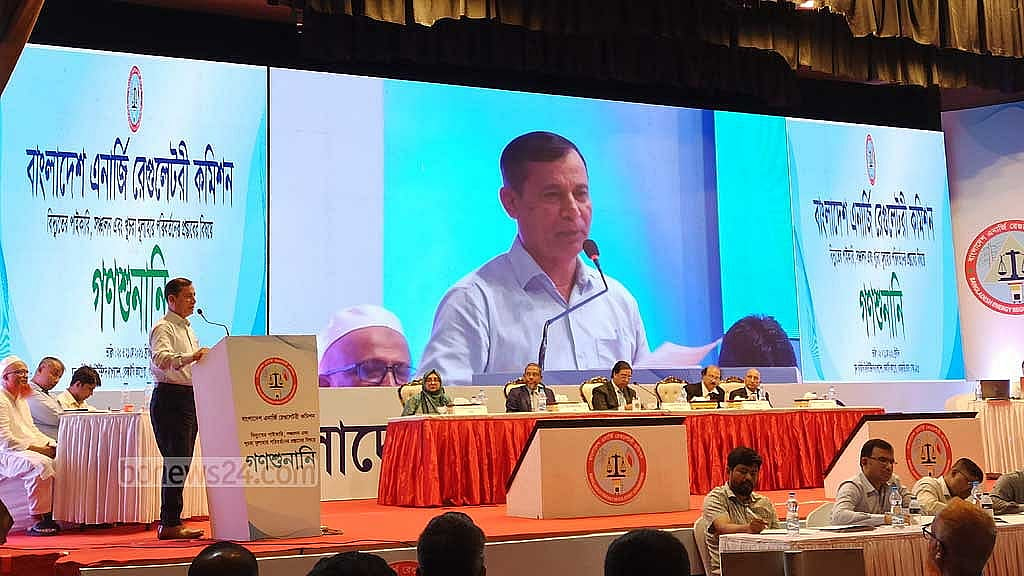
At the hearing organised by the Bangladesh Energy Regulatory Commission (BERC) at Krishibid Institution Bangladesh, BERC officials defended the proposed hike, citing the government's soaring financial burden.
Rights group Consumers Association of Bangladesh (CAB), however, warned that ordinary people were already struggling to survive under the economic pressure.
“Everyone is only thinking about government profits, but nobody cares that people will die under this burden,” said CAB Organising Secretary Syed Mizanur Rahman.
The Power Development Board (PDB) has proposed increasing bulk electricity prices by Tk 1.20 or Tk 1.50 per unit from the current Tk 7.04, which has remained in effect since February 2024.
According to the proposal, Bangladesh’s total electricity generation and purchase cost in fiscal year 2026-27 is projected to reach Tk 14.31 trillion, while revenue from selling electricity to distribution companies at existing tariffs would stand at Tk 7.75 trillion.
PDB said the average supply cost per unit would rise to Tk 12.91 under its projected revenue requirement.
The board argued that increasing the tariff by Tk 1.20 per unit would reduce the deficit by Tk 132.98 billion, while a Tk 1.50 hike would cut the shortfall by more than Tk 166.23 billion.
A technical evaluation committee report submitted to BERC said PDB’s net revenue requirement for fiscal year 2025-26, excluding subsidies, would be Tk 13.72 trillion, or Tk 12.51 per unit.
Without subsidies, bulk tariffs would need to rise by nearly 77.7 percent to eliminate the deficit, the report added.
BERC Chairman Jalal Ahmed blamed excessive installed generation capacity for the mounting capacity charges paid to idle power plants.
“The country’s installed power generation capacity is disproportionately higher than actual peak demand,” he said. “Plants are sitting idle, yet capacity charges must still be paid.”
He added that uninterrupted electricity supply could reduce reliance on captive power generation and allow gas to be used more efficiently in large power plants.
Calling for a shift in mindset, Jalal also urged greater investment in solar energy.
“If solar power generation increases in the future, dependence on expensive electricity will undoubtedly fall, easing pressure on consumers,” he said.
Mizanur warned BERC against approving the proposal.
“If you do not step back from this path, one day you will become enemies of the people,” he said.
BERC asked participants to submit written opinions by May 23 as the two-day hearing continues on proposals involving bulk, transmission, and retail electricity tariffs.