Published : 26 Oct 2022, 02:09 AM
Updated : 26 Oct 2022, 02:26 AM


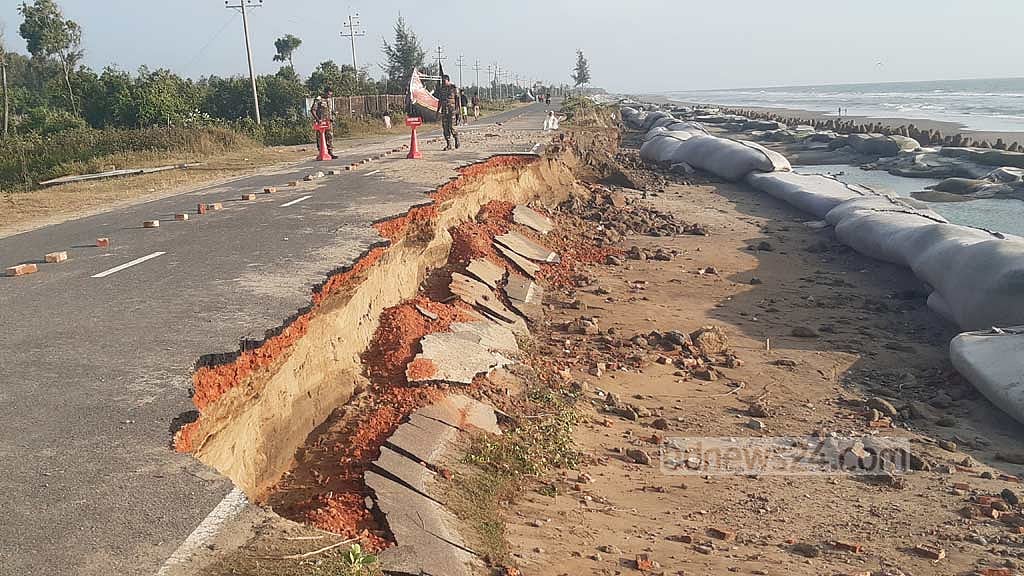
Cyclone Sitrang has left at least 26 people dead, millions without power and thousands of homes damaged in the coastal areas of Bangladesh with heavy wind, storm surge and rains in its wake.
The scenes of destruction emerged on Tuesday after the storm devastated large swathes of Bangladesh for hours from Monday evening, ripping off trees and utility poles, and knocking out power and telecom connections.
Many feared large-scale destruction as Sitrang took aim at Bangladesh directly after the Sundarbans mangrove forest along the border with India had shielded Bangladesh from devastating cyclones in the past few years.
State Minister for Disaster Management and Relief Enamur Rahman was however relieved, saying the damage was lower than he feared. “Alhamdulillah (praise be to God)!” he said three times during a press conference, although the authorities were yet to assess the extent of total damage.
Professor Selim Raihan, executive director of South Asian Economic Modeling or SANEM, agreed that the extent of damage was less than feared, but warned that this much damage may cause greater peril to people already suffering from an economic crisis.
“People are under pressure from many sides. Prices of food grains are already very high. The international community has forecast a fall in production,” he said, calling for quick steps to identify and tackle the challenges created by the storm.
Selim said the government should swiftly implement rehabilitation and compensation plans. “The government must prioritise the work to support the farmers who suffered damage due to the storm.”
HOMES, CROPS DAMAGED
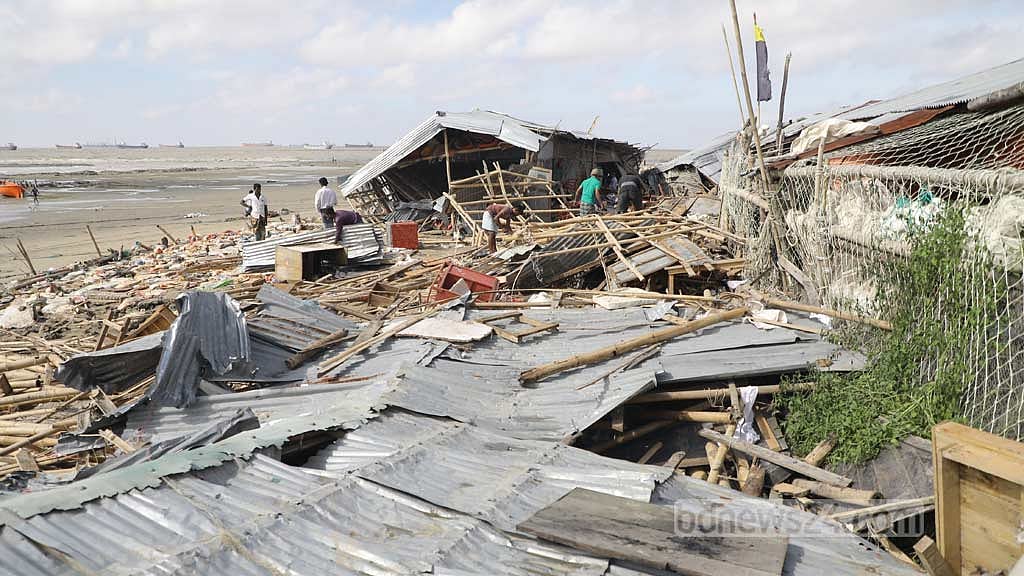
An estimated 10,000 homes and 6,000 hectares of cropland across 419 coastal unions were damaged during the cyclone, according to State Minister Enamur.
As many as 1,000 fish farms and enclosures were also washed away, but the impact of the storm could have been much worse if it intensified further into a super-cyclone, Enamur said at a media briefing on Tuesday.
He said the local administrations would assess the damage and the rehabilitation and compensation will begin after an inter-ministerial meeting based on reports from the field-level officials. The entire process will take seven to 15 days, he said.
Around a million people took refuge in 6,925 shelters across the country overnight. But they have since left the shelters as the storm died down, he said.
Enamur added that nine people died during the cyclone, although a bdnews24.com count puts the death toll at 26.
The families of the dead will receive Tk 25,000 each from the government.
The authorities will also provide materials to rebuild the damaged fisheries along with access to interest-free loans, said Enamur.
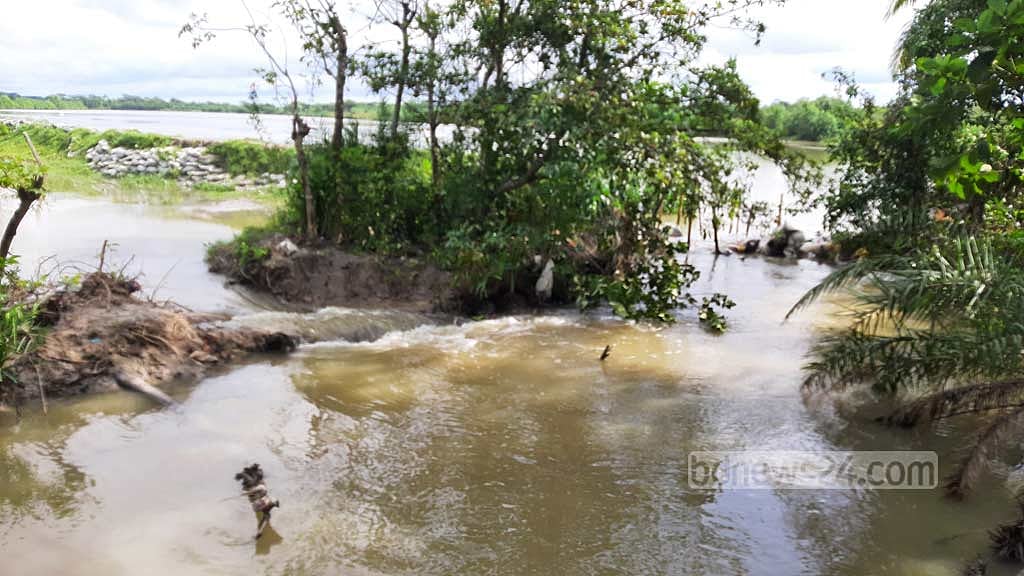
Several parts of the country were inundated by the storm surge but the situation has started returning to normal, he added.
26 DEAD
The death toll from Cyclone Sitrang climbed to 26 in 15 districts as the scale of the storm's impact on human life and property started to become clearer after the cyclone downgraded to a land depression.
The deaths were caused by mostly fallen trees, crumbling walls or by sinking. Four people died in Bhola Sadar, Doulatkhan, Lalmohan and Charfesson while three others of a family, including a four-year-old child, died in Cumilla.
Another child and a foreigner died in Cox’s Bazar’s Teknaf. Two deaths were reported in Gopalganj’s Tungipara, Munshiganj’s Louhajang and Brahmanaria each while one person died in Narail’s Lohagara, Barguna Sadar, Noakhali’s Subarnachar and Shariatpur’s Zanjira after falling under uprooted trees.
A woman and a boy died in Sirajganj when a boat sank off the coast of Jamuna River while a labourer died in Patuakhali where a trawler sank.
Two people died in Dhaka’s Hazaribagh and Gazipur’s Kapasia when walls collapsed on them and a child’s body drifted to the coast in Chattogram’s Sitakunda.
In Chattogram’s Mirsarai, eight workers of a dredger in the Bay of Bengal went missing after the vessel sank. One body was recovered on Tuesday.
POWER
Power was restored to parts of the country after an 18-hour outage caused by the cyclone.
As many as 2,000 utility poles were damaged across the coastal zone during the cyclone, according to State Minister for Power, Energy and Mineral Resources Nasrul Hamid.
Electricity workers have been carrying out repairs in different areas since Monday night, Hamid told reporters on Tuesday.
A total of 8 million customers remained disconnected from the power grid as of Tuesday afternoon. The authorities are hoping to restore power supply to 70 percent of users by the evening once the transmission lines are repaired.
“At least 800 poles belonging to the Bangladesh Rural Electrification Board were damaged. Altogether, around 2,000 electric poles under different power supply authorities like the BPDB were damaged. Our focus is to restore the electricity supply and provide it to hospitals as soon as possible,” Hamid said.