Published : 18 Aug 2026, 12:48 PM
Updated : 09 Sep 2026, 11:16 AM


Deeper Wells, Distant Relief
Drilling drive: Programme targets 150 wells by 2030 to raise domestic supply as legacy gas fields decline fast
Import dependency mounts: Spiralling LNG costs and West Asia supply shocks strain public finances and energy security
BAPEX capability tested: Success hinges on acquiring heavy rigs, skilled crews, and advanced tech to boost drilling capacity
Broader strategy demanded: Analysts urge a long-term plan combining gas exploration, solar power, and regional clean energy
Bangladesh is drilling deeper into a problem that has been building for years.
Gas demand is rising as output from ageing fields declines, leaving power plants and industries increasingly dependent on imported liquefied natural gas, or LNG.
Against that squeeze, the government has embarked on an ambitious programme to drill and work over 150 wells by 2030. Work on 29 has been completed.
The government says those wells have added 270.8 million cubic feet of gas a day, of which 139.6 million cubic feet has reached the national grid.
The hope is that the remaining wells will lift domestic production. But whether they can close the widening gap is another question.
Experts say the answer rests on three things: how much gas the new wells ultimately produce, how quickly ageing fields decline, and how fast demand grows.
At the same time, Bangladesh is paying more to keep LNG flowing. In 2025, it spent about $3.88 billion on 109 LNG cargoes, up $855.42 million from the $3.02 billion spent on 86 cargoes a year earlier.
Production Falls as Pressure Mounts
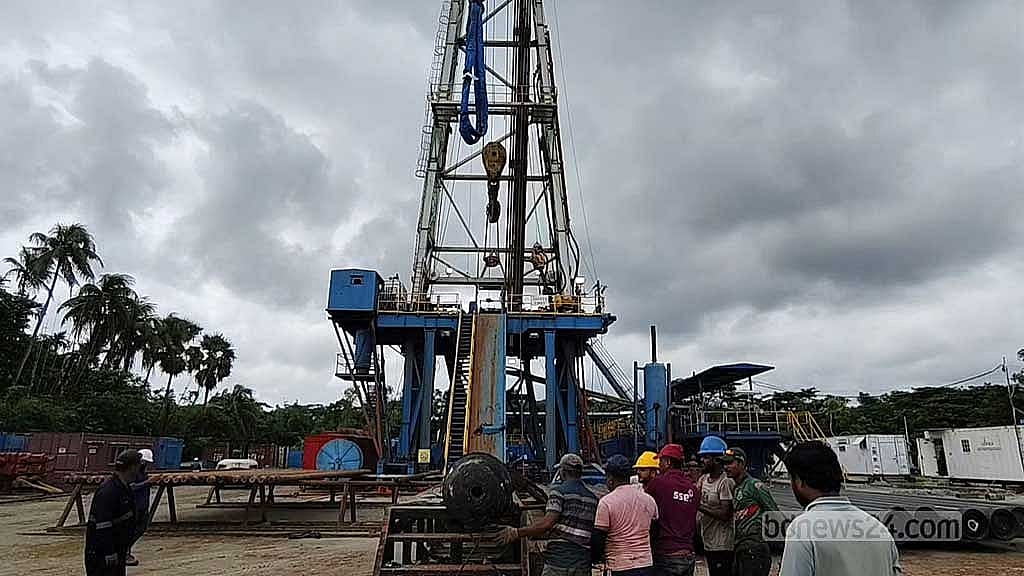
According to the Hydrocarbon Unit’s 2024-25 report, Bangladesh produced 696.10 billion cubic feet of gas that year, averaging 1,907.12 million cubic feet a day.
The previous year, production stood at 747.74 billion cubic feet, with daily output averaging 2,048.63 million cubic feet. The average daily supply therefore fell by 141.51 million cubic feet in a year.
Domestic production is heavily concentrated in a handful of major fields. Bibiyana, Titas, Jalalabad and Habiganj together accounted for 81 percent of daily output in 2024-25.
That dependence means a decline in the older giants quickly ripples through the entire supply system. The 150-well programme is therefore not simply about finding new gas; it is also an attempt to offset falling production from existing fields.
How Much Can 150 Wells Deliver?
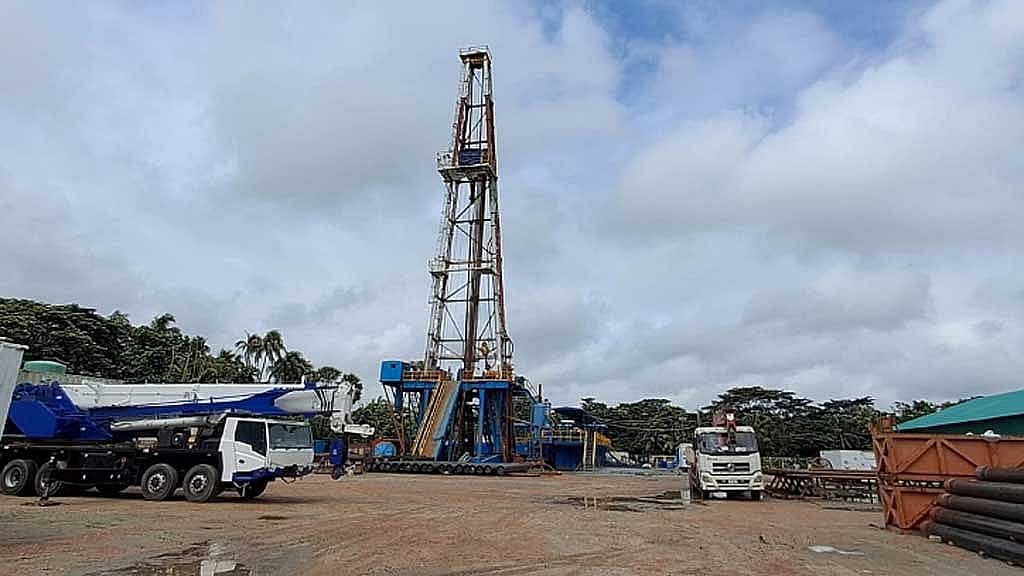
So far, the completed wells have secured 270.8 million cubic feet of gas a day, though only 139.6 million cubic feet entered the national grid.
The gap between potential supply and gas reaching consumers remains substantial.
If the full programme succeeds, the government expects an additional 1,401 million cubic feet of gas a day.
But that figure cannot simply be set against today’s shortage. Existing fields will continue to decline throughout the initiative, while demand will keep rising.
The government recently said 20 producing fields currently generate about 1,630 million cubic feet a day. It has also said it plans to complete drilling and workover operations on the 150 wells by 2030.
Can BAPEX Keep Pace?
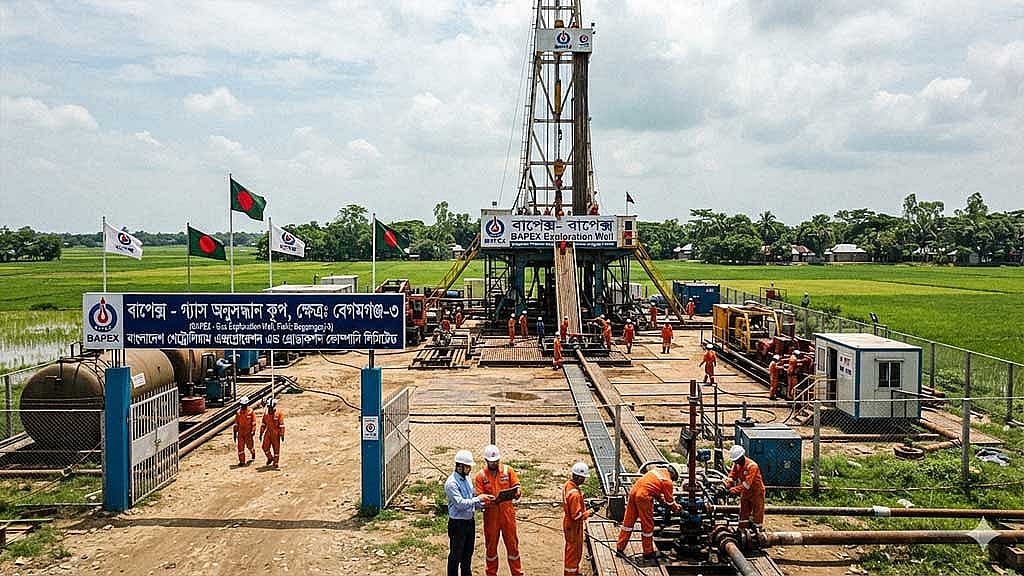
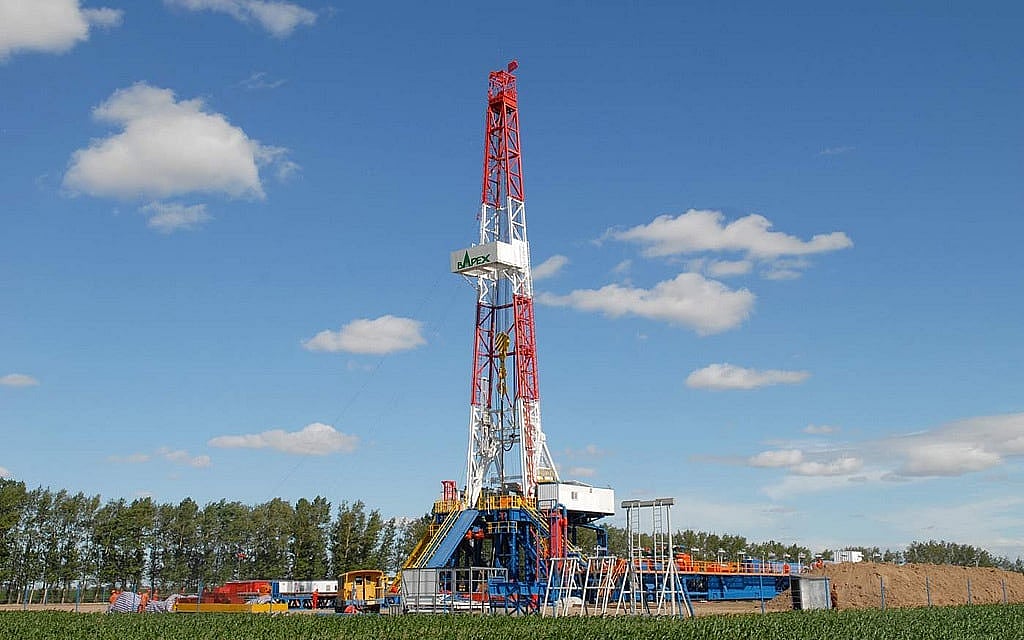
The programme is being led by Petrobangla’s exploration and production companies, with Bangladesh Petroleum Exploration and Production Company, or BAPEX, joined by Bangladesh Gas Fields Company, Sylhet Gas Fields and contractors where necessary.
Much will depend on BAPEX’s technical and equipment capacity.
It currently has five rigs -- Bijoy-10, Bijoy-11, Bijoy-12, Bijoy-18 and IPS-1. The government is seeking two more, with capacities of 2,000 and 1,500 horsepower.
The additions would take BAPEX’s fleet to seven, allowing it to work on more wells simultaneously. Evaluation of bids for the 2,000-horsepower rig is under way.
A BAPEX official told bdnews24.com that rigs alone would not be enough.
Skilled personnel, modern technology and proper training would also be needed, the official said. Strengthening those capacities would accelerate drilling and allow work on more wells at once.
From the Coast to the Offshore Blocks
BAPEX began drilling the Sundarpur-4 well in Senbagh, Noakhali, at the end of July. The 1,550-metre well is expected to produce about 7 million cubic feet of gas a day.
Projects worth Tk 7.29 billion have also been taken up for Begumganj-5, Begumganj-6 and Sunetra-2. If all three succeed, they are expected to produce about 35 million cubic feet a day.
BAPEX plans to drill the two Begumganj wells using its own rigs, while the 5,300-metre Sunetra-2 well is expected to be drilled by a contractor.
The government is also looking offshore. Its 2026 offshore bidding round has invited international companies to explore 26 blocks -- 15 in deep water and 11 in shallow water.
LNG Dependence Carries a Price
As domestic production falls, LNG imports are filling the gap. That dependence became more costly this year when conflict in West Asia disrupted supplies.
QatarEnergy has said it will halve LNG supplies earmarked for Bangladesh in 2026. After the Iran war began on Feb 28 and long-term contracted cargoes from Qatar stopped arriving, Bangladesh bought 35 LNG cargoes from the spot market from March.
Two cargoes bought in March cost $28.28 and $23.08 per million British thermal units, compared with about $10 in January.
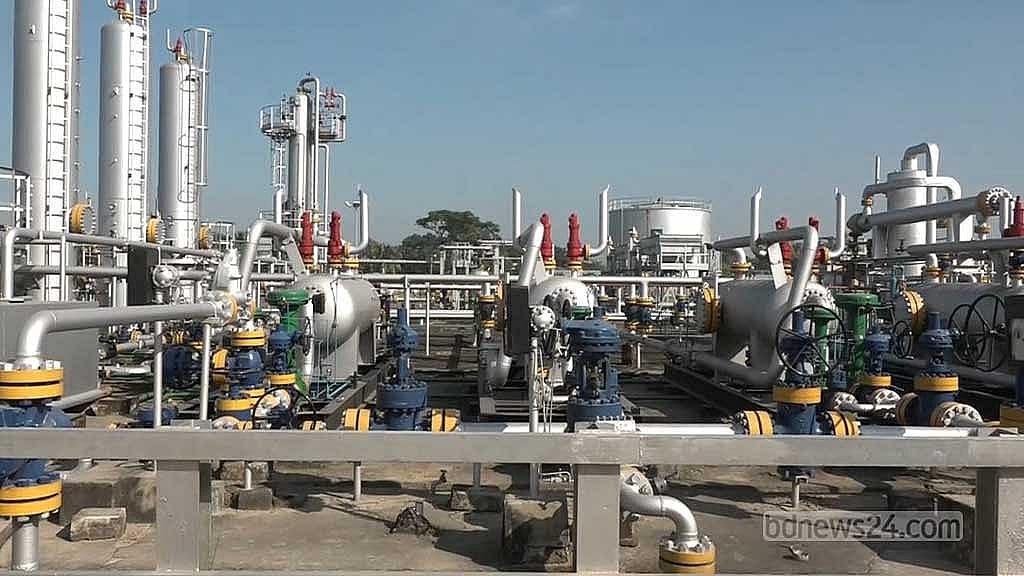
Import infrastructure itself has also proved vulnerable. After a fire at Excelerate Energy’s floating LNG terminal in Moheshkhali in July, gas supplies to the national grid fell by about 450 million cubic feet a day.
So boosting domestic production is no longer just about cutting import costs. It is also about energy security.
The World Bank approved a $350 million project in 2025 to help Petrobangla pay for LNG imports, followed by another $350 million in May. The funds are intended to provide letters-of-credit guarantees and short-term financing.
Is Drilling Alone Enough?
Shafiqul Alam, Bangladesh lead energy analyst at the Institute for Energy Economics and Financial Analysis, says expanding domestic exploration and production is urgent but must form part of a longer-term energy strategy.
“Every country in the world wants to utilise its own energy sources. If Bangladesh has an opportunity to increase its own gas exploration and production, it should take advantage of it,” he told bdnews24.com.
Greater LNG dependence, he said, would expose Bangladesh more directly to volatile international prices. Before committing to more imports, the full cost and benefit must be assessed.
If LNG accounts for more than half of total gas supplies, he believes price spikes could hit consumers and industry directly. At LNG prices of $22-$23 per million British thermal units, the cost of gas for industry could approach Tk 100 per cubic metre, he estimates.
Bangladesh has underinvested in domestic exploration for more than a decade, he said. Increasing reliance on imports has exposed the country to the financial shocks of the pandemic, global energy crisis and currency depreciation.
BAPEX’s capacity should therefore be strengthened, while foreign technology and expertise could be brought in where necessary. Investment in domestic exploration should also be weighed against the long-term cost of LNG imports.
But gas cannot be the only answer.
Falling costs for solar power and batteries offer scope for greater industrial use, Alam said, although gas-dependent industries cannot switch entirely to electricity overnight.
Electric boilers and heat pumps could eventually replace gas-fired boilers, while hydropower imports from Nepal and Bhutan could help reduce gas demand.
Bangladesh, he said, needs separate energy plans for the next 10, 20 and 30 years -- bringing domestic gas, renewable power, energy efficiency and regional cooperation into a single strategy.
The real test is whether the drilling programme buys enough time to build an energy system that no longer depends on any single source to keep the lights on.