Home
+
Published : 15 Jul 2026, 02:06 PM
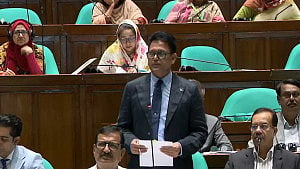
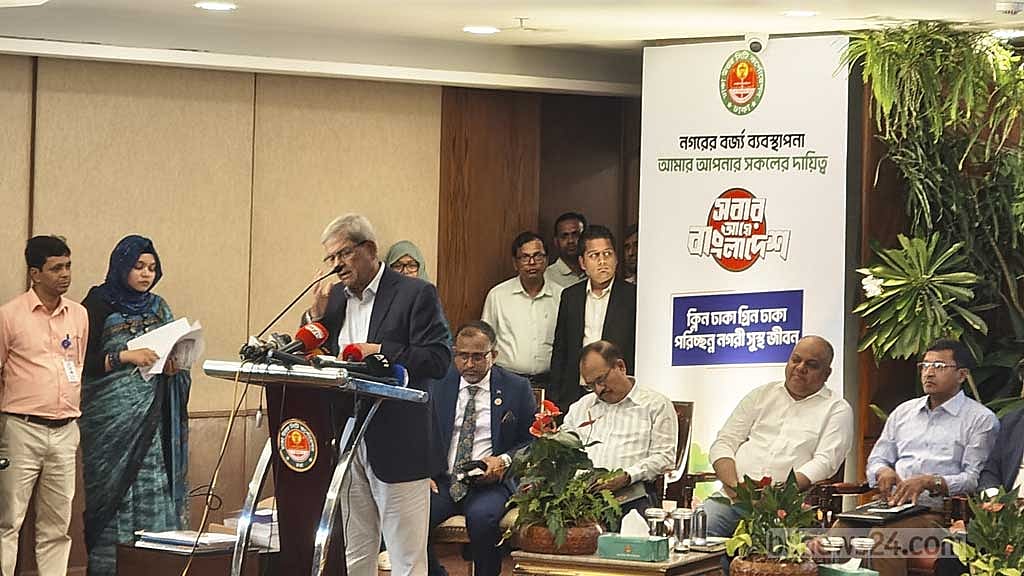
Local Government Minister Mirza Fakhrul Islam Alamgir has called on everyone to rise above political affiliations and fulfill their responsibilities as citizens in order to make Dhaka a beautiful and livable city.
"We do not want to see Awami League, BNP, Jatiya Party, or Jamaat-e-Islami. I want to see Bangladesh. I want to see people as citizens of Dhaka. We will fix Dhaka as responsible citizens," he said.
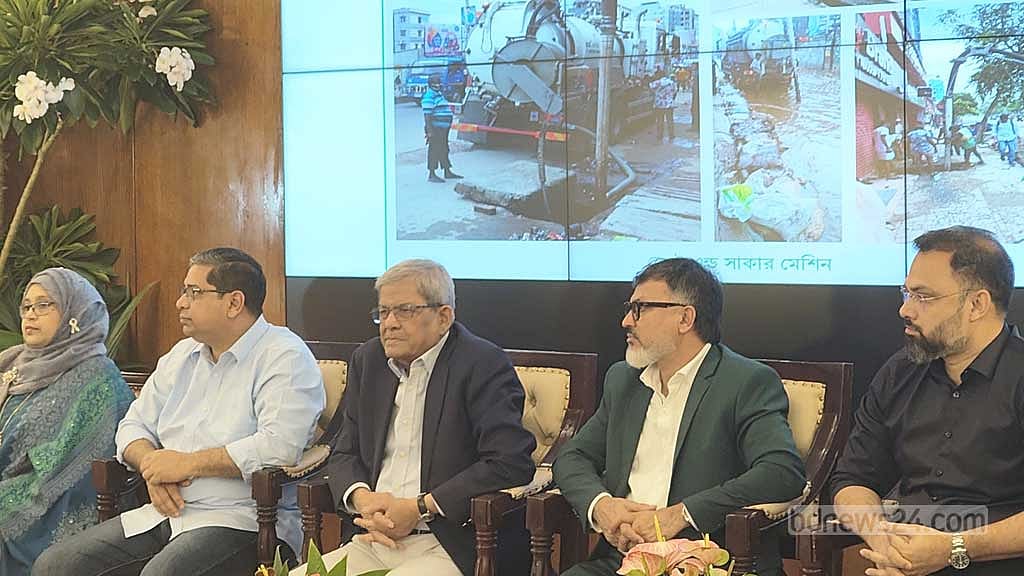
The minister made these remarks on Wednesday morning while speaking at a seminar held at the Dhaka North City Corporation (DNCC) headquarters in Gulshan.
The seminar, titled “Nogorer Borjo Bebosthapona: Amar Apnar Sokoler Daitto” or "Urban Waste Management: A Shared Responsibility for All of Us," was organised by DNCC.
Describing the capital's current challenges as the result of longstanding, accumulated problems rather than a recent phenomenon, the minister noted that Dhaka attracts people from across the country because it is the nation's economic hub.
As a result, he said, the city has developed a blend of urban and rural cultures.
"We are yet to become urban citizens fully," he remarked.
Emphasising that keeping the city clean requires not only infrastructure development but also a change in public mindset, Fakhrul cited examples from developed countries, where people dispose of waste in designated places on their own.
He stressed that Bangladesh should begin teaching children the importance of cleanliness from the school level.
Calling on citizens to take responsibility, the minister said the government alone cannot solve the problem.
"If I see someone throwing garbage on the street, I should politely discourage them," he said.
He also noted that transforming Dhaka into a beautiful city is beyond the capacity of the city corporation alone. Agencies such as RAJUK, WASA, the power distribution authorities, and other relevant institutions must work in close coordination.
According to the minister, Dhaka's problems cannot be permanently resolved unless the city corporation is transformed into an effective "urban government."
Criticising the recurring road excavations during the monsoon season, he said such work often begins after budget allocations are released at the start of the fiscal year, causing immense inconvenience for city residents.
He called for better coordination in planning and implementation to avoid unnecessary disruption.
Although he identified the lack of civic awareness as a major challenge, the minister also highlighted the positive impact of law enforcement.
He said that after the introduction of artificial intelligence (AI) in traffic signal management, people have become more inclined to follow traffic rules.
According to him, combining effective law enforcement with public awareness campaigns can bring lasting changes in civic behaviour.
Referring to the encroachment and filling of many canals in Dhaka, Fakhrul said restoring these waterways and reestablishing their natural flow could significantly reduce waterlogging in the city.
He also stressed the need for greater public awareness and social resistance to prevent the illegal occupation and filling of rivers.
The minister further noted that weaknesses remain in several areas, including the management of medical waste in the capital, and called for further improvements in these sectors.