Published : 06 May 2026, 08:04 AM
Updated : 21 Aug 2026, 03:41 PM


Stripped of Stones, Only Skeleton Remains
Ecological devastation: Once a lush green landmark, the hill has been hollowed into a “sea of craters” by two decades of illegal stone extraction.
Heritage erased: The 700-year-old legacy of Hazrat Shah Arefin has been wiped out. The shrine, mosque, and ancient graveyard are largely destroyed.
Political complicity: Allegations of "share arrangements" implicate political leaders and law enforcement. Despite a High Court ban, 200 lethal “bomb machines” operate under the cover of darkness to fuel the trade.
Festival of plunder: Looting surged after the August 2024 shift and February 2026 elections. Encouraged by political promises to reopen quarries, looters have now removed an estimated 90 percent of the hill’s stone deposits.
Fatal consequences: The site has become a death trap, with at least 38 workers killed in soil collapses. Despite billion-taka corruption cases and identified suspects, the extraction continues with total impunity.
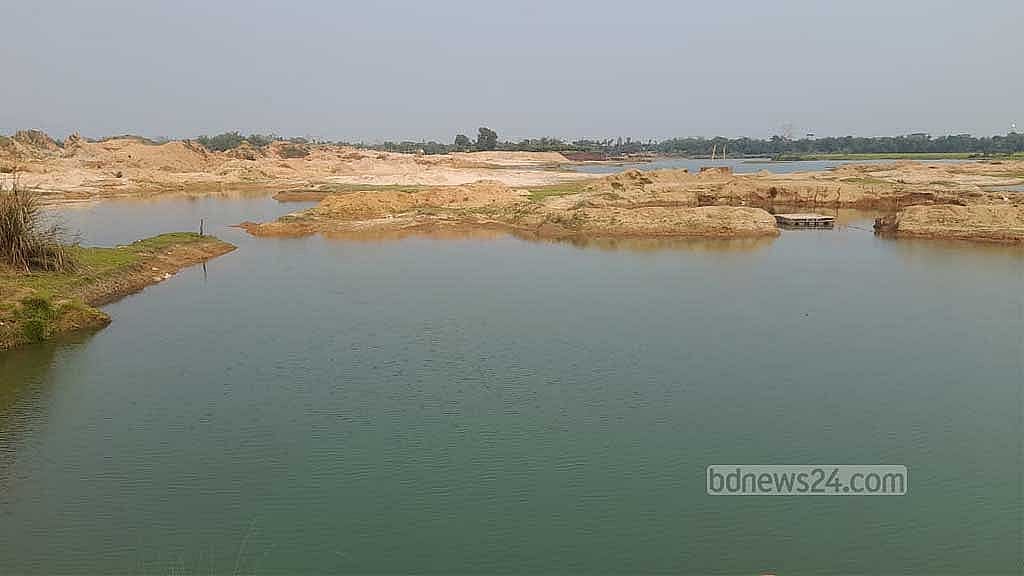
Once a towering, green landmark in Sylhet, Shah Arefin Hill has, over nearly two decades, been ravaged by relentless stone extraction, leaving behind what locals now describe as a “sea of craters”.
Along with it, traces of religious heritage linked to Hazrat Shah Arefin, a companion of Hazrat Shah Jalal, have all but vanished.
Located in Companiganj Upazila, the hill once held layers of small and large stones beneath reddish-brown clay soil -- long known locally as a “Pathorer Khoni”, or stone quarry.
Allegations persist that political leaders, sections of the administration and law-enforcing officers enabled illegal extraction through a system of “share arrangements”, using banned dredging devices known as “bomb machines”.
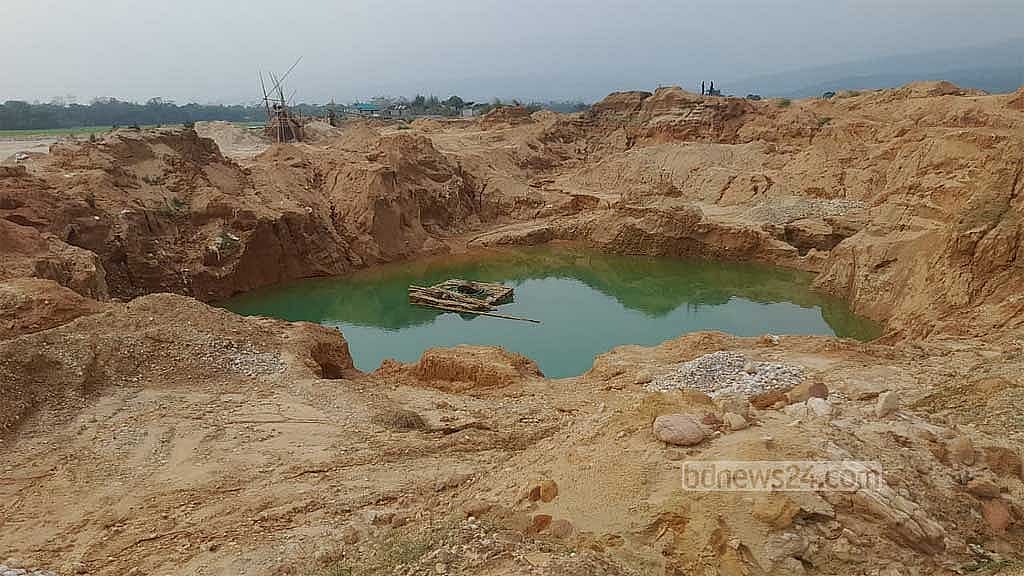
Now, at least 100 pits scar the hill, ranging from 20 to 300ft deep. Despite the damage, extraction continues, often under cover of darkness, with stones transported by trolley and tractor to crushing mills in Bholaganj. Sand is placed on top to conceal the cargo.
A video recently circulated on social media shows an argument involving police over money collection from stone-laden trucks.
Looting Intensifies
Locals say stone looting had been ongoing for years, but surged dramatically after the political shift on Aug 5, 2024. Not only Shah Arefin Hill, but other tourist sites across Sylhet saw what many described as a “festival of looting”.
Administrative action briefly curbed the activity following public criticism online. But after the parliamentary election in February, looters returned with renewed intensity. Around 90 percent of the hill’s stone has now been removed, residents estimate.
The pits left behind have triggered erosion, threatening nearby homes.
Some residents and environmentalists allege that election-time promises by the BNP and Jamaat candidates to reopen stone quarries emboldened looters.
Sylhet Deputy Commissioner Md Sarwar Alam acknowledged the devastation: “The hill is gone -- it has been turned into a sea. Local people themselves are the main problem… we are looking into what can be done.”
Erasing History
According to local accounts, Hazrat Shah Arefin visited the Khasi hills region around 700 years ago and would rest atop this hill. A shrine later emerged at the site, enclosed by large black stones, drawing devotees for annual gatherings.
Even two decades ago, two large hills stood here, attracting both tourists and pilgrims. Official records show the hill spans around 56 hectares, with another 142 hectares nearby containing stone deposits.
Residents say the shrine, mosque and graveyard have largely been destroyed over the past 18 months.
Lawyer Farhad Khandakar from Companiganj said, “There is nothing left -- only pits. The hill was a tourist spot, and religious gatherings were held there. With its destruction, that heritage is gone. It cannot be restored.”
A 2009 Department of Environment report had already described the hill as a “skeleton”. Now, almost everything except fragments of the mosque and graveyard has been wiped out.
Environmental researcher Prof Mohammad Zahirul Haque said, “If you look at the entire [56 hectares], it resembles a post-war wasteland. Even official reports called it a skeleton. The administration has either failed or been made to fail. Without firm action at the highest level, nothing will remain.”
Quarry Politics and Illegal Expansion
Stone quarry leasing began in 1992 under a BNP government. Shah Arefin’s quarry was last officially leased in April 2005 for a year.
But from 2000 to 2024, extraction continued illegally, violating lease conditions and expanding beyond permitted areas. Of the 56 hectares, 4 hectares were designated as Waqf land for the shrine; the rest fell under government ownership.
Locals allege that political actors across parties have been involved, with power shifts determining control. Some residents even sold land -- sometimes under disputed claims -- to looters.
Reign of ‘Bomb Machines’
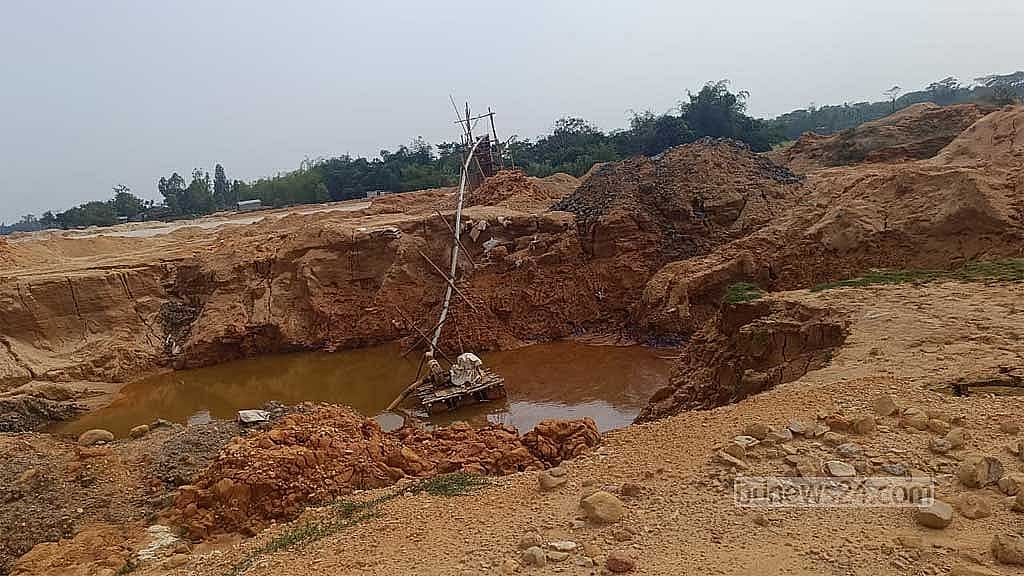
A recent visit revealed hundreds of pits and abandoned dredging machines scattered across the hill. Many pits are filled with deep blue water, their colour reflecting depth and mineral composition.
At least 200 such “bomb machines” are believed to be in operation or on standby, despite being banned by the High Court nearly two decades ago.
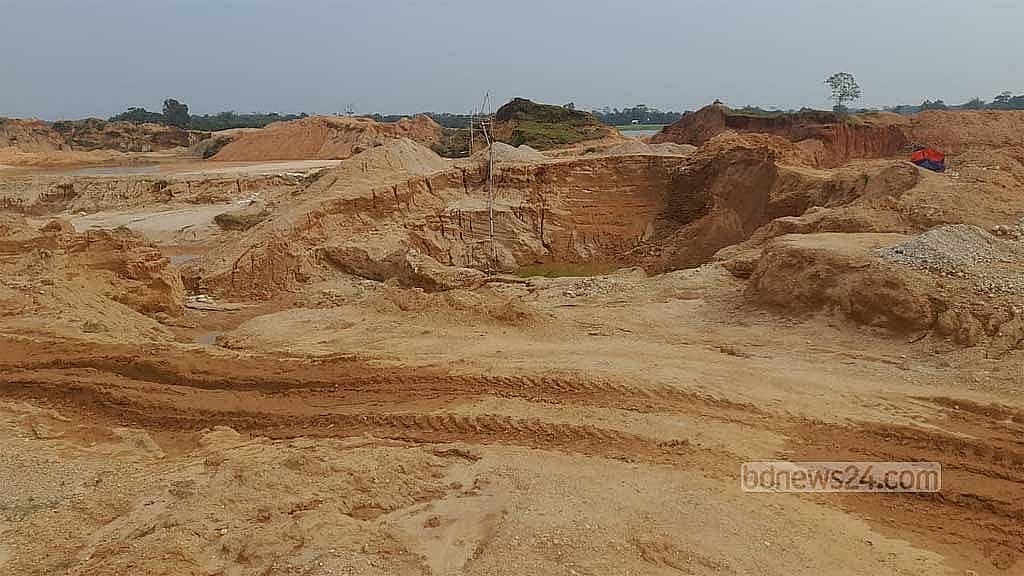
From a distance, the hill now resembles a ruin. Gone is the greenery; in its place lie exposed soil, broken stones and sand.
Only a fragment of a high ridge remains, surrounded by deep craters. Nearby roads bear tyre marks from constant transport. Temporary shelters made of bamboo and tarpaulin dot the edges of pits.
Residents living on the western side face immediate danger, with pits dug alarmingly close to their homes.
A Silent Landscape
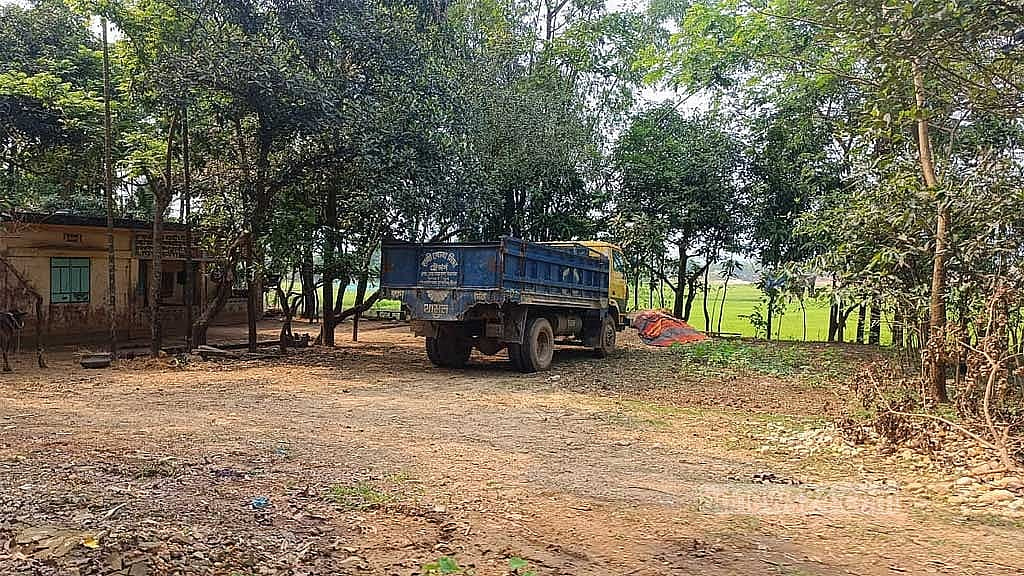
The area is eerily quiet. Occasionally, a tractor loaded with stones passes. At one point, stones were seen being concealed under sand for transport.
To the north, some people fish in the pits -- which now resemble natural water bodies. A first-time visitor would struggle to believe a hill once stood here.
A local youth said, “There are about 100 pits, with at least 200 machines. When the machines run, outsiders are not allowed in. The noise alone tells you stones are being extracted. Tourists no longer come.”
Stones in Backyards
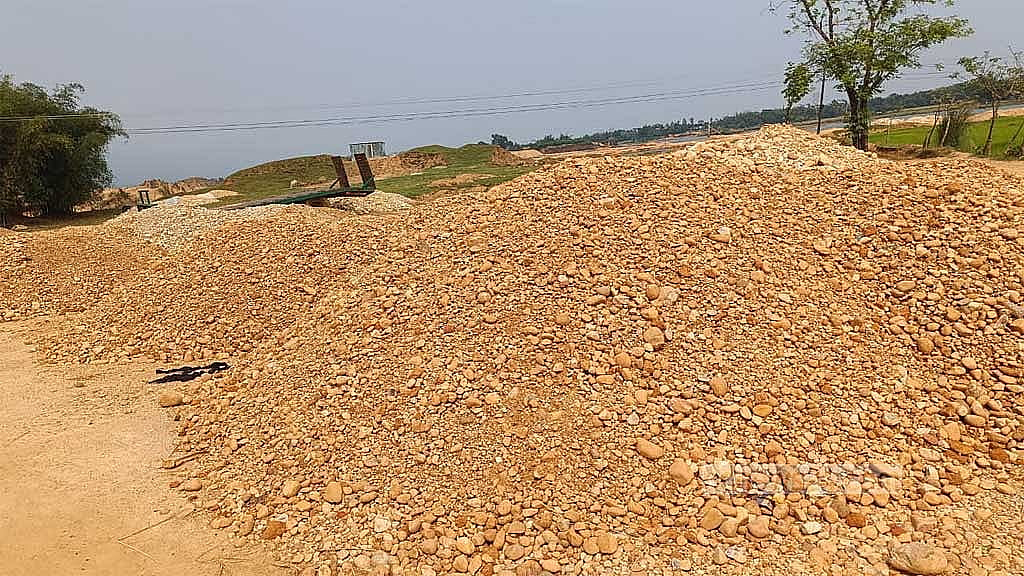
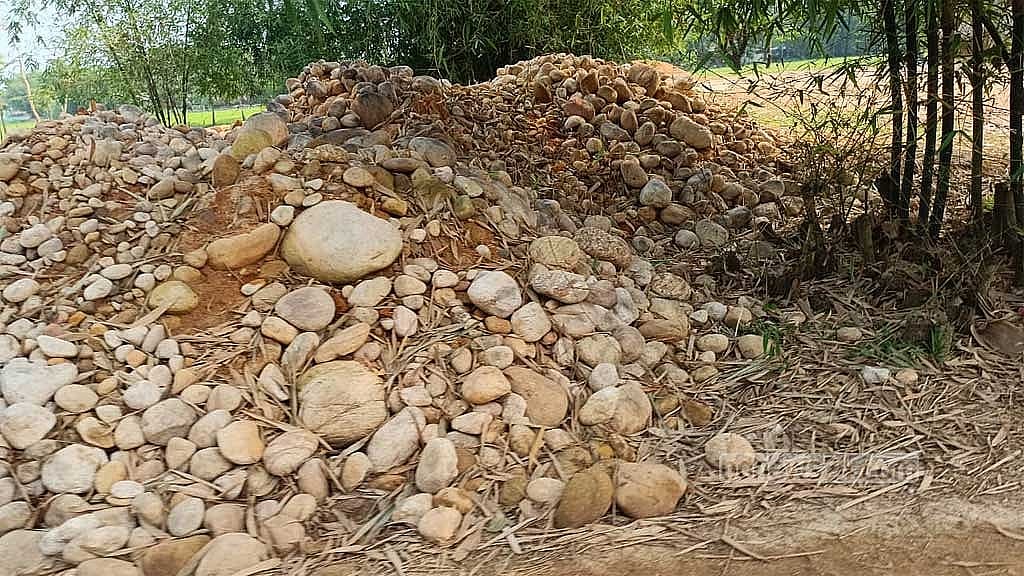
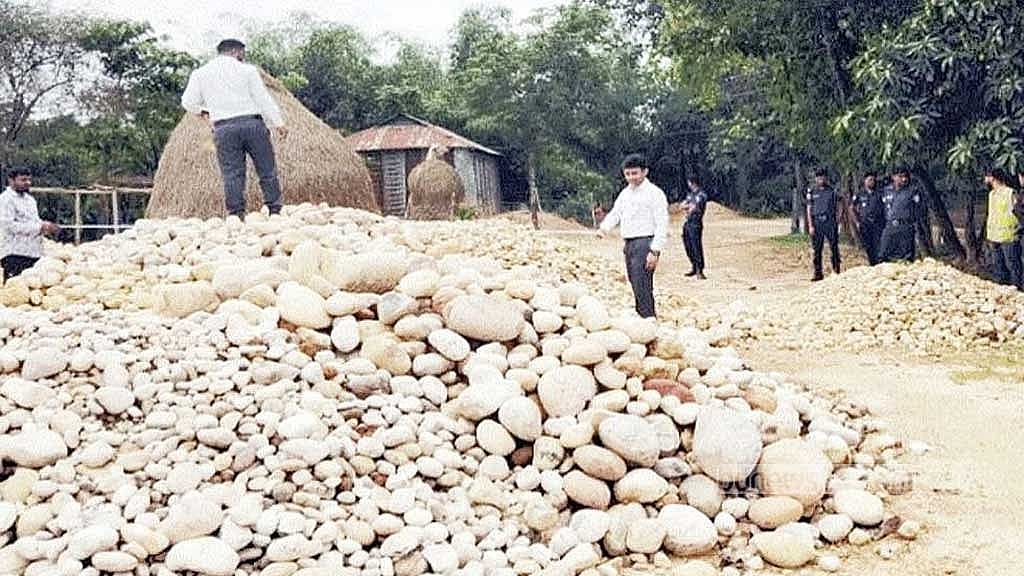
Approaching from Bholaganj, piles of stones line roads, fields and courtyards in villages like Noagaon, Babulnagar and Jalirpar.
Residents say around 100 trolleys transport stones daily, each making two to three trips. Each trip can carry at least 50 cubic feet of stone.
Allegations persist that police collect Tk 200 per trip at checkpoints. Locals also speak of an “OC’s line” -- night-time transport allegedly facilitated through informal arrangements.
Police officer Md Shafiqul Islam Khan denied the claims: “Police do not take money. There is no such line in my name.”
Sylhet’s Superintendent of Police Chowdhury Md Jaber Sadeq said action would be taken if evidence emerges, though he added he was unaware of such arrangements.
Death Traps
The pits have proven deadly. On Jan 23, 2017, six workers were killed in a collapse -- the first recorded fatal incident. Between 2005 and 2021, at least 38 workers died in similar incidents, according to environmental group BELA.
A government probe identified 47 individuals -- including officials, politicians and businessmen -- linked to the operations.
The Anti-Corruption Commission filed a case in October 2021 accusing a businessman, Mohammad Ali, of illegally extracting stone worth Tk 2.52 billion.
Investigators say his company lifted over 6.28 million cubic feet of stone from the hill, far beyond permitted limits, violating environmental safeguards.
The case remains ongoing.
Who is Responsible?
A 2018 district report identified 87 alleged looters, most of whom remain beyond reach.
Recent enforcement drives have seized large quantities of stone and equipment, though resistance persists. On Mar 20, looters attacked officials during a joint operation.
Locals name individuals linked to multiple political groups and law-enforcing networks, though most deny involvement.
Sylhet-4 MP Ariful Haque Chowdhury, labour and employment minister, warned: “If illegal extraction is not stopped and those responsible are not arrested, I have instructed that officials concerned will be made accused.”
Without intervention, environmentalists warn, the hill will disappear entirely -- leaving only water-filled pits where a landscape once stood.