Published : 04 Dec 2025, 07:30 AM
Updated : 21 Aug 2026, 02:50 PM


If you want to reach the Padma River sandbank from Gouripur or Lakshmipur ghat at Lalpur in Natore, most people discourage you.
Some panic at the idea. “Why go there? It isn’t a good place,” one warns.
The caution is not unfounded, for three killings have just occurred. Even after repeated persuasion, boatmen refuse to take visitors to the sandbank.
Finally, after intense pleading, one agrees.
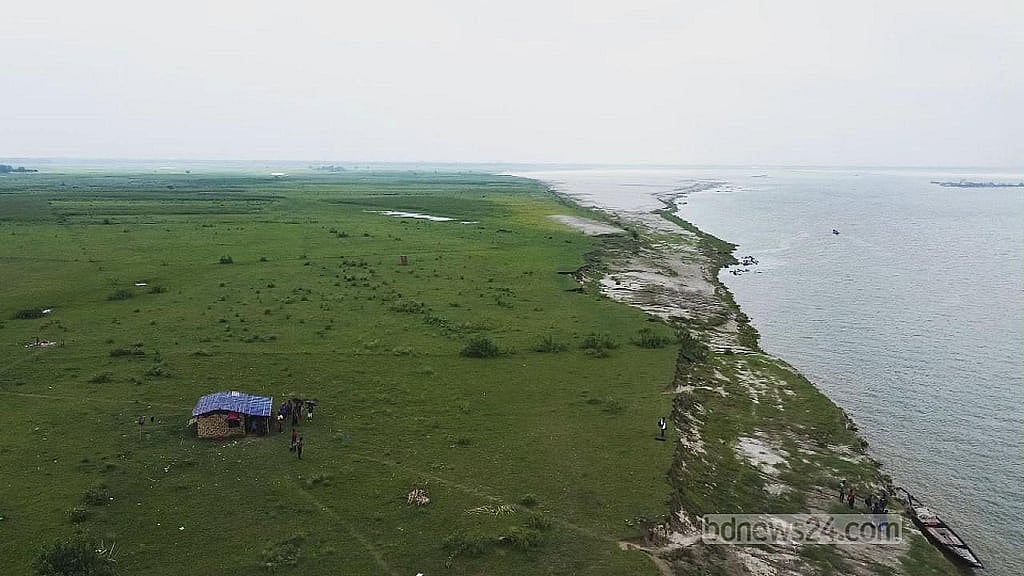
The Padma flows past Gouripur and Lakshmipur, bordered by Rajshahi’s Bagha in the west, Ishwardi of Pabna in the east and Kushtia’s Daulatpur to the south. The river’s shifting currents have formed vast sandy chars or raised islands over time.

To reach the main stream, narrow channels must be crossed. But before entering the Padma, the boat halts. The boatman’s phone rings repeatedly, and his face tightens. He approaches: “Brother, we can’t go into the Padma. Without permission from 'Kakon Bahini', no one can enter. We must turn back.”
Reassurances fail. The boat turns around. A second boatman at the ghat says bluntly, “Entering the Padma without their permission means you won’t live until night.”
Former Natore district superintendent of police (SP) Mohammad Amzad Hossain, who was stationed there from Feb 6 to Sept 4 this year, echoes the fear.
“The Padma char region became a sanctuary for criminals. Law-enforcers stayed away for years. Under Kakon Bahini’s oppression, ordinary people were crushed.”
“Beating farmers for crops, robbing fish from fishermen, extortion from sand boats — this is their daily routine.”
‘HERE, BULLETS SPEAK BEFORE WORDS’
The Padma River scene in Lalpur is idyllic with endless water and sweeping sandbars. But beneath the beauty lies layered fear. Armed groups have carved out their own mini-kingdoms. They are the undisputed sovereigns.
Villagers must pay these gangs to fish, farm, graze cattle or simply survive. Besides extortion, the gangs illegally mine sand and extort from boats. “Here bullets fire before words,” a Lakshmipur boatman said. “People remain mute.”
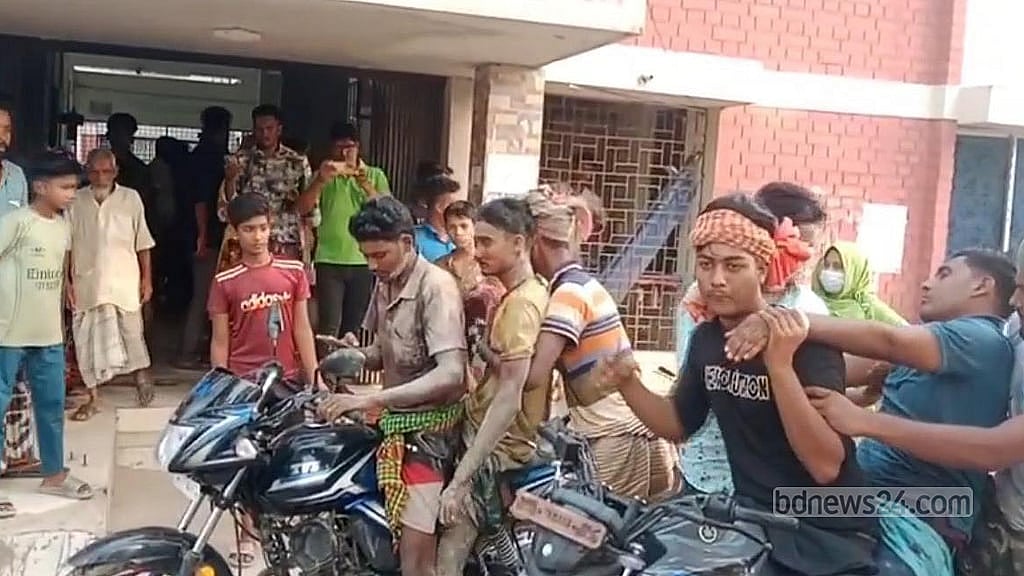
On Oct 27, men harvesting straw on land claimed by rival groups near the confluence of Bagha, Lalpur and Daulatpur came under gunfire from Kakon Bahini. They returned fire. Four people were shot, two, Aman Mondol and Nazmul Mondol, died later.
A 30-year-old Kakon Bahini member named only as Liton was also killed.
Earlier incidents this year include:
Jun 5: gunfight over control of Saraghat sandbank
May 5: daylight assault from speedboats on the river
Jun 9: four ruling-party activists abducted and hacked over sand control
Jul 12: another gun attack at Ishwardi ghat
Locals say all bear the same stamp of Kakon Bahini atrocities.
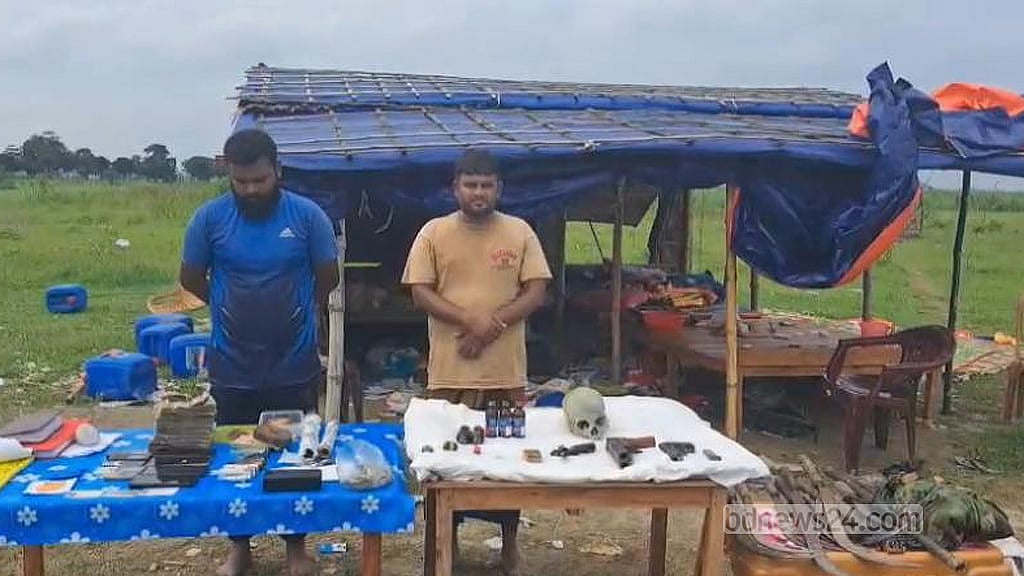
Police raids have been launched but gang control has not stopped. After three more killings, a Nov 9 operation called “First Light” arrested 67 gang members. But locals allege gangs do not work alone and that corrupt police and political patrons protect them.
Some recently arrested men have claimed the same. When asked, SP Amzad said: “We are verifying names coming from within law enforcement, journalists and government offices. Action will follow if guilt is proven.”
FROM ENGINEER TO CRIMELORD
Locals say gang chief Rokunuzzaman Kakon, aged around 50–55, comes from Majdia village in Daulatpur. He graduated in civil engineering in 1994 and people once called him “Engineer Kakon”.
After a murder allegation in 2001, Kakon moved to Ishwardi, worked, then went to Saudi Arabia in 2007. On return, under the patronage of Awami League leaders, he took over sand markets and formed Kakon Bahini, now with over 100 armed men.
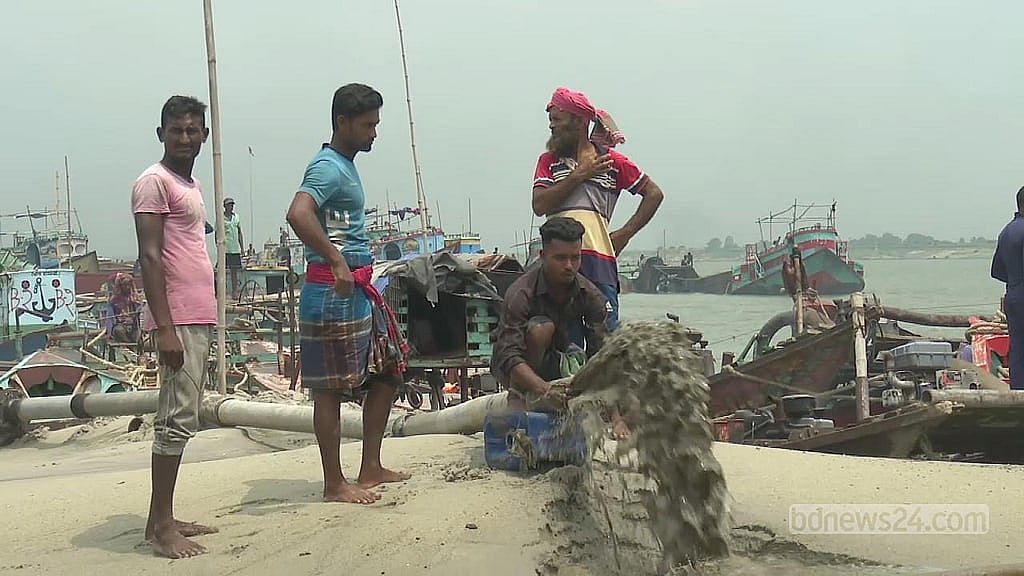
They control sand mining and extort across Daulatpur, Bheramara, Ishwardi and Lalpur.
Police said multiple other gangs such as "Mandal Bahini", "Tuku Bahini", "Saeed Bahini", "Lalchand Bahini", "Rakhi Bahini", "Sharif Kaigi Bahini", "Razzak Bahini", "Challish Bahini", "Bahanna Bahini", "Sukhchand Bahini" and "Naharul Bahini" also unleash terror here.
Another boatman said "Montaz-Rabi Bahini", backed by a BNP leader of Ishwardi, rivals Kakon Bahini.
“They fight for land and sand. Farmers cannot harvest without paying them. Fishermen cannot fish. Cattle cannot graze.”
But no char dweller agrees to speak on camera. Repeated attempts to contact gang leaders failed.
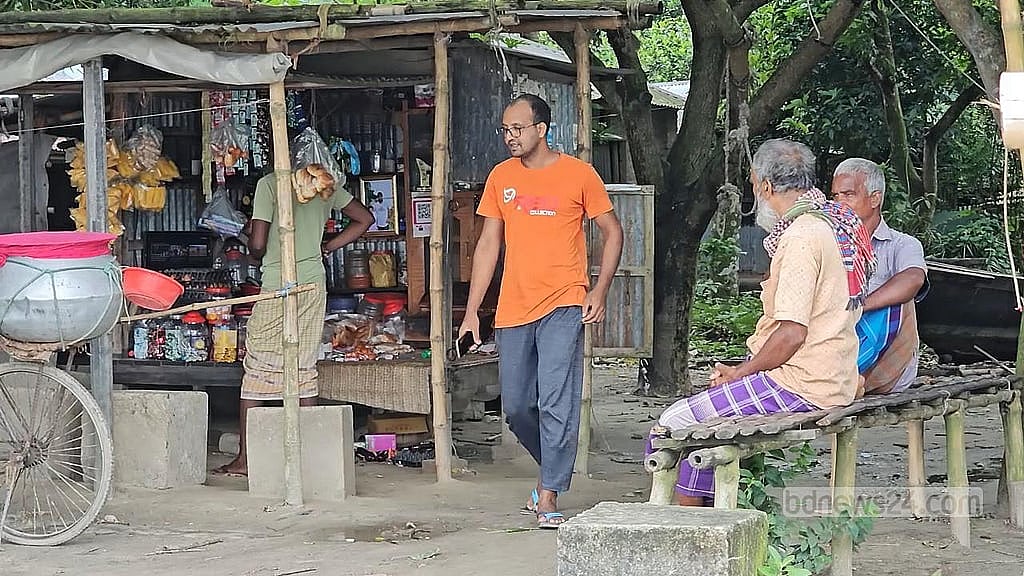
HOMES, LAND ARE DISAPPEARING
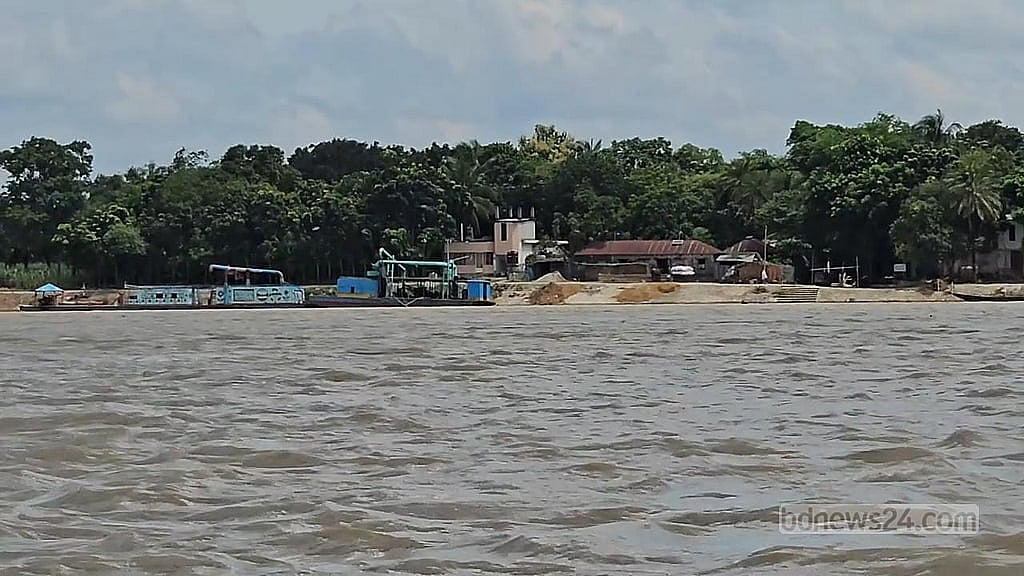
Kakon-loyal Molla Traders holds the sand mining lease at Diyar Bahadurpur. Locals allege they mine beyond designated zones, collapsing riverbanks, washing away farmland and threatening livelihoods.
Farmer Siddik Ali from the Tilakpur area of Lalpur said, “Our land, our homesteads, everything will be destroyed. They’re sucking sand from 60–70 cubits below. In just a few days, about a thousand bighas (roughly 250 hectares) have already collapsed. They’re lifting sand, that’s why the riverbank is breaking.
“We want no sand mining here with backing from Natore. We’re poor people, that’s all we’re asking. If we’re uprooted from here, I don’t have the money to buy even a single katha of land.”
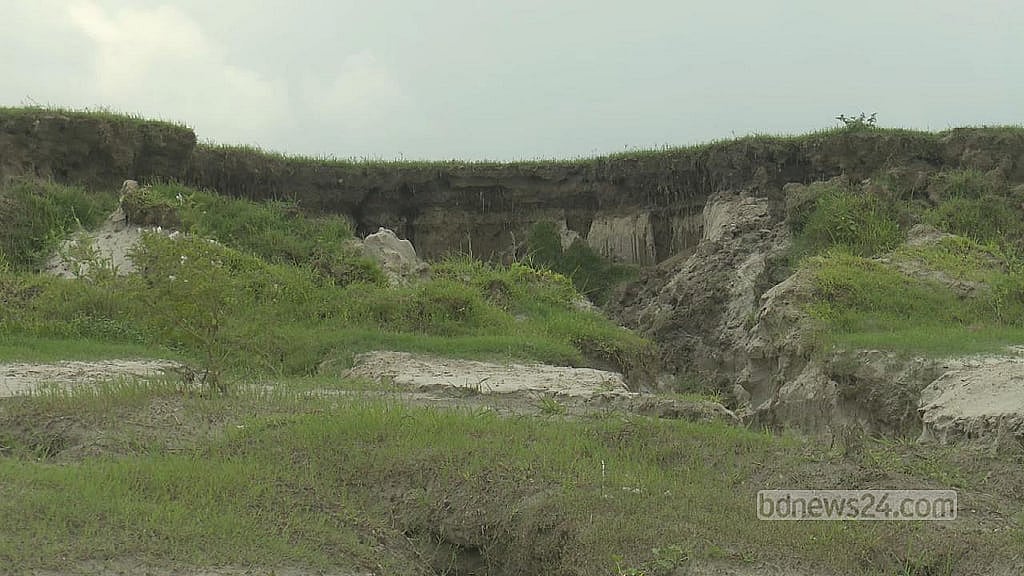
Another Padma riverside resident, identified only as Ashraful, said: “If they cut sand like this, our fields will be gone. We want them to go and dig where it doesn’t damage our farmland. If they keep doing this, slowly all our houses will go under water. If we can’t farm, how are we supposed to eat?”
Uttor Lalpur teacher Matiur Rahman added, “River erosion is destroying crops and homes. We demand a real solution.”
Residents estimate 70 hectares of farmland disappeared in five years. If unchecked, Lalpur town could be next, warned Upazila Agriculture Officer Pritam Kumar Hor.
“Because of unplanned sand extraction," he said, "farmers are having to bear these losses. It is disrupting our production and we are getting lower yields.
"From our side, we are sending reports to the higher authorities. If we are instructed to take any measures, we will do so with the cooperation of the administration.”
NUCLEAR PLANT, HARDINGE BRIDGE AT RISK
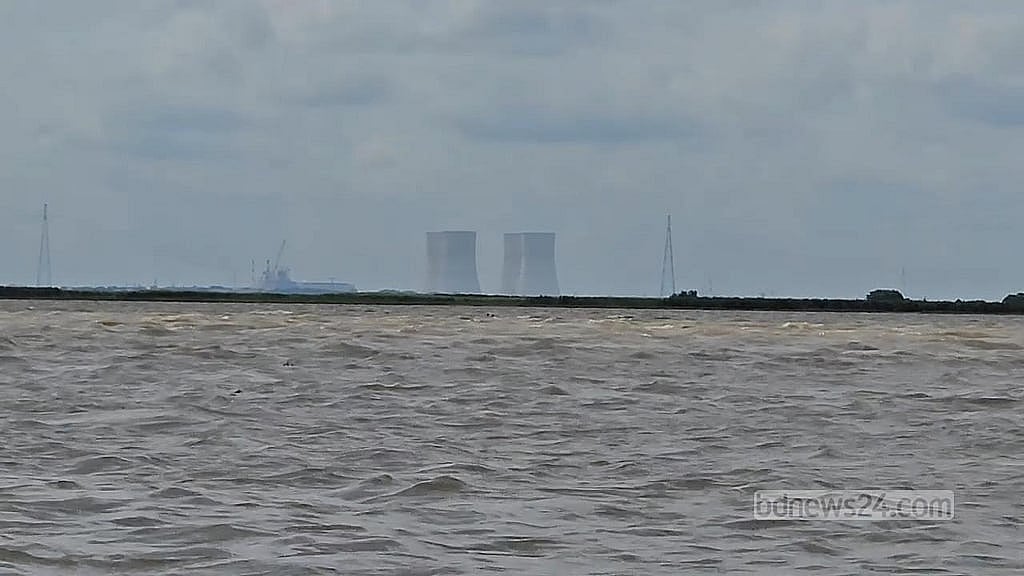
Experts say irresponsible sand mining is changing the river course, threatening the country's’s only nuclear power plant and century-old Hardinge Bridge.
Prof Chowdhury M Sarwar Jahan of the Department of Geology and Mining at Rajshahi University said, “The way sand is being extracted on such a massive scale can only be described as plunder. It has undoubtedly put installations along the Padma River at risk.
"Their stability depends on the river’s course, and when sand is lifted in an unplanned way, those structures remain under threat. This will also become a threat to the nation.”
He added, “Because the Padma works as a shifting channel -- it is always shifting -- we must be careful about whatever activities we undertake there. The government should also be cautious. Any reckless action will pose a threat to the river’s course, the environment and all our state installations. Protecting critical installations is more important than the money flowing into the state coffers.”
WHAT OFFICIALS SAY
Natore district administrator (DC) Asma Shaheen said, “The Army and River Police are going there frequently. Whenever we receive any information, we immediately carry out drives. If anything alarming happens, we will, of course, take action there.”
She continued: “As for the designated sand fields (Balumahal), we are obliged to lease those out under government rules. But if sand is extracted illegally beyond that, the river’s course will inevitably change. That is certainly harmful for nature.
"They are absolutely not allowed to extract sand outside the specified area, it is against the rules. If they go outside and lift sand, we will definitely catch them and bring them under the law.”
Natore Superintendent of Police Md Tarikul Islam said operations to crush terror on the Padma’s chars will continue.
“In Diar Bahadurpur, Char Jajira and Char Lalpur, we are conducting drives with 14 boats divided into 10 teams. Police operations will continue in the char areas of Lalpur and along the Padma channel to maintain law and order.
“We are following a zero-tolerance policy against illegal weapons, drugs, fraud and organised crime rings.”