Published : 06 Jun 2021, 08:11 PM
Updated : 08 Apr 2022, 12:59 PM


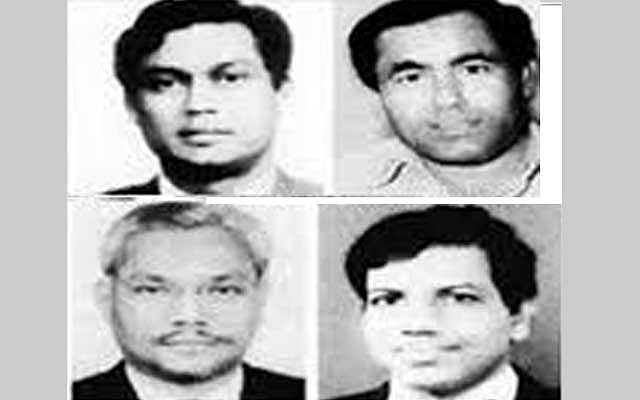
The Ministry of Liberation War Affairs issued a statement announcing the decision to revoke the titles of AM Rashed Chowdhury, Mosleh Uddin Khan Shariful Haque Dalim and SHMB Noor Chowdhury.
Bir Uttom titles were stripped away from Noor Chowdhury and Dalim while Bir Protik ranks were removed from Mosleh Uddin.
Once the awards are stripped, the fugitives and their families will no longer be able to make use of the benefits afforded to freedom fighters.
Last week, Minister of Liberation War Affairs AKM Mozammel Huq announced the decision to revoke their titles had been finalised by the National Freedom Fighters Council.
“Now we will issue it in a gazette,” he said.
On Dec 15 last year, the High Court suspended the awards to the absconding killers. Then, in February, a meeting of the Jatiya Muktijoddha Council or JAMUKA made the decision to revoke the awards and sent it to the Ministry of Liberation War Affairs for final approval.
It was also decided in that meeting that military ruler and wartime sector commander Ziaur Rahman would be stripped of the title Bir Uttom defying the constitution, assisting the self-proclaimed killers of Bangabandhu Sheikh Mujibur Rahman in fleeing the country and posting them on important state position
Mozammel did not speak of any development about what the ministry decided on Zia’s title.
On Aug 15, 1975, four years after Bangladesh’s independence, Bangabandhu and most of his family were killed by a group of military officials. Awami League leaders have long insisted that the assassination was part of a conspiracy involving both foreign and domestic actors.
Prime Minister Sheikh Hasina also claims that Ziaur Rahman, who took power 10 days after Bangabandhu’s death, was ‘totally involved’ in the killing.
Khondaker Mostaq Ahmad, the self-proclaimed president at the time, issued an ordinance protecting Bangabandhu’s killers. Later, when Ziaur Rahman came to power, he revised the constitution to clear a path to protect the killers permanently. The killers were also appointed to several state positions.
In 1996, when the Awami League returned to power under the leadership of Hasina, it cleared the path to bringing the killers to justice. Of the twelve sentenced to death in the trial, five were executed, one died outside custody and five more remain at large.