Home
+
Published : 13 Jul 2025, 02:30 AM
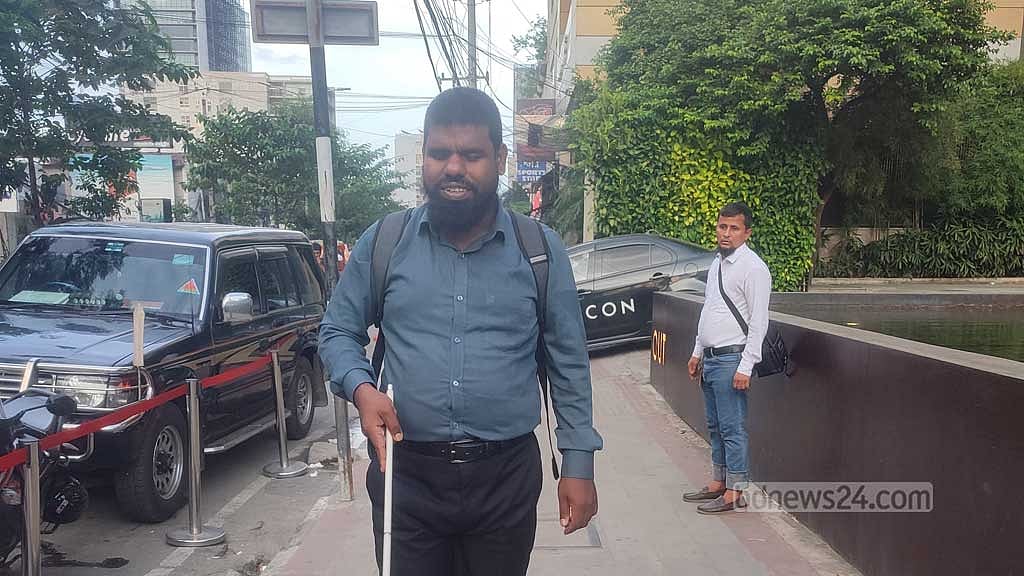
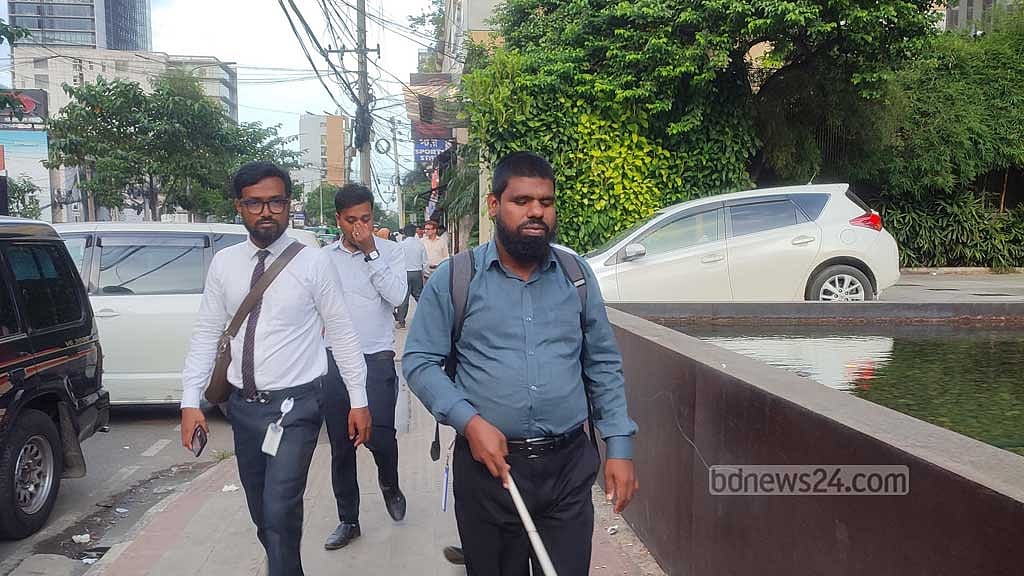
Tasfirullah, a visually impaired student at Dhaka University, was making his way from Nilkhet to his residential hall with the help of his white cane. He relied on the raised tactile tiles embedded into the footpath to guide him through the city’s bustle.
But halfway along, he collided with an iron rod planted squarely in his path. It gashed his hand, drawing blood. The obstacle, he said, was hardly surprising. For him, poorly maintained and interrupted tactile paths are part of daily life.
He said, “When I walk on the road where tactiles strips have been installed, there are stretches where they are no longer there, or where they have been broken. That is when I get into trouble. If the road runs out, where can I go?”
“In many places where you have to walk at different speeds, I use the tactiles. But then someone bumps me from the side and tells me to get out of the way. This is usually because they have no idea why this lane has been made.”
For Tafsir, such indignities are routine — bruises from misplaced tiles, insults from unaware pedestrians, and risks from misaligned or missing infrastructure.
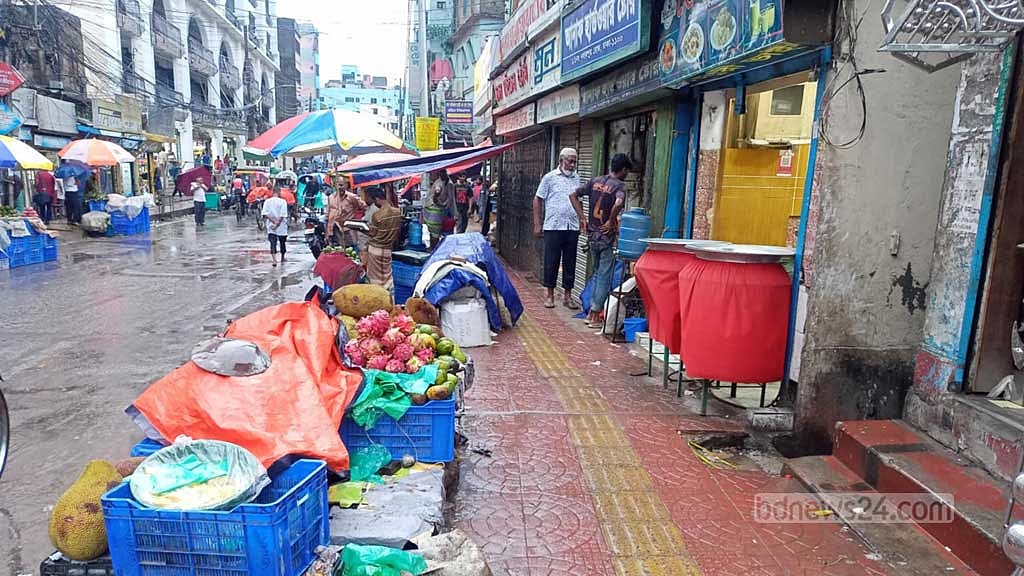
Often, the tiles are obstructed by street vendors who set up stalls directly on top of them, erasing any sense of guidance for those who need it most.
The Department of Social Services estimates that there are currently about 3.63 million people with disabilities in Bangladesh, of whom nearly 500,000 are visually impaired. Yet, urban infrastructure remains grossly out of sync with their needs.
WHAT IS SO SPECIAL ABOUT TACTILES?
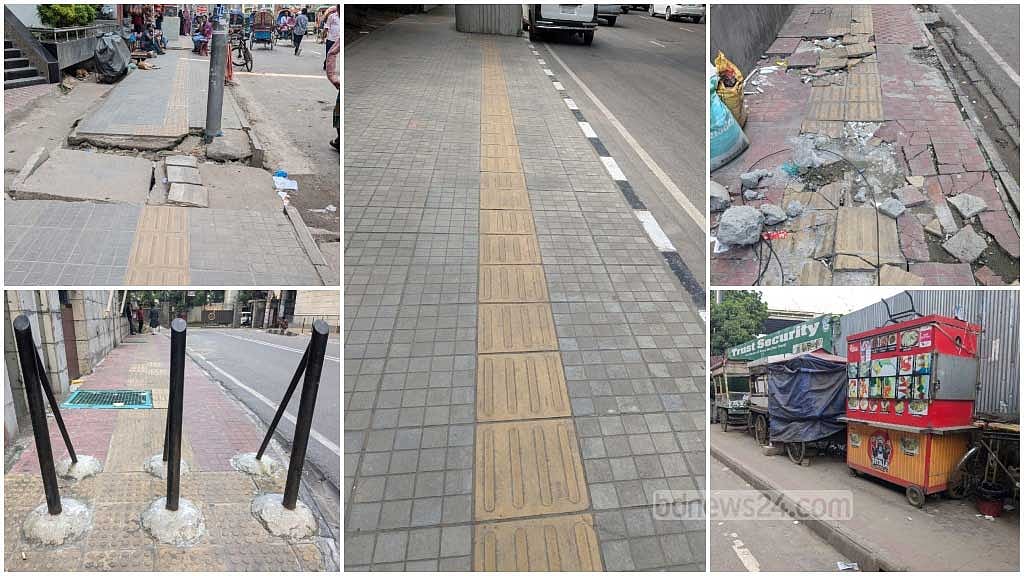
A look at some of the modern footpaths in Dhaka shows yellow tiles placed alongside red tiles. These tiles, which aim to help the visually impaired, include special indicators. The long, slightly raised line design means the way forward. And the presence of a round indicator on those tiles suggests that the user should stop or proceed cautiously.
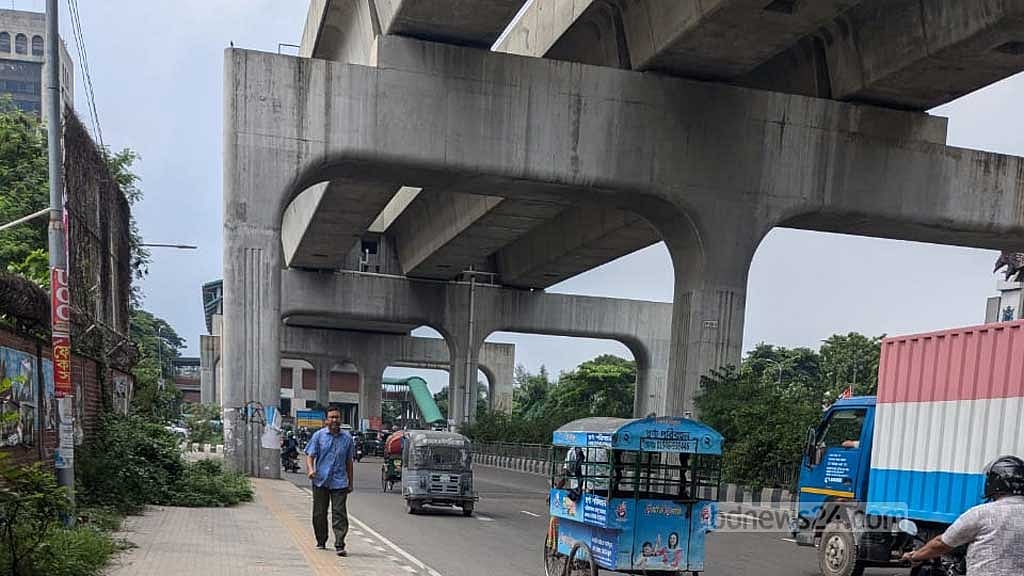
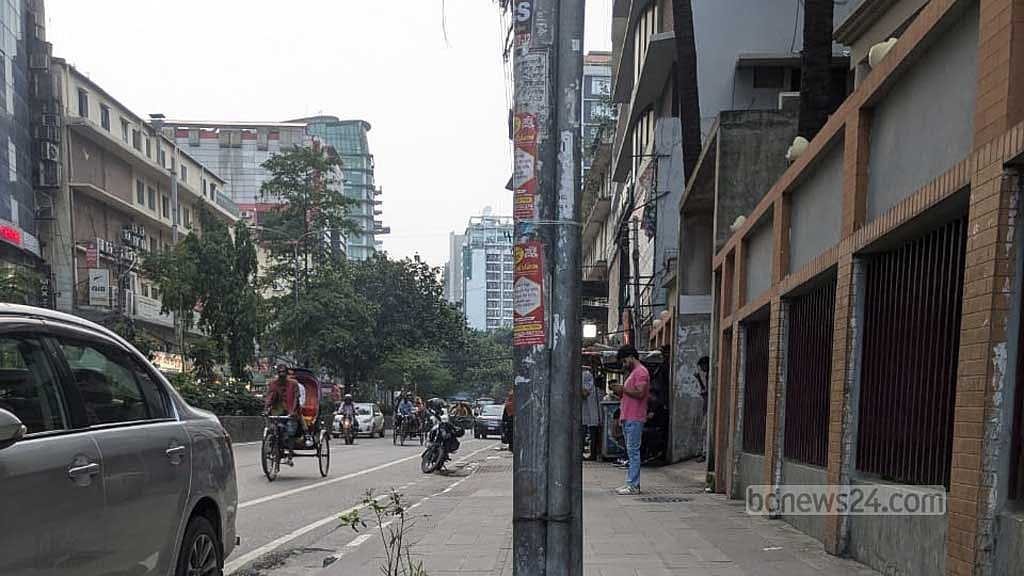
However, due to poor implementation, sometimes electricity poles, telephone boxes, motorcycle barricades, and manhole covers are placed over these specially designed yellow tiles. In some places, there are whole trees or pedestrian overbridges that block them. Not to mention the people who set up shops on those special tiles.
Due to the lack of a substantial awareness campaign, many visually impaired people do not know about these special tiles on the sidewalks.
Most pedestrians have no idea about their use either.
After hearing of Tafsir’s experience, yours truly paid special attention to the yellow tactiles at several places in Dhaka, including Jatrabari, Dholaikhal, Narinda, Shahbagh, Mirpur, Agargaon, and Uttara, speaking to pedestrians, shopkeepers, city corporation authorities, urban planners, the visually impaired and organisations who work on these issues.
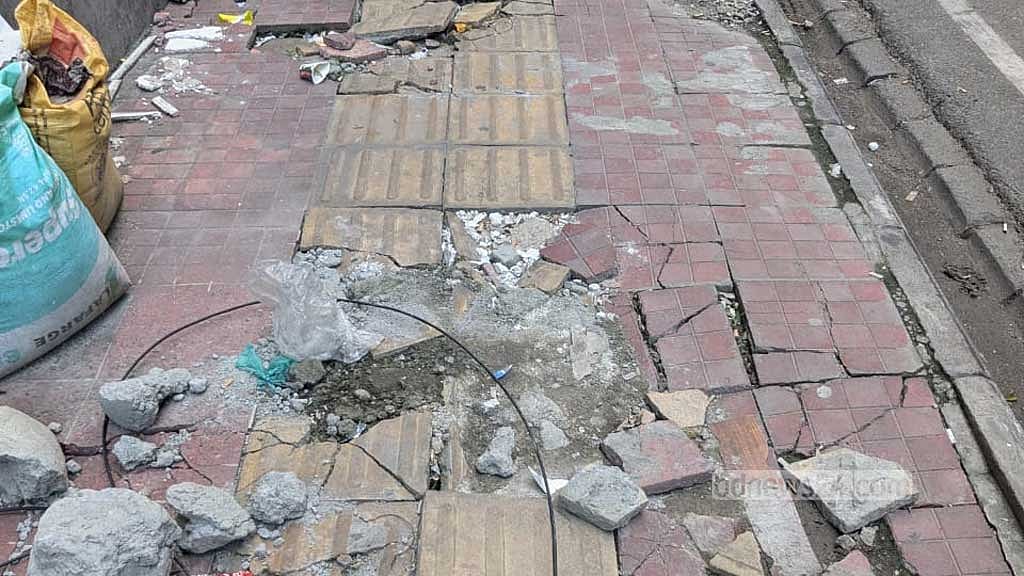
In many places, tactiles surfaces have been placed irresponsibly. They are also poorly maintained and are regularly interrupted by various obstacles, including power poles.
In other places, the tactiles run out halfway along the path. In some areas, the footpath is occupied by various shops and stalls or even parked vehicles.
Speaking to over 100 pedestrians, we found that none had any idea about the special tiles. Most thought they had been installed for visual appeal.
‘WALKING ON TACTILES MAY BE MORE HAZARDOUS’
After all this, do the tactiles actually help? bdnews24.com spoke to several visually impaired people to find an answer.
Recounting his poor experiences, Tafsir, a postgraduate student in the Department of Mass Communication and Journalism, said: “There are stalls in most places, and from what they say and the way they behave, they seem to think the footpath is meant for stalls. It was a mistake to walk there.
“Bars are also put up to block motorcycles, and I stumble over them. Power poles can sometimes be set up right in the middle of the tactiles. So, walking along the tactiles may actually be more hazardous.”
Ujjala Banik lost her eyesight due to smallpox at the age of three and a half. She came to Shahbagh from Uttar Badda for a job, accompanied by a relative. Although she can walk alone on familiar streets, she cannot do so along roads she does not know.
Regretfully, Ujjala says that Dhaka’s environment is such that it is impossible for someone with a visual disability to walk alone.
“Tactiles have been installed, but they do not help us. None of the disability-friendly accessibility that is necessary to walk alone with a white cane is in place. So, I need someone’s assistance to walk on unfamiliar streets.”
Getting slightly heated, Ujjala said: “Those who installed the tactiles did it just for show, without any real experience or training.”
Amjad Hossain, another visually impaired man, recounted a horrific experience while walking on the treads.
A banker by trade, Amjad said: “I went out in 2021 to give an interview. I got off the rented motorcycle and walked along the tactile tiles on the sidewalk, looking for the address. But along the path, there was a section that was completely broken, with no slab on it.
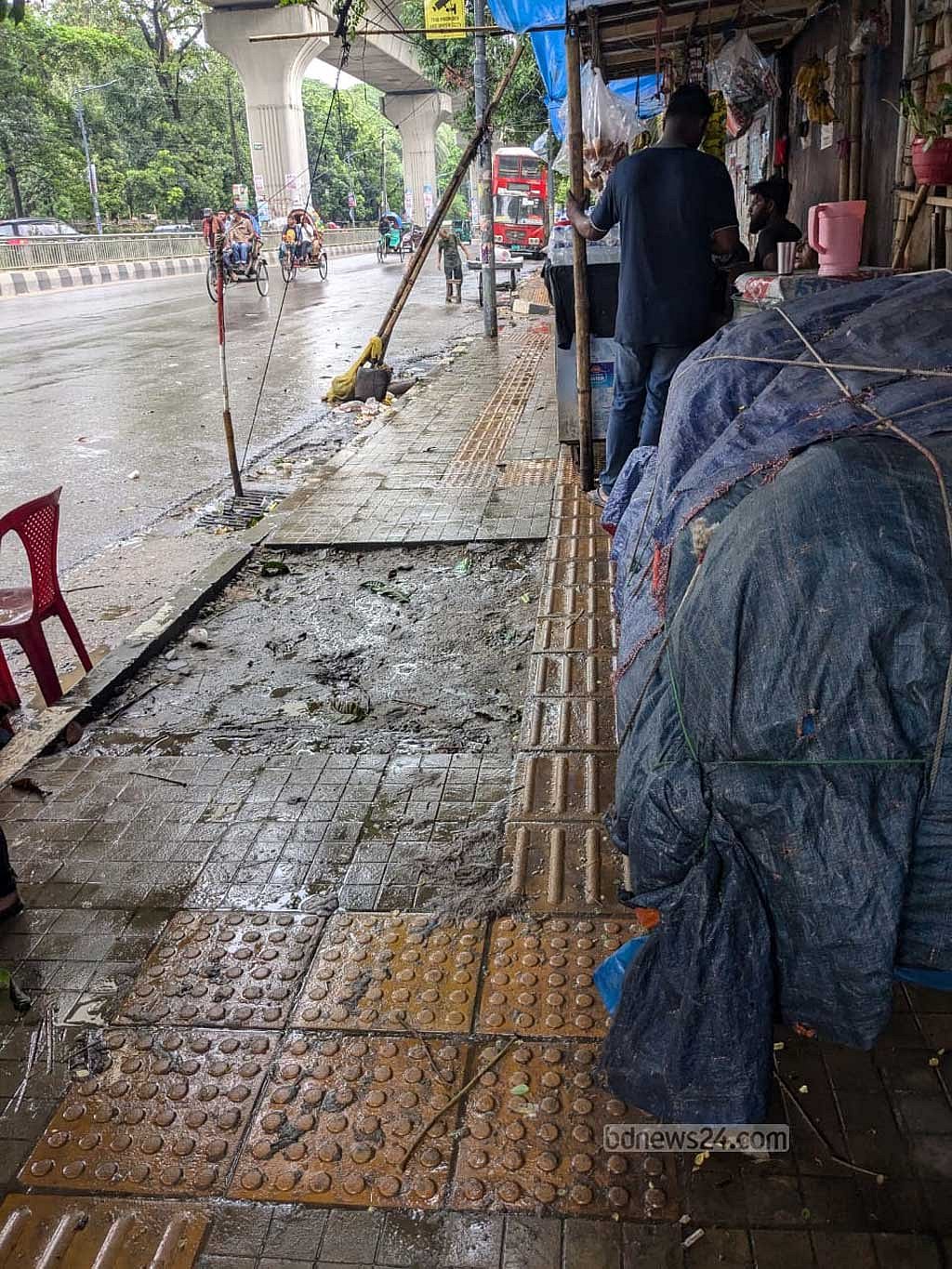
“My stick didn’t find it, my foot slipped, and I fell into a manhole. My pants and shirt were ruined, and I suffered a blow to my hand. Any chance of getting that job had disappeared.
“Another time, I hit a lamppost in the middle of the sidewalk and fell, suffering quite a large cut above my eye.”
According to Amjad, tactiles strips were installed on the footpaths of Dhaka as part of a foreign-funded project, but the reality of their usefulness to those with disabilities was not properly considered.
The safety issue with the tactiles is a joke, he said.
He said, “In our country, roads were not built with consideration for the movement needs of everyone. Some foreign organisation or project invested their money and those in power implemented it.
“This is because foreign organisations want Bangladesh to be inclusive. So, what should we do to make it inclusive? Will it suddenly become inclusive if we install tactiles? They understood the need but not the work.”
Speaking of the lack of planning, Amjad said: “Those who installed tactiles strips are also installing electric poles or lampposts on these same tactile lanes. They set up pillars in a zigzagging manner.
“They are not thinking about how the visually impaired and wheelchair users will move through that space. This means there was no plan in place. Those who built the paths are the same ones who set up the obstacles to it.”
Amjad believes that the root of this issue lies not only in infrastructure but also in the limitations of education and narrow perspectives on society.
“People do not know what tactiles are for because thinking is not practised in schools and colleges. There is no discussion about the inclusivity of those with disabilities anywhere. No one even thinks of them.”
Asked what should be done to create a disability-friendly city, Amjad said: “The police, city corporation, and public representatives should all be involved, and awareness should be created. It is not enough to just hold a rally on White Cane Day (a date celebrating the achievements of people who are blind or visually impaired) on the 15th of October.”
“We need to bring a sense of responsibility into our policies. We need to create a community with people from all walks of life. Everyone needs to come forward through a united effort.”
Bibi Kulsum Lipi, who works at the Bangladesh Association of Software and Information Services (BASIS), shares a similar view. She also sees a lack of planning in the installation of tactiles strips on footpaths.
She says, “The installation of electric poles, lampposts, and manholes on tactile tiles was also done by the government. Many organisations and NGOs work with us. Where were they then? Why didn’t they stop it? Why didn’t they give the government a plan that would make it accessible to the disabled?”
TACTILE TILES MISSING OR FAULTY
Across Dhaka, tactile paving has been installed on footpaths, but in many places, it remains incomplete, misaligned, or entirely absent.
On Shahid Faruk Road in Jatrabari, for example, no tactiles surfaces exist despite the presence of footpaths.
In West Jatrabari, only short stretches are fitted with tactiles, leaving most of the footpaths uncovered.
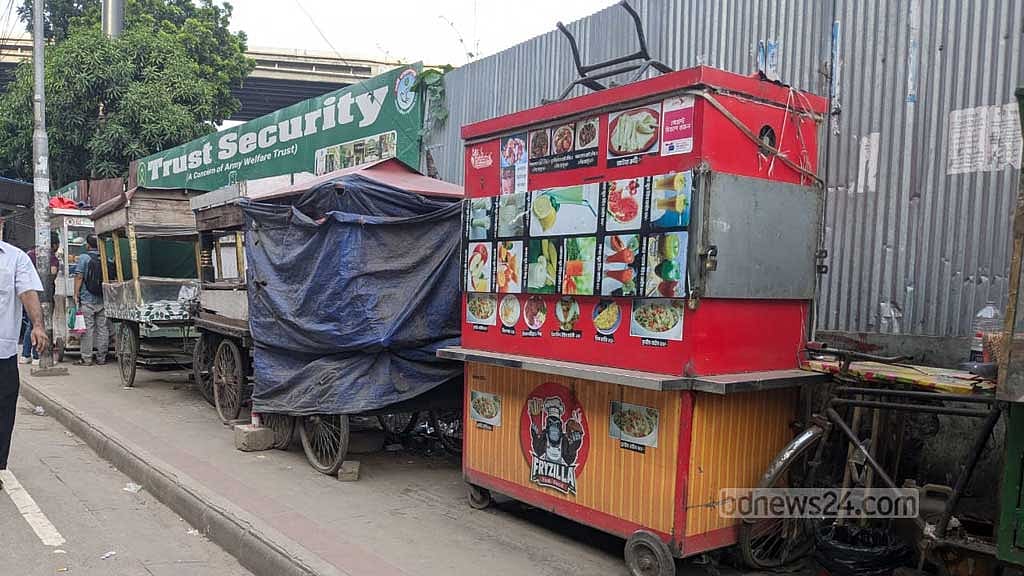
In Old Dhaka’s Lakshmi Bazar, tactiles are virtually non-existent, and the footpaths are heavily encroached upon by furniture stores, food vendors, and evening pop-up markets.
On the road in front of Jagannath University, tactiles cover only half the footpath, while the Judge Court intersection offers some continuity.
Stretches from Narinda intersection to Loharpul, Murgitola to Doyaganj, and from Ray Shaheb Bazar through Nawabpur and Tantibazar to Gulistan do have tactile tiles, but many are either broken or missing.
Shahbagh, Dhaka University, and Nilkhet areas have tactile tiles, but the main road from Shahbagh to Katabon and Science Lab lacks them, and footpaths here are frequently occupied by tea stalls and temporary shops.
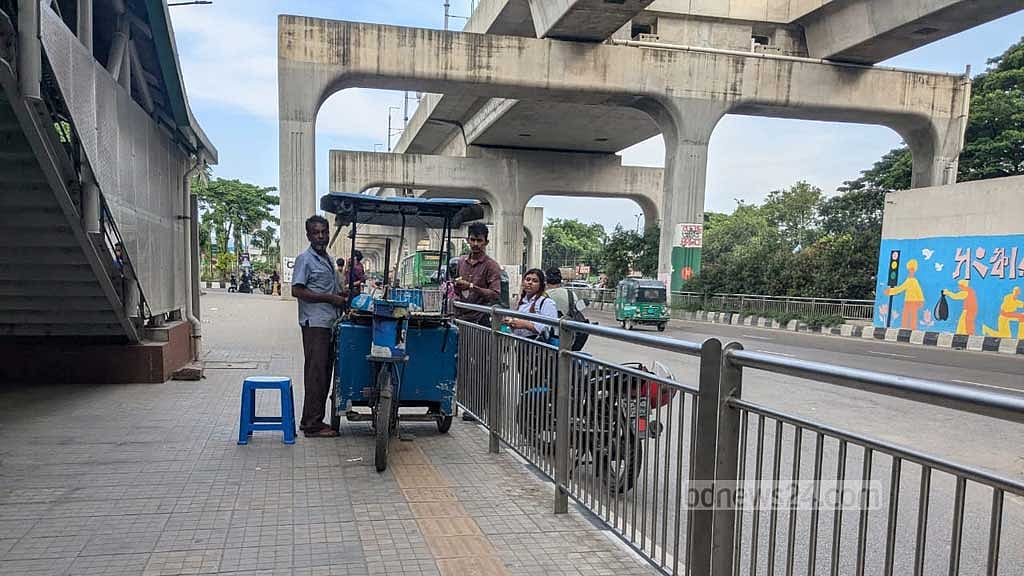
Some new tactile tiles have been installed around metro rail stations from Farmgate to Mirpur-10, but such installations are not seen along older roads.
In Farmgate, some pillars are placed directly on tactile tiles to prevent motorbikes, negating the tiles’ utility.
From Mohakhali Railgate towards Bijoy Sarani, footpaths are crowded with several shops.
In Mohakhali, Banani, and Gulshan areas, tactile tiles exist but are often broken, displaced, or uneven due to installations like electric poles, lamp posts, and manholes.
LACK OF PUBLIC AWARENESS
Despite installation in recent years, most city dwellers remain unaware of what tactile surfaces are for.
One pedestrian walking from Nilkhet to TSC admitted he never realised the purpose of the tiles.
“I just found out they’re for the visually impaired. But if stalls are set up along the way, how will they walk? Everyone should think about this.”
Abdullah Al Mamun, a jobholder walking from Agargaon to Farmgate, said he was aware of tactiles but rarely walked along them.
“Sometimes they end abruptly, or the pavement has no proper descent.”
“This country is strange. There are all sorts of obstacles on our walking paths, plus bad smells. If development is taking place, let it be inclusive for all,” he added.
Six female students from Dhaka Mohila Polytechnic Institute were walking in Shewrapara along tactiles but admitted they had no idea what the tiles were for.
Md Sarwar, selling ice cream near the Bangladesh Air Force Museum metro station, thought the yellow tiles were “just decorative elements of the new road”.
Two nearby buyers also confessed ignorance.
Nasir Uddin, a security guard in charge of a booth at Mirpur-10, said: “This is just a design. They put in whatever style they want. It’s up to those who built the road.”
Shamim Hossain, who sells headphones and lights at Mohakhali Railgate, said: “We’ve had shops here for ages, even on the yellow-red tiles. No one tells us to move.”
Aditi Roy, a Titumir College student, said she had noticed the tactile line but never thought of its purpose.
“We don’t want visually impaired people to face obstacles. From now on, I’ll avoid stepping on the line while walking. There should be awareness on social media or other platforms.”
Rickshaw-puller Anwar Hossain, found parked atop tactiles at Gulshan-1, said: “I never thought about it. I’ve seen these patterned bricks but didn’t know they had a purpose.
“Now I understand they help someone find their way.”
Conversations with city dwellers reveal widespread ignorance about tactiles and a lack of public awareness initiatives.
Following the 2013 passage of the Rights and Protection of Persons with Disabilities Act, ensuring “easy accessibility” became a legal goal.
Tactile tiles were introduced during road construction to meet this aim.
Poor design adherence, lack of maintenance, and illegal occupation have reduced the tiles to “mere symbols” in many places.
Since 2009, Bangladesh Society for the Change and Advocacy Nexus (B-SCAN) has worked to improve accessibility for disabled persons.
Its Secretary General Salma Mahbub said: “Before 2013, these tiles were not made in Bangladesh; demand led to local production. When installing, they invited us to participate.
“The tiles have two patterns: dots indicate stopping points, and lines guide movement.”
Salma criticised the lack of coordination, saying: “We provided specific dimensions, but these were not followed. Authorities did not collaborate with us, so the tiles are ineffective for the visually impaired.
“They were also meant as a learning tool for the general public, which was ignored.”
When asked about Dhaka’s progress toward becoming an inclusive city, she said: “We are very far behind. Disabled persons are not prioritised.
“Authorities should appoint a focal person dedicated solely to accessibility.”
Visually Impaired People’s Society (VIPS) Secretary General Ashiqur Rahman Amit echoed concerns.
“There is a significant planning gap. Disabled groups are excluded from consultations. We conducted individual audits on the tiles, but they became ineffective after installation.
“Still, we are keen to work on tactile improvements.”
‘MOSTLY FOR SHOW’
Responsibility for Dhaka’s footpaths lies with the city corporations.
Sanjida Haque, an urban planner with Dhaka North City Corporation, said footpaths are regularly reoccupied even after eviction drives.
Despite this, she said: “We want footpaths to remain free of any barriers for pedestrians.”
In many cases, pillars to block electricity poles, lamp posts, and motorcycles have been placed directly on tactile tiles, rendering them useless for visually impaired people.
Commenting on the effectiveness of the installation, Sanjida said: “Fixing one issue has created another. Public awareness is urgently needed.
“Unless bikes stop using the paths, proper poles won’t work, and visually impaired people can’t walk freely.”
Dhaka South City’s Chief Engineer Aminul Islam said, “If the project was truly effective, these problems wouldn’t exist.”
He said the tiles are often installed to meet international donor requirements, but enforcing accessibility lies with other government bodies.
Adil Muhammad Khan, president of the Bangladesh Institute of Planners, called the initiative “unplanned and superficial.”
Many paths are broken, blocked, or end abruptly. “Even able-bodied people struggle to walk here.
He described the installations as “showy” exercises that consume money without delivering practical benefits.
“If we want real inclusivity, we need long-term planning and shared accountability,” Adil said.
[Writing in English by Shoumik Hassin and Sheikh Fariha Bristy]