Published : 09 Jul 2026, 07:34 AM
Updated : 08 Sep 2026, 09:23 AM


Following the lonely death of an elderly mother in a littered Mirpur flat, intense public scrutiny has focused on her established children for alleged neglect.
However, the case remains recorded only as an unnatural death, with police awaiting the postmortem report before deciding on further legal actions.
Police recovered the body of Nurjahan Begum from a flat in Mirpur's Pallabi on May 31 after responding to a 999 emergency call.
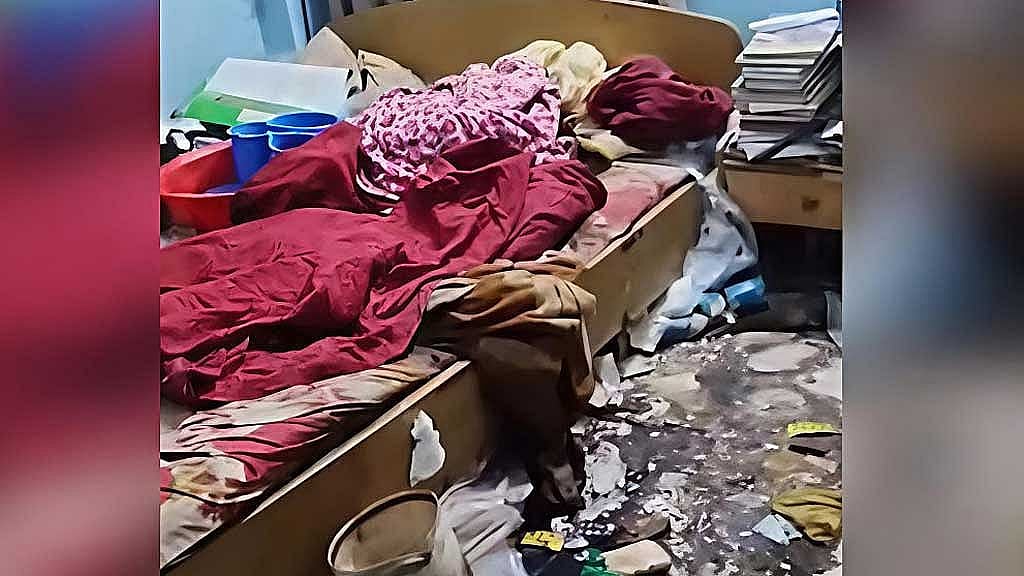
Her body was found on a small cot surrounded by heaps of garbage.
The law-enforcing agency noted that the body showed signs of decomposition and insect infestation, suggesting she had passed away days prior without her children's knowledge.
Nurjahan’s children hold prominent positions: her eldest son, AKM Anisur Rahman, is a joint secretary; her younger son, AKM Ashikur Rahman, is a Computer Science and Engineering professor at BUET; and her daughter, Fatima Nasrin Sultana, is a local schoolteacher.
Following public outrage, the government withdrew Anisur from his post as a member of the Mongla Port Authority and attached him to the Ministry of Public Administration.
Despite initial police observations pointing to "clear neglect", the children have remained tight-lipped and have reportedly not been fully cooperative with the investigators.
The unnatural death case was filed by the daughter Fatima, who said in the police report that her over 70-year-old mother died of "old age complications in seclusion" and expressed no suspicion against anyone.
Pallabi Police Inspector Emdadul Haque told bdnews24.com, "An unnatural death case has been filed, and we are awaiting the post-mortem report. Once received, we will consult seniors to decide if a regular case will be registered. High levels of the government are aware of the matter, and subsequent steps depend on government decisions."
The flat belonged to Fatima, who lived there with her mother in increasingly isolated and unhygienic conditions since her husband, a Dhaka University teacher, passed away in 2017.
Neighbours reported that the family lived completely detached lives, and the flat's interior smelled so vile that it was uninhabitable for a healthy person.
A tenant in the building noted that despite the high profiles of the sons, the mother lived in deplorable squalor, adding, "They acquired education but failed to become human beings."
When contacted, the younger son Ashikur Rahman requested more time, saying they were trying to recover from the situation and gather themselves.

"There is no question of neglecting our own mother. It was just a bit dirty, and things got blown out. We will discuss everything in detail later," he said.
He also noted he is seeking medical advice regarding his sister's mental well-being.
The incident sparked legal actions as well.
On Jun 3, Supreme Court lawyer Farjana Yasmin Rakhi sent a legal notice to the children demanding an explanation.
The children’s legal counsel responded by evading the direct queries, noting that a writ petition on the same issue was already active in the High Court.
The public interest litigation was filed by lawyer HM Sanjid Siddiqui on behalf of Sharif Sarkar.
Following a hearing on Jun 9, the High Court issued a rule asking why the Ministry of Social Welfare's inaction to appoint caregivers for elderly citizens over 65 should not be declared illegal.
The court also questioned why a three-member judicial committee should not investigate Nurjahan's death and asked the National Human Rights Commission why it failed to probe the human rights violation.
Sanjid said, "If the police investigation uncovers neglect during the unnatural death probe, the case will automatically convert into a regular criminal case."
Bangladesh enacted the Parents' Maintenance Act in 2013, with rules framed in 2023, making it a legal obligation for children to provide food, clothing, shelter, medical care, and companionship to their parents.
Violations carry a fine of up to Tk 100,000 or a three-month prison sentence.
Lawyer Farjana said while the law exists to compel children to perform their duties, most cases are legally settled through mutual compromise due to family dynamics.