Published : 23 Feb 2026, 08:11 AM
Updated : 21 Aug 2026, 03:23 PM


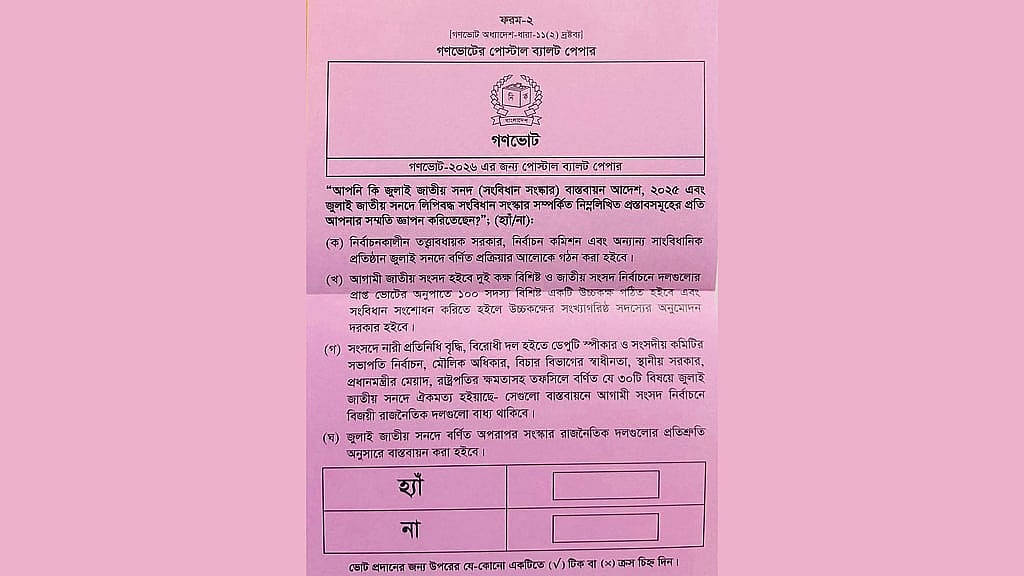
A political and constitutional dilemma is unfolding just days after Bangladesh’s new parliament took office, and it centres on the very reforms voters endorsed in the July National Charter referendum.
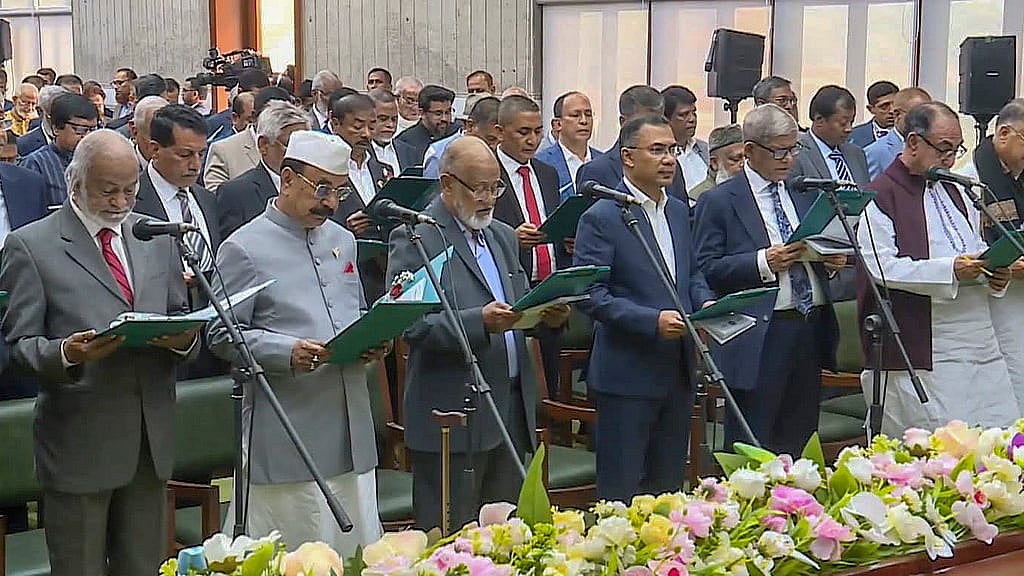
The BNP-led government, commanding a decisive two-thirds majority, has sworn its lawmakers into parliament but refused to take a second oath required to sit on the Constitution Reform Council, the body tasked with rewriting key parts of the Charter.
The move has thrown the entire reform architecture into uncertainty, raising questions about whether the ambitious reform roadmap approved by voters can be implemented under its current framework.
At the centre of the impasse lies a procedural requirement under the July National Charter (Constitutional Reform) Implementation Order, 2025, which stipulates that members of parliament must also take a second oath to serve on a special council responsible for drafting constitutional amendments.
While the Jamaat-e-Islami and its allies eventually complied with the dual-oath requirement after initial hesitation, the BNP’s refusal has left the council incomplete -- and the reform process effectively stalled before it even begins.
Legal experts say the situation has created a constitutional grey zone, with some warning that the legal window for reform may be narrowing.
Constitutional expert Shahdeen Malik warned that the order establishing the council may legally expire within 30 days of the formation of the new parliament.
Some jurists warn that the opportunity to complete constitutional reform may already be slipping away, while others insist the referendum’s mandate cannot collapse simply because of a procedural omission.
Despite declining the council oath, BNP leaders insist they remain committed to the reform agenda.
Mirza Fakhrul Islam Alamgir, the local government minister and BNP secretary general, told bdnews24.com on Friday the party expects the matter to be resolved once parliament convenes, scheduled to begin on Mar 12.
"We need to work on the procedural aspects of the July Charter's implementation," Fakhrul said. "The BNP remains sincere about the Charter, and we will hold discussions once parliament begins."
Under the Charter’s framework, the Constitution Reform Council is required to complete its work within 180 working days of its first session.
But with the BNP absent from the council despite its parliamentary dominance, the mechanism designed to produce constitutional amendments remains paralysed.
A senior BNP leader suggested the government could establish a dedicated cell at the Prime Minister’s Office (PMO) to coordinate work on the Charter and bridge the gap between the executive and the legislature.
The national election and the referendum approving the Charter were both held on Feb 12, with newly elected MPs sworn in on Tuesday.
On the same day, however, a High Court petition challenged the legality of the referendum and sought suspension of its results -- adding another layer of uncertainty to the reform process.
‘Like Climbing to the Moon’
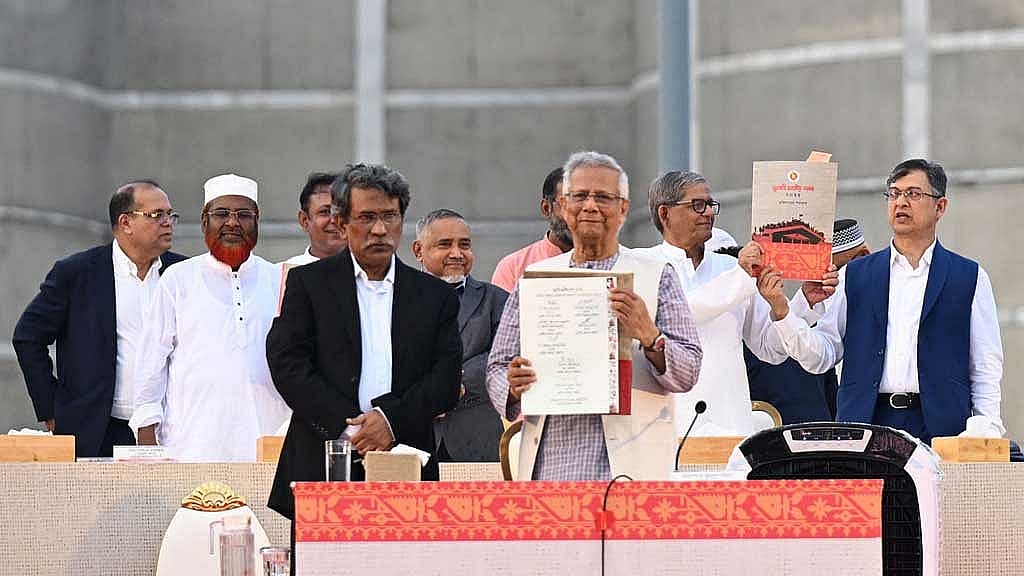
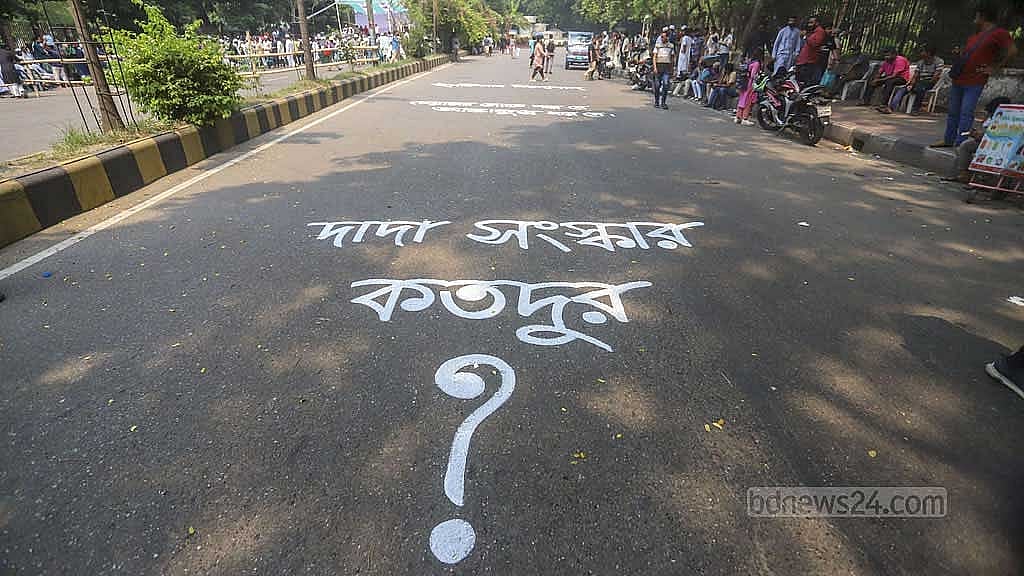
Senior lawyer Malik has sharply criticised the idea of establishing a Constitution Reform Council through executive orders, comparing the effort to “climbing to the moon by ladder”.
Speaking about the legal deadlock created by the BNP’s refusal to take the second oath, Malik argued that the framework lacks constitutional grounding.
“Has this ever happened in any country? There is nothing written in our laws or the Constitution that allows for such an order,” Malik said.
“Asking about the council is like asking if one can leap to the moon. Experts might tell you that if you practice jumping long enough, you’ll get there -- but it’s a fantasy.”
Malik attributed the confusion partly to the absence of legal professionals during the early stages of the reform process.
“Was there a single lawyer on the reform commission? Among the 30 parties that held discussions, I didn't see any legal experts. Now, we are just arguing over whether we should use a bamboo ladder or a steel ladder to reach the moon,” he said.
Supreme Court lawyer Jyotirmoy Barua echoed those concerns, arguing that while the referendum suggests a popular mandate for reform, the legal mechanism used to create the council is questionable.
“A second oath has been introduced quite illegally, without any jurisdiction,” Barua said during a television discussion. “This is not something that should be accepted without rigorous legal scrutiny.”
The BNP, which secured a sweeping victory in the Feb 12 election, has defended its refusal to take the council oath.
Standing Committee member Salahuddin Ahmed, who led the party’s delegation to the Consensus Commission, said the council does not yet exist within the current constitutional framework.
“We were not elected as members of a reform council; we were elected as MPs,” Salahuddin said.
“If the council is to be formed based on the referendum result, it must first be incorporated into the Constitution. Moreover, there is no legal provision stating who would even administer such an oath.”
Supreme Court lawyer Arif Khan said the BNP’s position does not necessarily amount to rejecting reform, noting that the interim legal instruments underpinning the Charter still need parliamentary approval.
“Until these orders are passed by the elected parliament, they do not hold the status of permanent law,” he said.
Others strongly disagree.
Shishir Manir, a Supreme Court lawyer and Jamaat candidate, argued that the BNP is already violating the July Charter Implementation Order by refusing the oath.
Constitutional Reform Now in BNP’s Court
With 209 seats in parliament, the BNP under Prime Minister Tarique Rahman holds a commanding two-thirds majority, giving it the legislative authority to pass constitutional amendments without opposition support.
By contrast, the 77-member Jamaat-led opposition alliance -- despite taking the Reform Council oath -- lacks the numbers to enact any changes independently.
The result is a political stalemate.
Although opposition parties have endorsed the dual-oath mechanism, the ruling party’s refusal to participate in the council has effectively halted its formation.
Malik warned the government may also be racing against a constitutional deadline.
Under Article 93 of the Constitution, any ordinance issued during the interim period must be placed before parliament and will “die a legal death” if not converted into law within 30 days of the first parliamentary session.
"Parliament does not have the power to simply let an ordinance continue as a law," Malik said.
"According to the Constitution, these ordinances will lose all effectiveness after 30 days unless formally enacted. Parliament cannot simply grant them 'validity' without a vote."
For members of the reform commissions established during the interim period, however, procedural debates may ultimately prove secondary to political reality.
Iftekharuzzaman, head of the Anti-Corruption Reform Commission, said Article 142 of the Constitution allows parliament to amend any provision with a two-thirds majority.
“Everything now depends on the goodwill of the ruling party. With over two-thirds of the seats, the BNP can amend any article or even the core principles of the Constitution, as has happened during the 5th (1979), 8th (1988), and 15th (2011) amendments,” he said.
Another member of the Consensus Commission told bdnews24.com that the “ball is now in the court of the political leaders”.
Jamaat, NCP Criticise BNP
The July Charter was finalised in October following months of negotiations under the Consensus Commission, although the National Citizen Party (NCP) initially declined to sign the agreement.
Disputes over how the reforms should be implemented -- and whether they should be endorsed through a referendum -- later deepened divisions between the BNP, Jamaat and NCP.
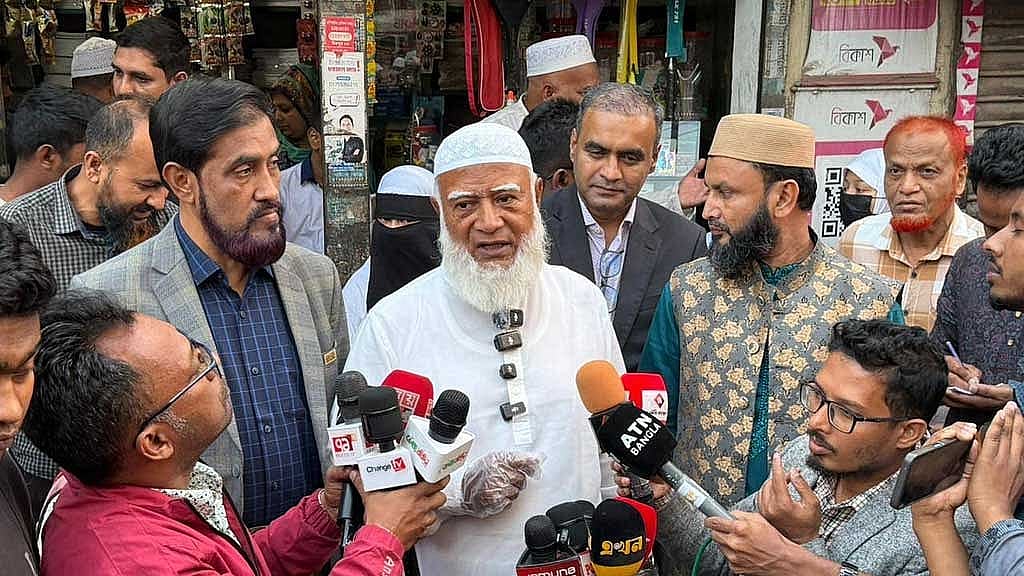
On Wednesday, Jamaat chief Shafiqur Rahman accused the BNP of undermining the spirit of the movement that led to the Charter.
Speaking to reporters in Dhaka, he said the party’s refusal to take the council oath amounted to “insulting the July Uprising”.
The NCP -- a party that emerged from the leadership of the 2024 student-led movement -- issued an even sharper rebuke.
NCP Convenor Nahid Islam accused the BNP of using legal technicalities to avoid reform.
He said on Thursday, “By misinterpreting the Constitution, BNP MPs avoided the oath. This is deception against reform and defiance of the referendum verdict. Those who voted ‘Yes’ in the referendum have been betrayed.”
BNP’s Explanation
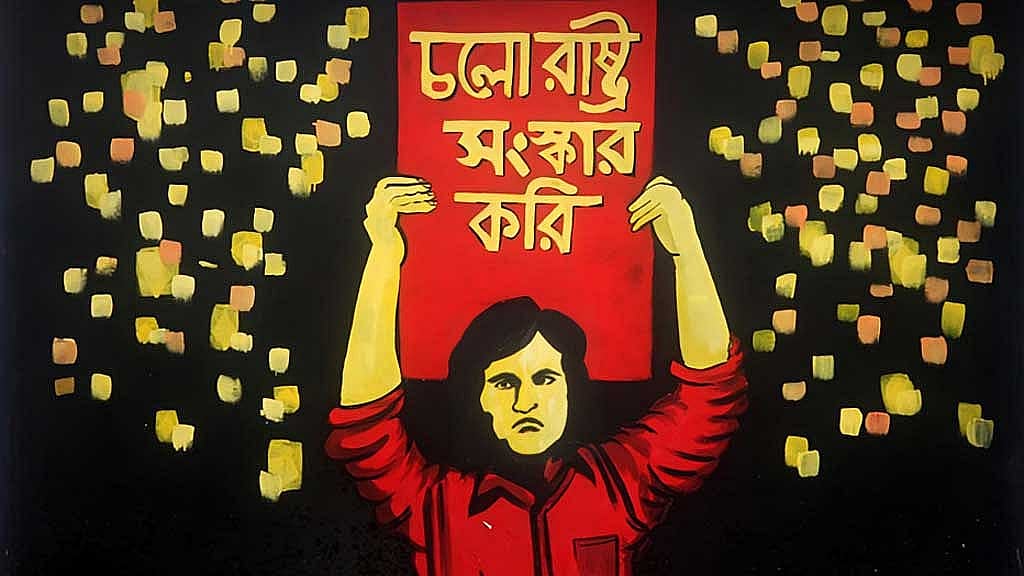
BNP leaders insist their refusal to take the Reform Council oath stems not from opposition to reform but from legal concerns over how the oath was administered.
Salahuddin Ahmed, the home minister, argued that the chief election commissioner (CEC) had no authority to administer the oath.
“The provision under which the CEC administered MPs’ oath does not include the council. He had no authority to approach us for that oath, and we did not take it,” he said.
Even so, Salahuddin reiterated the party’s commitment to implementing the July Charter.
“Every clause of the Charter, signed as a historic political compromise, will be implemented to the letter.”
Party leaders told bdnews24.com that the BNP still intends to pursue the reforms outlined in the Charter and expects the issue to be addressed within the first 180 days of parliament’s session.
The party’s election manifesto promises institutional reforms aimed at rebalancing the relationship between the executive, legislature and government, including the creation of a bicameral parliament with an Upper House whose seats would be allocated according to parliamentary strength.
The dispute now places the future of the July Charter squarely in the hands of the BNP leadership.
One senior BNP leader suggested the deadlock could still be resolved once parliament begins its work.
“Once parliament begins, the BNP will start discussions. The legislature and the council will run simultaneously, and MPs may take the council oath during the session.”
An official at the BNP chairperson’s office said the final approach would likely emerge through parliamentary debate and could involve consultation with civil society.
[Writing in English by Arshi Fatiha Quazi; Editing by Syed Mahmud Onindo]