Published : 24 Nov 2025, 08:23 AM
Updated : 21 Aug 2026, 02:47 PM


A major earthquake striking Bangladesh is not a matter of “if” but “when”, warns the country's leading geoscientist Prof Syed Humayun Akhter.
He identifies three critical failures -- widespread public ignorance, government inaction, and a chronic lack of preparedness -- that have left Dhaka and other cities dangerously exposed.
“The energy stored beneath Bangladesh will be released eventually,” he said. “We cannot prevent earthquakes, but we can minimise casualties if we act wisely now.”
Following four tremors over Friday and Saturday that stirred widespread public fear, Prof Akhter, former vice-chancellor of Bangladesh Open University, joined bdnews24.com’s flagship discussion programme "Inside Out" on Sunday to share his thoughts with the public.
He argues that without urgent public awareness campaigns, stronger building enforcement, and serious contingency planning, the country remains on a collision course with a disaster of its own making.
The former chairman of Dhaka University’s geology department said mitigation is possible, but only through coordinated expert guidance and decisive policy measures.
“The bottom line is that we must build capacity and devise short-term, medium-term, and long-term plans for earthquake preparedness and disaster management,” he says.
As an immediate measure, he emphasises raising public awareness:
“We need a social movement. Regular earthquake drills must be conducted. Everyone has a role: ordinary citizens, the government, political parties, and professionals.
“If we can create a social movement and inform the public, then when an earthquake strikes, loss of life and property can be minimised.”
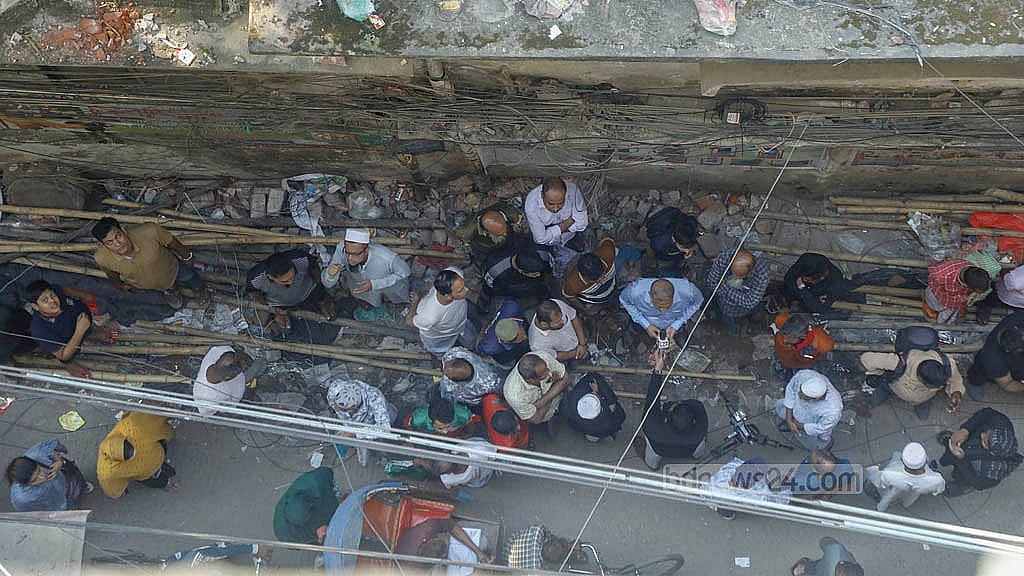
He spoke about recurring earthquakes in Narsingdi, gaps in post-quake response, government reluctance, buildings constructed without following codes, and unplanned urbanisation.
The programme was broadcast on bdnews24.com’s Facebook and YouTube channels on Sunday.
He also cautioned that misinformation and misinterpretation circulating on social media were amplifying public anxiety and confusion.
“Nowadays, everyone claims to be an earthquake expert. As a result, conflicting messages reach the public and policymakers, leaving them confused and misguided.”
TWO SOURCES
Prof Akhter has spent over two decades researching earthquakes in collaboration with Columbia University. Their 12-year data analysis was published in Nature Geoscience.
“We showed precisely that Bangladesh has two earthquake sources. One is the Dauki Fault in the north, hidden beneath soil, stretching from the Jamuna River through Mymensingh, Sherpur, Sunamganj, Sylhet, Jaintapur, and into India’s Karimganj,” he said.
This fault has historically produced major earthquakes. The 1897 Great Indian Earthquake registered 8.3 on the Richter scale.
It caused immense damage. A century later, in 1792 or 1797, another large quake shifted the Brahmaputra River’s course -- from Mymensingh to the Jamuna. That was a massive alteration.
The second source lies in the east, spanning from Sylhet to Cox’s Bazar and Teknaf, known as the subduction zone.
“When one tectonic plate slides beneath another, it forms a subduction zone. Here, the Indian Plate is descending beneath the Burma Plate,” he says.
The descending plate moves from Sunamganj and the Kishoreganj haor, through the Meghna River, into the Bay of Bengal, forming a critical junction between the two plates.
MAJOR DISASTER INEVITABLE
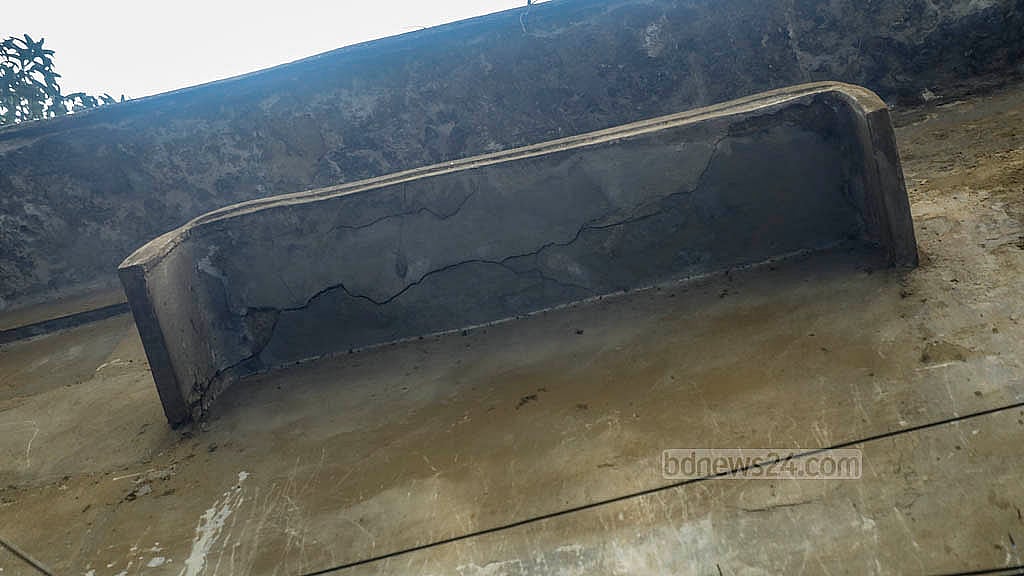
Narsingdi sits atop the intersection of these two plates.
“The plates are moving in opposite directions. Using GPS, we measured their motion and the energy accumulating in the subduction zone. 12 years of data show compression of 17mm per year.”
Prof Akhter notes that no major earthquake has occurred in this subduction zone in the past 800–1,000 years.
The last major southern earthquake struck on Apr 2, 1762, with a magnitude of 8.5, releasing pent-up tectonic energy.
“That quake lifted St Martin’s Island, which had been sinking, by 3m, and Myanmar’s Cheduba Island by 6m. Mudslides erupted in the Sitakunda hills, a tsunami formed in the Bay of Bengal, and houses along the Buriganga River in Dhaka were washed away. Between 500 and 700 lives were lost.”
While the southern energy is released catastrophically, the northern and central segments remain locked, he warns.
“In this segment, from Sylhet to Chittagong, no energy release has occurred. The recent quake struck this junction of two plates. Now we have a clearer picture.”
“We also now see how much energy is stored in the subduction zone. This energy will release eventually; there is no alternative. We cannot say when exactly it will happen.”
Referring to the Friday tremor, the earthquake researcher adds: “The recent quake, magnitude 5.7, released energy at a point where stress had built up.
“The next day, two aftershocks occurred slightly north, 5–10km away. This shows that enormous energy is stored in the subduction zone. The release has just started -- it will continue.”
“It may persist for one month, two months, or six months. Eventually, a major release will occur. That is when the real catastrophe will strike,” he warns.
DHAKA AT RISK
Prof Akhter notes that regardless of the earthquake’s source, the risk to Dhaka is exceptionally high.
“Even if the epicentre is 70–100km away and measures 7–8 on the Richter scale, the most damage will occur in Dhaka. Nearby cities may suffer, but the capital will bear the brunt. All the factors that make an urban area vulnerable to earthquakes converge here.”
He emphasises that the city’s high population density and unplanned urbanisation have significantly increased the risk to life.
“Urbanisation here has been unplanned and uncontrolled. Another factor is building codes, which either did not exist when many structures were built or are ignored today. Even if a code exists, construction often does not comply.”
“In any city, constructing a building requires permission from an authority and space must be allocated for open areas. None of this has happened here,” he adds.
Prof Akhter describes Dhaka’s rapid, mushrooming urban growth: “Buildings have expanded fast, without common facilities. Open spaces are minimal. People have to travel far for education or hospital services.
“The communication network and overall urban planning are severely lacking.”
He labels the current building regulations as a “faulty building code”, noting that it fails to account for the energy already stored in the earth that could be released by an earthquake.

LACK OF AWARENESS
On preparedness, Prof Akhter says: “Unplanned and uncontrolled urban growth is one issue, but residents lack awareness of earthquakes. They do not know how to respond. In other disasters, awareness exists, but not for earthquakes.”
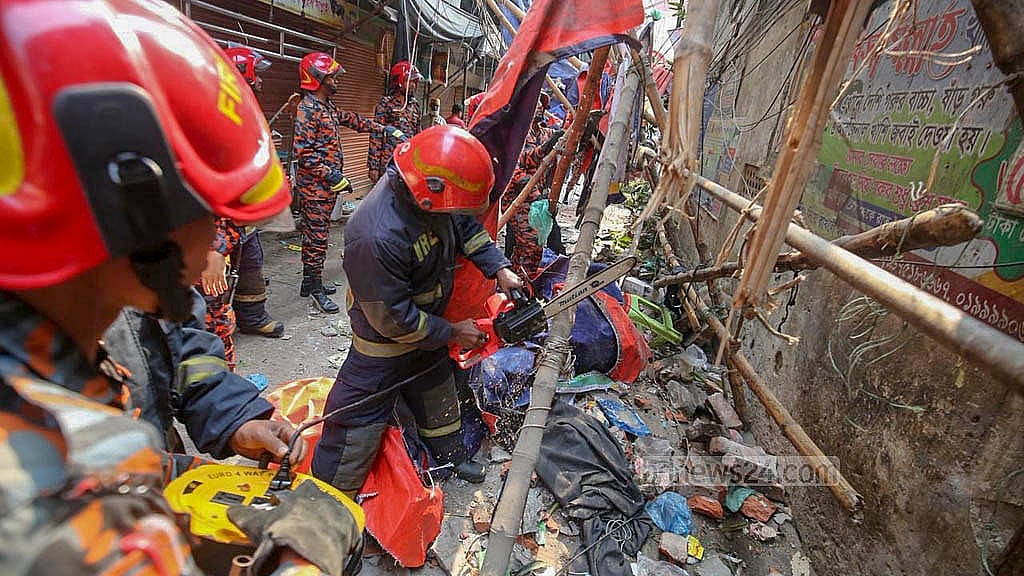
He points to government inaction: “During the recent quake, CCTV footage showed panic, with people losing awareness while fleeing. One person even jumped from a roof, sustaining injuries.
“This reflects not only panic but also a lack of government planning and preparedness. Collectively, this puts Dhaka in a dangerously vulnerable position.”
He warned of the humanitarian crisis that a major quake could trigger.
“Hundreds of thousands could die instantly, and many more may perish while trapped, unable to be rescued. In Dhaka, an earthquake measuring 8 on the Richter scale could collapse 30–40 percent of buildings, according to engineers.
“About 200,000 people could die immediately. In high-rise buildings, some may survive inside, but exits could be blocked. One building falling against another could seal escape routes.”
“In such a disaster, fires could erupt from gas and electricity lines. Those trapped would face shortages of food, water, and medical care.
“Rescue teams might not reach them. The government would not immediately know where the damage or disaster is worst, nor have a plan to assess it. Humanitarian catastrophe would inevitably unfold.”
HOW PREPARED ARE WE?
Prof Akhter notes that while Dhaka University once ran projects on earthquake warning, funding constraints have halted them.
“We had plans under the USGS HIT project. I advised keeping them active. Now, after recent tremors, these initiatives gain renewed importance. I hope we can revive them soon.”
He laments that at the official level, earthquake disaster management remains neglected.
“In Bangladesh, when an earthquake occurs, the disaster management bureau or ministry may issue a statement or hold a seminar, and that is the limit.
“Comprehensive work began in 2008 and ended in 2011 under the CDMP programme, funded by UNDP, with promised follow-ups in five cities, though only three were done. ADPC, a Thailand-based disaster management agency, did some work, but it’s insufficient.”
“They made recommendations, but I do not see visible government action following them,” he adds.
POLITICAL COMMITMENT
Prof Akhter stresses that politicians will drive the country’s development and must prioritise earthquake preparedness.
“Whatever priorities politicians set will be implemented by the relevant ministries. Addressing natural disasters is a matter of patriotism. If we fail to prepare for earthquakes, the economy and national development will suffer.
“Dhaka is the hub of skilled labour, educated professionals, and various sectors. If they are killed or injured in a quake, their contributions to the economy will stop. The nation will fall behind.”
He believes that if political parties recognise the scale of the earthquake threat, they will act on it when in power, beyond mere election promises. The public also expects such action.
Emphasising that earthquakes cannot be prevented, Prof Akhter urges correct decision-making and proactive initiatives to minimise damage.
“If we truly want to advance our country, the government must consult with experts who have detailed knowledge of these issues. Only then can effective measures be implemented to reduce loss and ensure better outcomes.”
DANGERS OF MISINFORMATION
Prof Akhter explains that seismology, the study of earthquakes, comprises three main branches.
The first is earthquake geology, where seismologists examine how earthquakes occur, how energy is stored in the Earth’s crust, what constitutes a fault, and the geological structures involved.
The second branch is earthquake engineering, which focuses on the construction of buildings and infrastructure on the surface. It addresses how structures should be designed and built to withstand strong earthquakes, ensuring that critical facilities can endure for up to a century.
The third is earthquake physics, which studies how seismic waves propagate and affect rock layers and geological formations. Specialists in this field assess the impact of these waves on different terrains.

Prof Akhter emphasises that planning to reduce earthquake risks requires input from experts across all three branches.
“If they work together in a coordinated way, we can provide clear, actionable guidance. Unfortunately, at present, each speaks in isolation.
“Even engineers responsible for structural design debate the location of faults, the magnitude of quakes, and differentiate aftershocks from foreshocks inconsistently… This is misleading.”
He stresses that policymakers must consult the right experts when formulating policies, ensuring discussions involve accurate and authoritative voices.
Commenting on post-earthquake confusion, Prof Akhter observes: “After a quake, everyone speaks according to their own perspective, which confuses both citizens and the government.
“Professionals from other fields often offer superficial knowledge, and their statements sometimes transmit incorrect messages to the public.”