Published : 29 Jan 2025, 11:06 AM
Updated : 28 Aug 2026, 01:17 AM


Bangladesh have witnessed an unprecedented day of train service suspension, causing severe inconvenience to tens of thousands of commuters up and down the country.
The disruption continued as railway running staff held firm to their demands despite multiple rounds of meetings throughout the day.
The indefinite railway strike, which began at midnight on Monday, stretched into Tuesday midnight, with all passenger and freight trains halted.
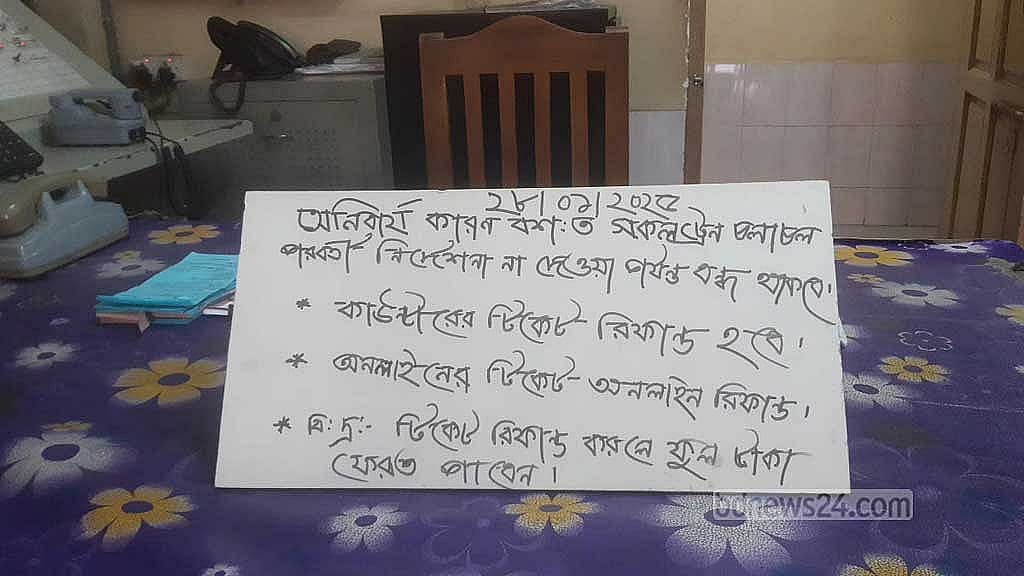
An announcement was made that advance ticket sales for Wednesday morning were cancelled, and all train services were suspended until 9am.
Passengers, who had purchased advance tickets despite knowing about the work stoppage, were left stranded at stations, unable to travel to their destinations.
They questioned how the stoppage proceeded despite prior announcements, why the issue remains unresolved, and who should be held accountable for the disruption.
The standstill in Bangladesh Railway was triggered by the staff's demands for the inclusion of running allowances in their basic pay for pension calculations and gratuity benefits.
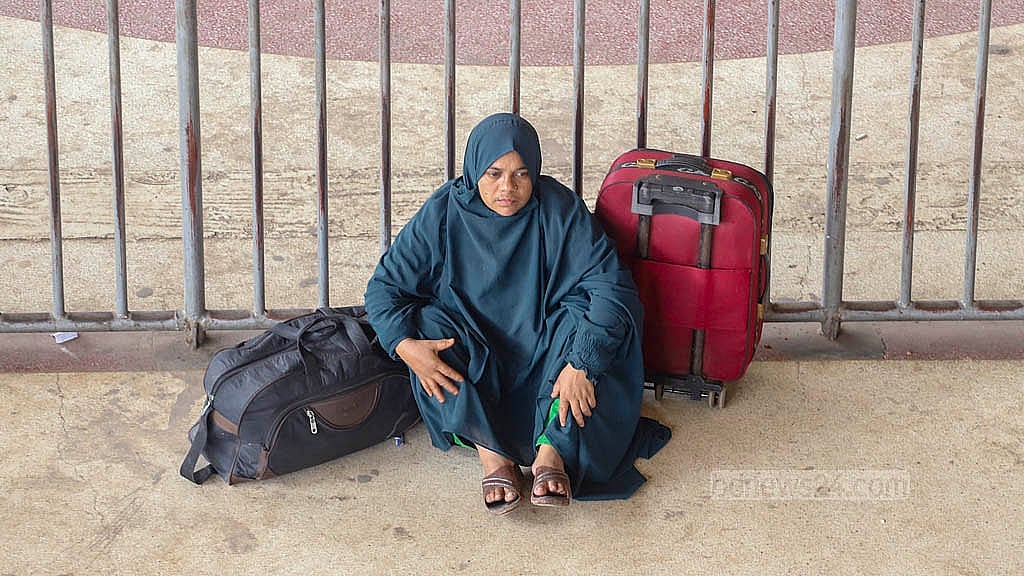
This situation marked a rare occasion where rail services were suspended for over 24 hours due to labour unrest, a scenario that had not occurred even during major political movements or the COVID-19 pandemic.
Despite the government's repeated calls for the workers to call off the strike, the situation remains unchanged.
The meetings between railway authorities and running staff failed to make any progress.
Md Saidur Rahman, executive president of the Bangladesh Railway Running Staff and Workers Employees Union, told bdnews24.com: “Discussions have been held throughout the day. We have received assurances from the railways ministry, but we are not convinced by their words.”
They have asked us to withdraw the programme, but we won’t do so unless we receive the approval documents.”
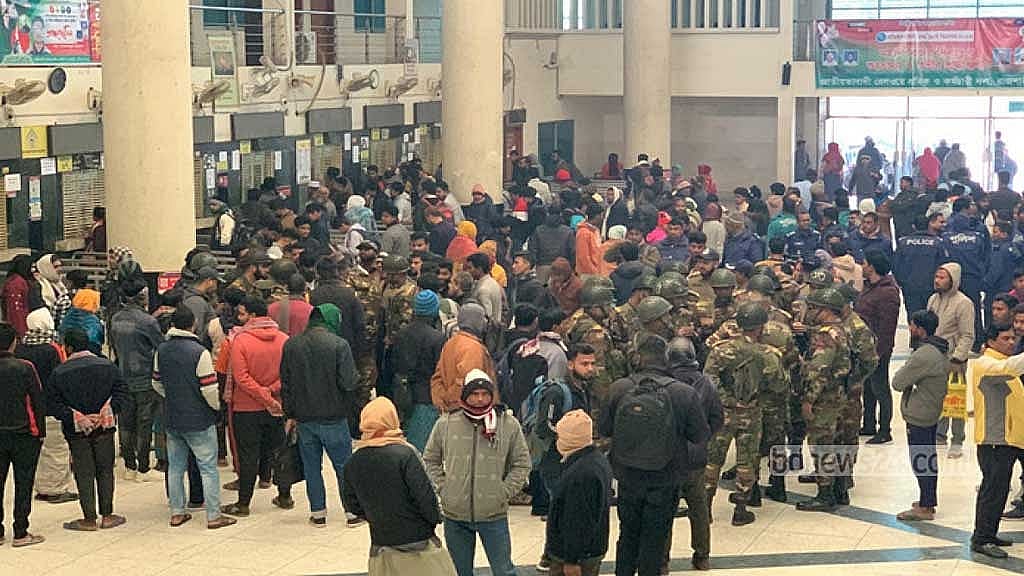
With trains suspended across the country, passengers endured severe hardships.
In several locations outside Dhaka, rail stations were attacked, and officials were detained.
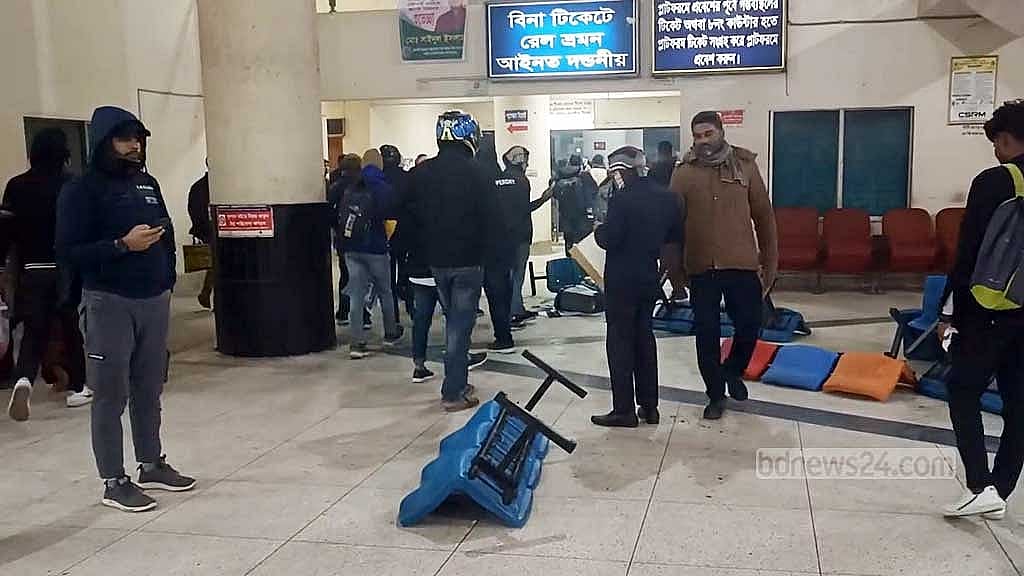
Complaints also emerged about increased bus fares due to the lack of train services.
No new trains departed after midnight on Monday, but those that had already left before 12am reached their destinations on time.
In response to the crisis, the railway ministry arranged Bangladesh Road Transport Corporation, or BRTC, buses to transport passengers from Dhaka’s Kamalapur and Airport stations to cities like Chattogram, Rajshahi, Sylhet, Khulna, Comilla, Bogura, and Mymensingh.
While this arrangement alleviated some hardship for passengers, most still faced significant difficulties.
After sunset, no buses were provided for train passengers departing from Dhaka.
WHO IS RESPONSIBLE
Railway insiders described the day-long suspension of services as an unprecedented event in Bangladesh’s railway history.
A former director general of Bangladesh Railways, who retired a few years ago after serving for 35 years, told bdnews24.com that he had never witnessed such an occurrence before.
The former official, who preferred to remain anonymous, reflected on his experience dealing with railway workers' demands and protests over the years.
He said “In the past, work stoppages were brief and typically lasted only a few hours. This is the first time a strike has lasted an entire day. The railway is an essential service; it is a means of transport for people in times of crisis.
“When all other transport shuts down, people rely on the train. Even those without enough money can take the train to reach their destination.
“But [Tuesday], the train services are suspended, and passengers are being transported by buses, which is very unfortunate.”
According to the former official, both railway officials and the protesting workers share some responsibility for the current impasse.
“While the workers’ demands are not entirely unreasonable, there is also a failure on the part of those negotiating with them. The discussions should have been held earlier, with adequate time to resolve the issue.
“The programme had been announced well in advance, but at that time, the authorities did not take it seriously.”
While efforts to resolve the issue were ongoing, no satisfactory response was forthcoming from senior railway officials.

Bangladesh Railway’s Acting Director General SM Salimulha Bahar and Railway Secretary Mohammad Fahimul Islam did not comment on the matter.
However, Railways Advisor Muhammad Fouzul Kabir Khan said the railway department had done what it could to address the protesters' demands.
He added that the matter was now with the finance ministry.
Later, Finance Advisor Salehuddin Ahmed told journalists that the "reasonable demands" of the protesting railway workers had already been accepted.
His remarks raised doubts about the government's current capacity to meet the additional demands put forward by the railway running staff and the union.
NATIONWIDE DISTRESS
The suspension of train services for an extended period left passengers across the country facing significant hardships.
Early in the day, the disruption led to an act of vandalism at the Rajshahi Railway Station.
Hundreds of passengers, unable to board their trains, protested between 7am and 8am, resulting in widespread damage to station property.
“Frustrated passengers vandalised the chairs and tables in a TTE [Travelling Ticket Examiner] office. The doors to other rooms were locked. Several chairs that had been placed in the station were also damaged by the travellers,” said Acting Station Master Shahidul Alam.
"Upon receiving the news, army personnel arrived to control the situation, which helped calm the agitated travellers.
“They eventually returned home after receiving a refund for their tickets."
In Mymensingh, an incident occurred where angry passengers detained a station superintendent.
The Haowr Express, heading to Dhaka from Netrokona’s Mohonganj, departed in the morning, but at around 10am, upon reaching Mymensingh Railway Station, the locomotive master fled. Enraged passengers then detained the railway official.
In the morning, passengers at the station, unable to find trains, crowded the bus stands.
Bus fares were reportedly raised by up to Tk 100, adding to travellers' frustration.
On the Dhaka-Narayanganj route, passengers also faced challenges.
At Narayanganj Railway Station, people were seen arriving with their luggage, only to turn back as the trains were unavailable.
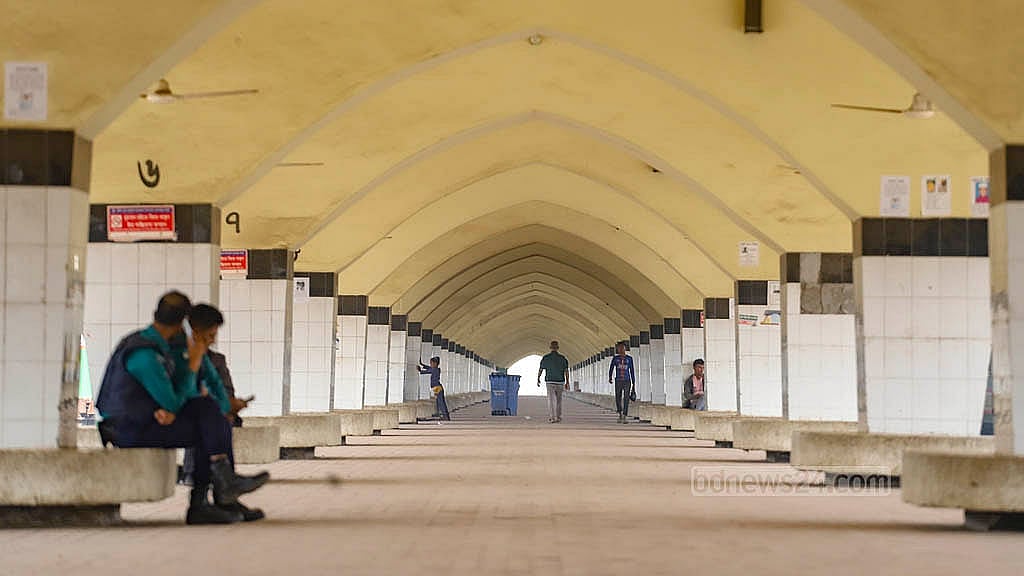
At Khulna Railway Station, it was evident that coaches were left on the platform without engines.
The running staff, including TTEs, guards, and train drivers, were nowhere to be found.
An announcement was made that train services were suspended due to “unforeseen circumstances”. Passengers who had already purchased tickets were refunded.
Long-distance travellers were particularly affected, especially those with urgent matters, who found themselves stranded without a viable alternative.
Due to the suspension of train services, there was a commotion at Brahmanbaria Railway Station in the morning, but by the afternoon, a complete silence had settled in
Some travellers, unaware of the work stoppage, were seen turning back. A few were inquiring about when the trains would resume service.
Throughout the day, the situation was much the same at stations in both the eastern and western zones of the railway network.
People dependent on trains were left to endure a day of major inconvenience.
NO PROGRESS DESPITE MULTIPLE MEETINGS
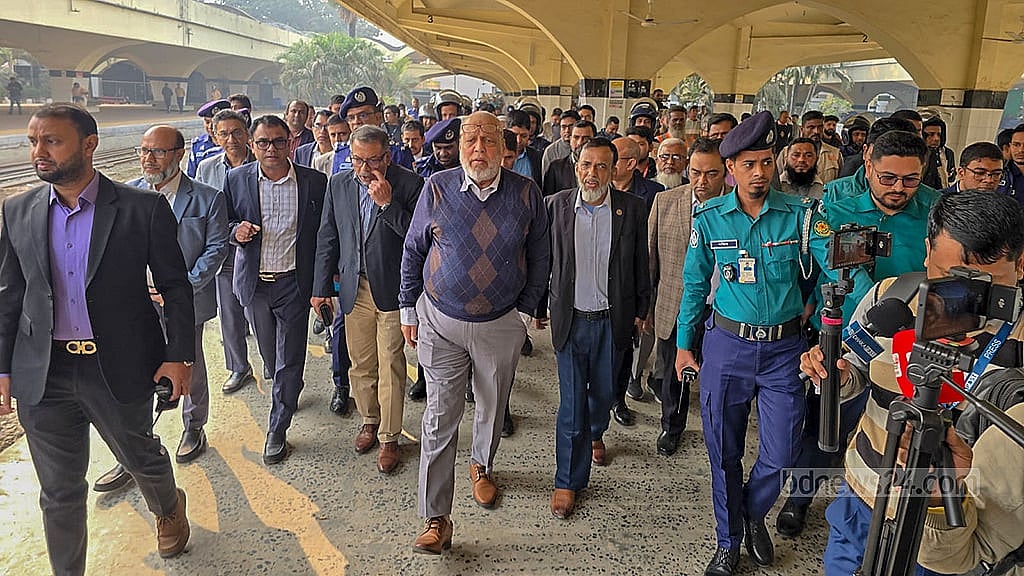
As initial efforts proved futile, Railway Secretary Fahimul met leaders of the protesting running staff at the VIP lounge of Kamalapur Railway Station around 1:30pm.
However, the meeting yielded no progress.
Later, at 4:00pm, BNP’s labour wing Jaityatabadi Sramik Dal Convenor Shamsur Rahman Shimul Biswas arrived at the Rail Bhaban, attempting to mediate between the protesting railway workers and the government.
Present at the meeting were Advisor Faouzul, the railway secretary, and the acting director general of Bangladesh Railway.
However, no representatives of the protesting running staff attended, preventing any actionable decisions to withdraw the protest programme.
At 8:00 PM, Shimul Biswas convened another round of discussions with the protesting workers at the VIP lounge of Kamalapur Station.
The talks continued until 10:00pm but concluded without a resolution.
WHAT RUNNING STAFF WANT
The railway running staff, including guards, loco masters, assistant loco masters, sub loco masters, and travel ticket examiners, are directly involved in running trains.
More than 1,700 running staff work on providing rail service across the country.
On average, running staff need to work for 15-18 hours each day. Previously, they used to get special financial benefits for the extended hours, which was called mileage. This mileage was part of their salary.
The running staff used to get an additional amount equivalent to their one-day basic salary for each 100 km distance their trains covered.
If a work day is considered to be eight hours, the work done by running staff in a month becomes equivalent to 2.5 or 3 months for other workers.
Their salary was calculated accordingly.
In addition, they used to get pensions with an additional 75 percent of their basic salary.
In 2022, the Ministry of Finance scrapped all these benefits for the running staff. Since then, the Bangladesh Railway Running Staff and Workers Employees Association has been staging regular protests.
On Jan 22, the running staff held a press briefing in Chattogram and announced a work stoppage from Jan 28.
Md Mojibur Rahman, general secretary of the union and chief coordinator of the Railway Running Staff Unity Council, claimed that though the Bangladesh Railway and railways ministry supported the demands of the staff, it was the finance ministry that created the complications.
It was alleged that newly recruited running staff, including train drivers and assistant drivers, are not granted benefits similar to those of their predecessors.
According to him, two conditions were imposed on appointment letters issued after 2022.
These state that newly recruited staff will not receive any allowances other than the running allowance for duties on moving trains, and the monthly running allowance will not exceed their basic salary.
Furthermore, pensions and gratuities will now be based on their last drawn basic salary, which the union claims violates railway laws and regulations.
[Writing in English by Sheikh Fariha Bristy]