Published : 28 Oct 2025, 07:08 AM
Updated : 21 Aug 2026, 02:38 PM


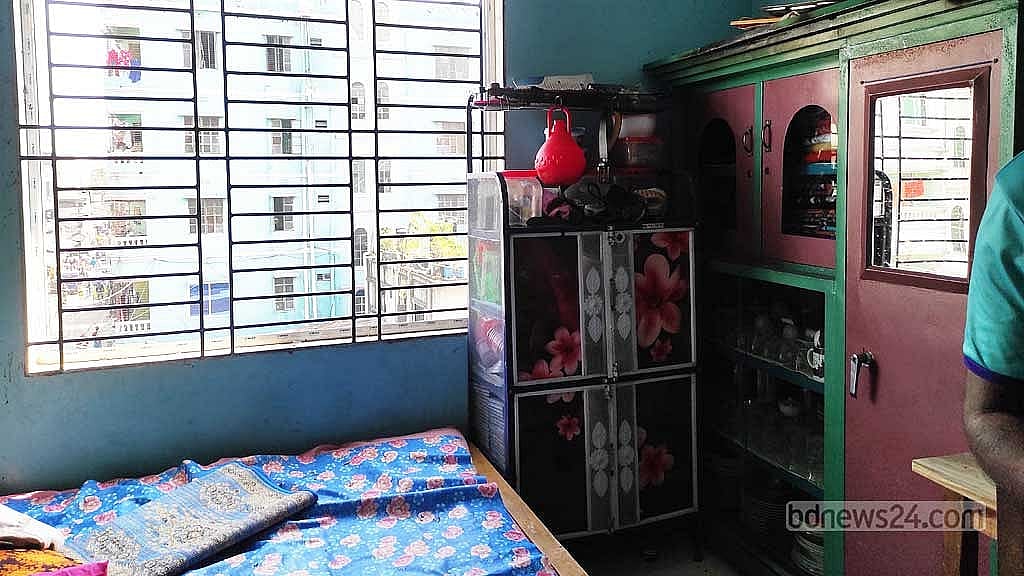
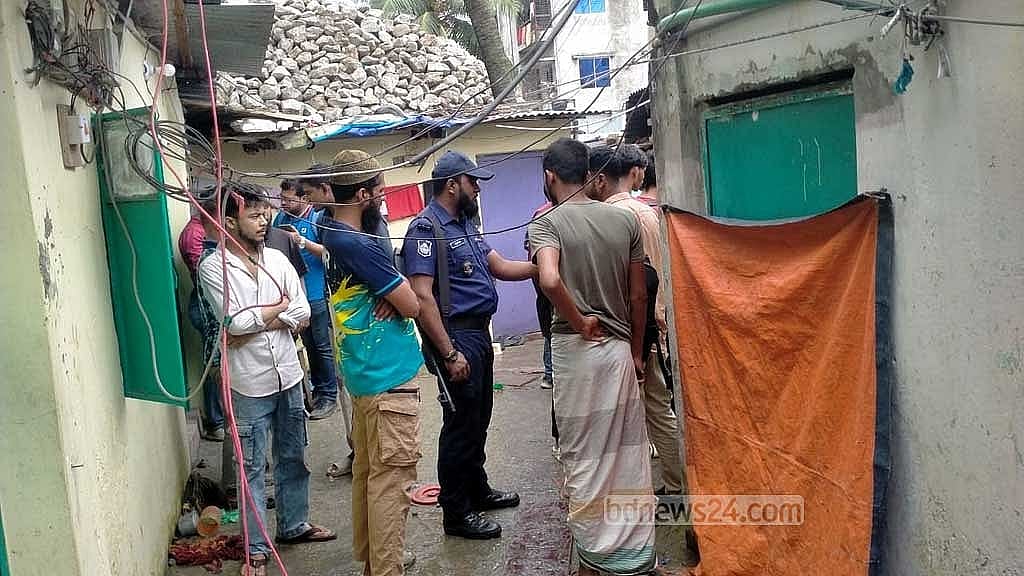
In Narayanganj City Corporation’s Ward No. 3, the tightly packed neighbourhood of Painaadi Purba Para is a maze of narrow alleys lined with semi-concrete homes. Inside one such house, small rooms stand like cubicles, shared by several families bound by kinship and hardship.
In one room lived small trader Md Ibrahim. In the two adjacent rooms stayed his aunts-in-law Asma and Salma, with their children. Together, they built a modest life within these cramped walls. But one night, their laughter turned into screams.
It was the early hours of Sept 23. As the family slept, a deafening blast shattered the quiet. Ibrahim awoke in panic and rushed outside -- only to freeze in horror. Flames engulfed the next two rooms, his loved ones stumbling out, their bodies ablaze.
Beneath the house ran a gas distribution line belonging to Titas. For weeks, residents had complained of a foul odour of gas, but the landlord had ignored repeated warnings. That negligence cost nine lives.
Seven of the nine burn victims later died in hospital, including a 1-month-old baby. The only survivor still fighting for life is 8-year-old Muntaaha, who sustained burns over 37 percent of her body and is being treated at the National Institute of Burn and Plastic Surgery in Dhaka.

With tears in his eyes, Ibrahim recounted: “Around 3:30 in the morning, I woke up to a loud explosion. When I ran outside, my two aunts-in-law, Asma and Salma, and my niece Trisha were standing there -- their heads and bodies still on fire. We put the flames out and rushed them to the hospital. Only two survived.”
At first, Fire Service and Civil Defence officers suspected that an electrical short circuit had caused the blaze, possibly from a refrigerator compressor explosion. But Narayanganj City Corporation’s Chief Executive Officer Zakir Hossain later confirmed that their engineering team had found evidence of “gas accumulation inside the room from a leaking Titas line,” which triggered the blast.
CAUSES BEHIND THE EXPLOSION
In the industrial and densely populated district of Narayanganj, explosions and fires caused by leaking gas lines have become alarmingly routine.
According to the Fire Service and Civil Defence, Narayanganj records more gas-related explosions and fires than any other district in the country -- resulting in devastating loss of life and property.
In just the first eight months of this year, at least 400 fire incidents were reported in Narayanganj, 30 of them caused by gas. In the past five years, more than 400 fires have been linked to gas leaks -- mostly from Titas lines, and some from faulty LPG cylinders.
The deadliest occurred in 2020 at the Baitus Salat Jame Mosque in Talla, where gas accumulated from a leaking Titas distribution line exploded during evening prayers, killing 34 people.
More recently, on Oct 4 this year, five members of the same family were burnt when gas accumulated from a leaking cylinder exploded at their home in the Kanchpur BSCIC Industrial Area of Sonargaon Upazila. Two later died.
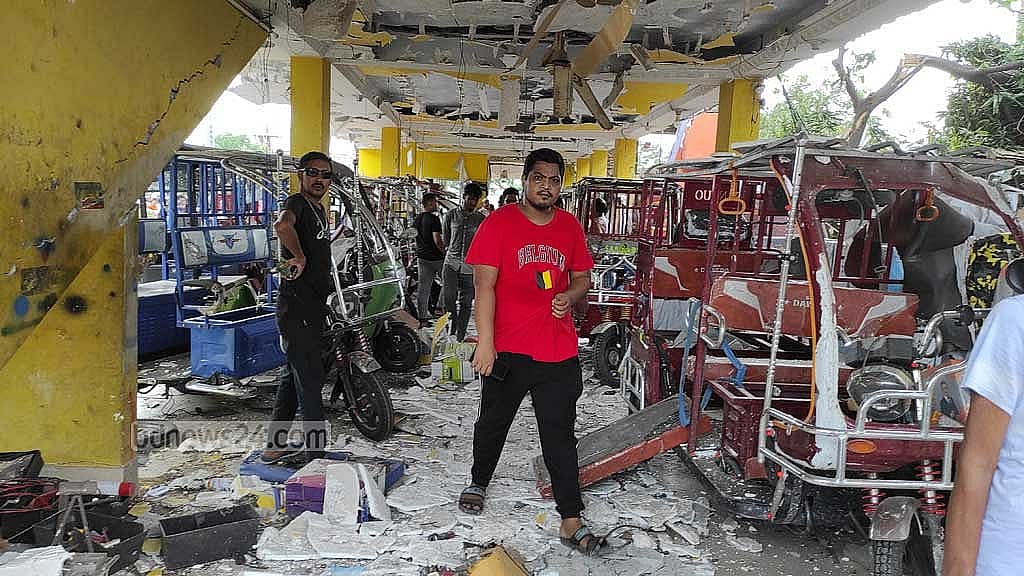
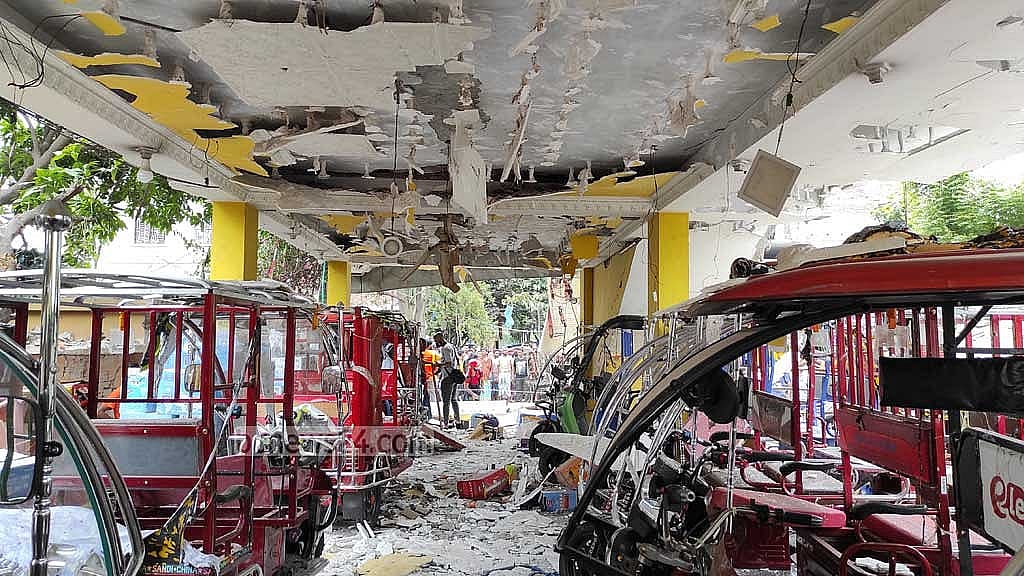
Just last Sunday morning, another explosion in the shared gas meter room of two garment factories at the Fatullah BSCIC Industrial Area left at least six workers severely burnt.
Fire Service Station Officer Abdul Halim said preliminary investigation showed that both factories had adjacent meter rooms.
“They were expanding the one-storey meter room. When workers used a hand-grinding machine to cut rods, a spark likely ignited trapped gas inside the pipeline,” he said.
Fire Service officers identify several recurring causes behind these frequent blasts: unplanned housing construction, failure to routinely inspect old Titas lines, unauthorised gas connections, meter tampering, and public negligence in using stoves and LPG cylinders safely.
Data shows most gas-related fires occur in Fatullah and Siddhirganj of Narayanganj Sadar Upazila, where hundreds of factories have created densely packed communities.
Explosions are also frequent in the crowded residential areas of Sonargaon, Araihazar, Rupganj, and parts of Bandar Upazila -- areas largely inhabited by lower- and middle-income families living in haphazardly built homes.
Despite repeated tragedies, little has changed.
Deputy Assistant Director of Fire Service and Civil Defence Abdullah Al Arefin, who has long served in Narayanganj, said the problem extends beyond homes to industrial sites.
“Many kitchens have gas leaks in the stove pipes or cylinder lines,” he said. “If the gas has nowhere to escape, the room becomes a chamber of gas -- and the smallest spark can cause a catastrophic blast.
“In some places, people even cook inside bedrooms instead of separate kitchens. That makes it far worse.”
6-DECADE-OLD LINES STILL IN USE
Titas Gas Transmission and Distribution Company, responsible for supplying gas to residential and commercial users in Narayanganj, currently serves more than 68,000 legal household customers across five Upazilas, along with 396 factories. But many of its main distribution lines are more than 60 years old.
Still, Titas denies liability for most accidents. Its regional deputy general manager, Md Mamunur Rashid, insists that “customer negligence is responsible for the majority of incidents”.
After the 2020 mosque explosion, a government probe had recommended that Titas regularly inspect residential pipelines. But Rashid said their inspections cover only the main connections, not internal pipelines.
“Titas connects the main supply line to the building, but the owners themselves connect it to the stoves,” he said. “Many don’t use authorised contractors or skilled workers. And we don’t have the manpower to inspect every household.”

He acknowledged that Narayanganj’s network is outdated.
“Some of the lines here date back to 1964. Yes, some are damaged, but whenever we receive complaints, our operations team repairs them,” he said, adding that plans are under way to replace ageing pipelines.
Rashid also revealed that Titas has only half the required workforce to manage the sprawling network.
In the Painaadi Purba Para case, Titas had reportedly issued a written warning to the landlord in 2023 after discovering a distribution line running under the building.
“But he ignored it,” Rashid said.
LACK OF OVERSIGHT
A Fire Service officer noted that neither consumers nor gas officials are vigilant enough.
“Whichever type of gas you use, you must check for leaks. But both the public and Titas officials are careless,” he said.
“They often don’t even know where the pipelines run. Some lines have corroded so badly that gas constantly seeps out. Add to that the problem of illegal connections -- it’s an open secret, and it multiplies the risk.”
He recalled the Talla mosque explosion as an example: “At first, Titas denied having a line there. But when the road beside the mosque was dug up, a leaking Titas line was found.”
The incident led to criminal charges against eight people, including four Titas engineers.
Dhiman Saha Jewel, Narayanganj district president of the civil rights group Shushashoner Jonno Nagorik (SUJAN), said Titas cannot escape accountability.
“They stopped giving new residential connections years ago, but never maintained the old ones. This is mismanagement,” he said. “Many people also get illegal lines installed by unskilled workers. Titas and other government offices must act together to fix this.”
Jewel added that the problem begins when homes are built without coordination with utility authorities.
“City corporation and RAJUK hardly inspect construction sites anymore. Corruption and negligence have only worsened things,” he said.
He also emphasised the need for a specialised burn unit in Narayanganj to treat victims locally instead of sending them to Dhaka.
PREVENTING GAS ACCIDENTS
Cooking with gas may be convenient, but it comes with serious risks. The Department of Explosives says simple precautions can prevent fatal disasters.
Gas smell: If there is a strong odour, avoid lighting any flame or using electrical switches. Open doors and windows immediately, leave the room, and call the Fire Service. If the prepaid meter runs even when the stove is off, a leak is likely.
Sound: Hissing noises from the stove or cylinder indicate leakage -- never ignore them.
Ventilation: Ensure airflow wherever gas stoves or cylinders are used. Keep kitchen windows open while cooking.
Cylinder storage: Always keep cylinders upright on a flat surface, away from heat and the stove. Never roll full cylinders. Keep the safety cap attached when not in use.
Pipe, knob, and regulator checks: Leaks often occur in the valve ring, regulator, or hose. Have equipment checked by a professional at least once a year. Soap water can detect leaks.
Above all: Always turn off the stove after cooking, and check for gas smell or hissing before lighting it again.