Published : 21 Jun 2026, 09:38 PM
Updated : 08 Sep 2026, 09:17 AM


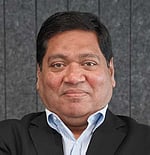
Bangladesh Chamber of Industries (BCI) President Anwar-Ul-Alam Chowdhury Parvez has criticised the home minister’s remarks on law and order, saying the country has not yet moved beyond “mob culture” and raising concerns over investment risks.
Speaking at a discussion organised by research organisation Centre for Policy Dialogue (CPD) on the budget on Sunday, Parvez said the prevailing situation remains a challenge for both local and foreign investors.
“We are not yet free of mob culture. We are still not safe in terms of law and order. And we see that our home minister is very satisfied, saying that the situation is improving,” he said.
“If the home minister is satisfied under such circumstances, then that is a matter of concern,” he added.
He also warned that such an environment creates fear among investors.
“The fear is something you know affects all of us, especially those who want to invest here,” he said.
After the BNP won a majority in the parliamentary election and took power, the home minister had said that mob culture would not be tolerated in the country.
He said, “Mob culture will no longer be encouraged in Bangladesh. Demands must be raised through proper procedure. Processions and rallies can continue, but blocking highways in the name of demands will not be tolerated.”
Last month, during Police Week-2026 at Rajarbagh, Salahuddin said initiatives would be taken to reform existing laws to stop mob culture.
However, amid the ongoing concerns over law and order, Parvez directly criticised the minister’s position.
He made the remarks while outlining the constraints affecting business and investment, despite several positive proposals in the budget.
He highlighted energy shortages, high interest rates and difficulties in accessing bank credit as major challenges for industry.
“Existing industries are not able to survive -- that is a big problem. Why are they not surviving? Number one - energy shortage,” he said.
“This is so severe that industries cannot even think without energy. High bank interest rates are another headache. And getting loans from banks is also difficult because the government is borrowing heavily from the banking sector for budget financing,” he added.
He said growth is not the immediate priority.
“Growth is not important for us at this moment. What is important is that existing industries survive. And for that, energy is the biggest headache,” he said.
He also questioned the government’s energy plans.
“We do not see what the government’s actual plan is to ensure the energy supply. Renewable energy alone cannot guarantee the survival of existing industries,” he said.
Turning to tax administration, he criticised the National Board of Revenue (NBR).
“Then there is the NBR issue. Everyone, including foreign investors who have come here, complain about the NBR,” he said.
He said while some reform is visible in the budget process, it remains insufficient.
“I think we are seeing some reforms in budget preparation. But the issues is, proper reforms have not been done. That must be acknowledged. So reform is needed here,” he added.
Finance Minister Amir Khosru Mahmud Chowdhury, who presented the national budget in parliament on Jun 11, was present at the event.