Published : 19 Dec 2025, 11:45 PM
Updated : 21 Aug 2026, 02:54 PM


Students and alumni of Bengali cultural organisation Chhayanaut and its educational wing Nalonda have taken to the streets outside its burnt and vandalised premises, protesting the attack on the institution through song.
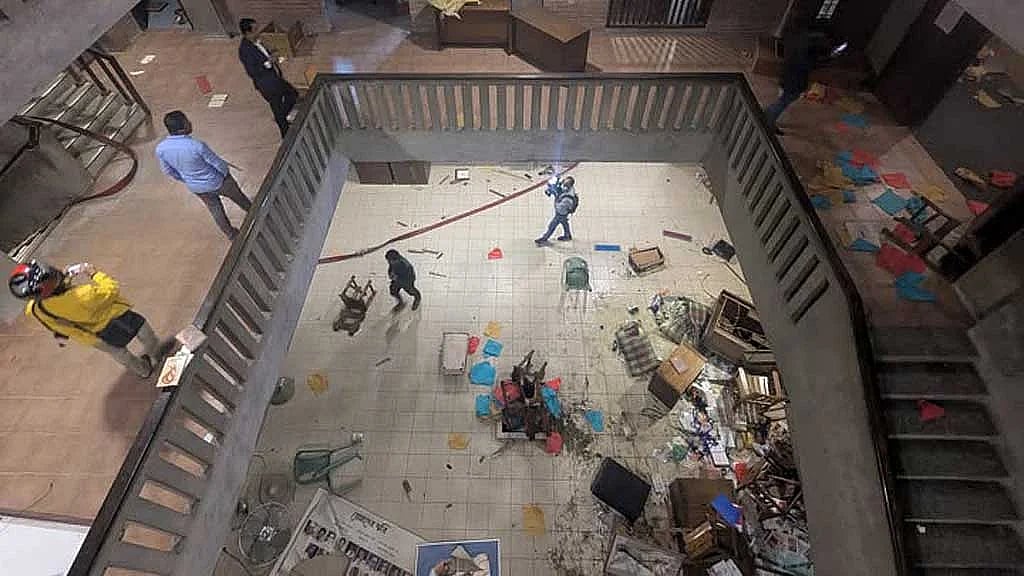
The gathering came hours after assailants vandalised and set fire to Chhayanaut’s seven-storey building in Dhanmondi on Friday, following protests sparked by the death of Sharif Osman Bin Hadi, convener of the Inqilab Moncho.
According to witnesses, a group of protesters entered the building in the early hours of Friday, smashing doors and windows, destroying musical instruments and books, and setting parts of the premises on fire. Surveillance cameras, sound systems and artworks were also damaged in the attack.
By Friday morning, students, teachers and alumni began arriving at the site, walking through the charred rooms before gathering outside the building on Sat Masjid Road. Standing amid the debris, they sang Rabindranath Tagore’s songs in chorus, countering the violence and intimidation through words of courage and motivation.
The songs carried messages of courage and defiance, urging listeners to reject fear and inaction, with refrains like “Shongkocher Bihbolota Nijere Opoman” (To be paralysed by hesitation is an insult to oneself).
The attack drew condemnation from the government. Cultural affairs adviser Mostofa Sarwar Farooki described the vandalism and arson as a “criminal offence” and said it ran counter to the spirit of the July uprising. In a statement, he said those responsible would be brought to justice and called for unity against violence during the country’s ongoing democratic transition.
Founded in 1961, Chhayanaut has long been seen as a symbol of Bengali cultural identity and resistance, most notably for its annual Pohela Boishakh celebrations at Ramna Batamul. The organisation has previously faced violence, including a deadly bomb attack on its New Year event in 2001.
Despite the latest attack, participants at Friday’s gathering said their response was deliberate — using culture, not confrontation, to push back against fear.