Published : 03 Jul 2026, 06:40 AM
Updated : 08 Sep 2026, 09:21 AM


Monsoon Menace: The Rain and the Ruin
Landslide toll: Landslides in Cox's Bazar Rohingya camps killed 28 people and injured 80 between 2021 and 2026, with 12 dead in 2024
Deforestation risks: Rapid 2017 forest clearing weakened hill stability, making steep, overcrowded slopes prone to sudden collapse
Funding gaps: Global funding shortages forced agencies to scale back critical slope stabilisation and drainage maintenance work
Relocation roadblocks: Densely packed camps lack vacant land, while refugees resist moving away from vital community and social networks
When the rain begins to fall over the hills of Camp-20 in Ukhiya, Senowara Begum stops sleeping.
For her, the arrival of the monsoon is no longer a change of season. It is the return of uncertainty.
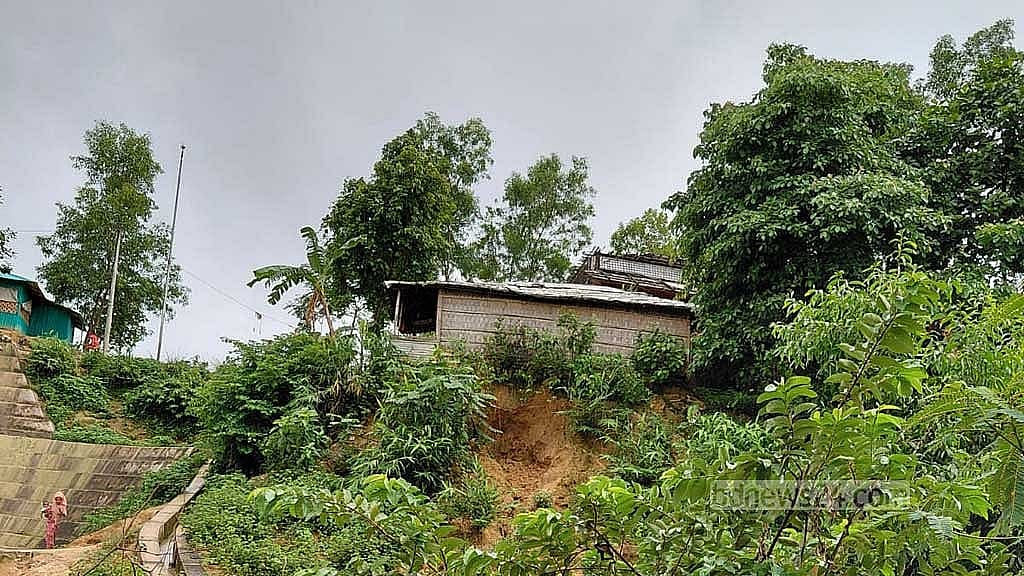
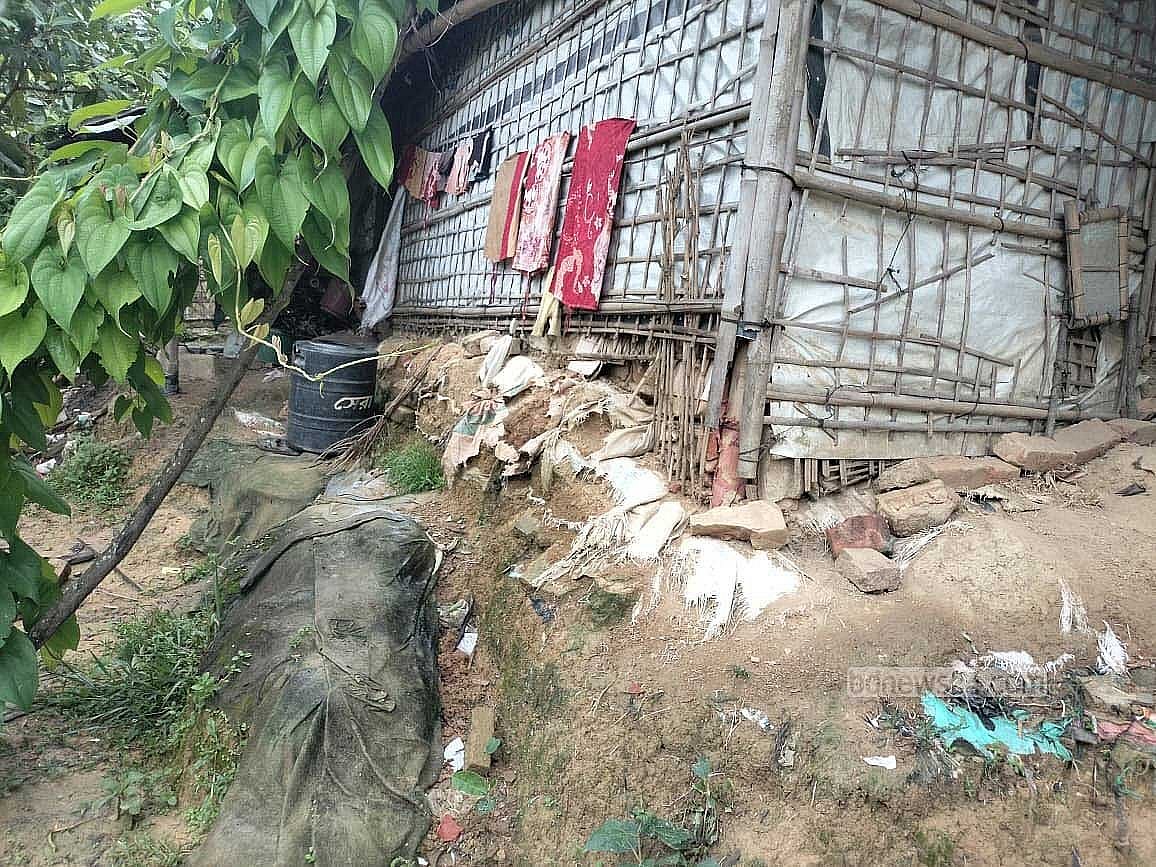
Her tiny shelter, built from bamboo, rope and tarpaulin, sits beneath a steep hillside. In daylight the slope appears almost harmless, but after hours of relentless rain it becomes the greatest threat she faces.
In recent years, landslides have buried Rohingya refugees in their homes. So whenever dark clouds gather, the same question returns to her mind: Will the hill survive this time?
"There is no safe shelter nearby," Senowara said.
"When aid agencies ask us to move elsewhere, the places they suggest are far from our neighbours, relatives and familiar surroundings. We do not want to go there. But if the hillsides were maintained regularly, the risk would be much lower."
Her fear is not an isolated story. Across the vast Rohingya camps of Ukhiya and Teknaf, thousands of families live with the same reality every day.
Space is so scarce in one of the world's largest refugee settlements that many households have been forced to build homes on steep slopes or directly beneath them.
After hundreds of thousands of Rohingya fled Myanmar in 2017, large areas of forest were cleared to create emergency settlements. Over time, the natural stability of the hills weakened, and every monsoon has made the danger worse.
Each spell of heavy rain loosens the soil further. Cracks appear in some places; in others, chunks of earth give way. Within minutes, an entire slope can collapse and bury several shelters.
A Recurring Tragedy
According to the United Nations Refugee Agency (UNHCR) landslides in the Rohingya camps of Cox's Bazar killed 28 people and injured at least 80 between 2021 and 2026.
The deadliest year was 2024, when 12 people lost their lives. This year, even before the monsoon reached its peak, two people had died and 10 others had been injured.
"Many high-risk slopes have still not been adequately stabilised," said Shari Yasmin Nijman, UNHCR's public information officer in Bangladesh.
"As a result, both refugee families and critical infrastructure remain at high risk during the monsoon season."
Experts say landslides usually occur when several factors combine. In the Rohingya camps, almost all of them are present: steep terrain, deforestation, weak soil, intense rainfall and extreme population density.
Funding Shortages Deepen the Danger
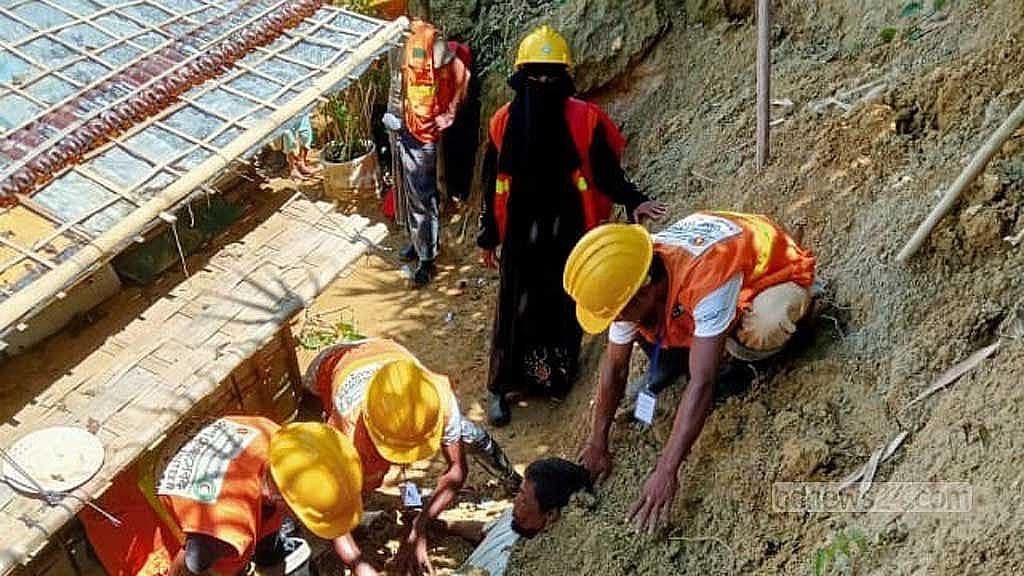
UNHCR says the threat is no longer only natural. A growing global humanitarian funding crisis has forced agencies to scale back many risk-reduction activities.
These include:
• Stabilising hillsides
• Building bamboo terraces
• Maintaining drainage systems
• Strengthening shelters
• Regularly repairing high-risk areas
With limited funds, humanitarian organisations have had to prioritise food assistance, nutrition and protection programmes. Many long-term disaster-prevention projects have been reduced.
As a result, numerous slopes that were once repaired and monitored regularly can no longer receive the same level of attention.
Relocation Is Not a Simple Answer
Moving families away from dangerous areas is frequently proposed, but in practice it is one of the most difficult tasks facing camp authorities.
"Relocating families from the highest-risk hillsides has long been one of the biggest challenges in camp management," Nijman said.
"The camps are among the most densely populated places in the world. There is almost no vacant land. Many families are reluctant to move because they fear losing access to livelihoods, markets and the social networks they have built since fleeing Myanmar in 2017."
As a result, many families remain where they are even while fully aware of the risks.
Sleepless Nights in the Rain
In Camp-4, resident Salim Ullah said anxiety descends on his family as soon as the rain starts.
"When it rains, I cannot sleep. I spend whole nights wondering when the hill will collapse. I live with my children on a hillside. We have to live with fear all the time."
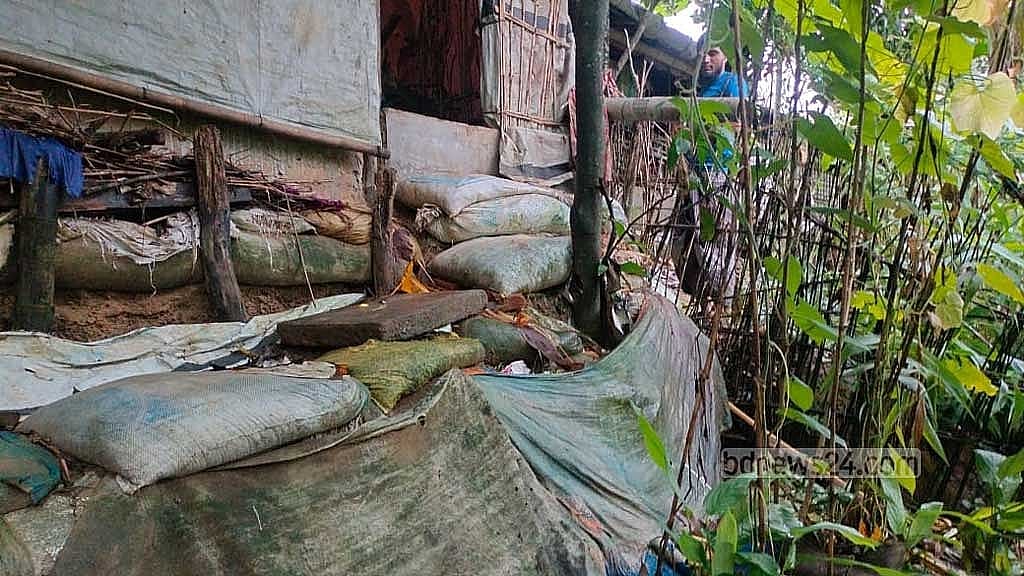
Small efforts to reduce risk can be seen across the camps. Plastic sheets cover drains to stop water washing away soil. Sandbags sit beside shelters. Bamboo poles prop up unstable slopes.
But these are temporary measures. Against days of heavy monsoon rain, their effectiveness is limited.
Race against Time
Refugee Relief and Repatriation Commissioner Mohammed Mizanur Rahman said disaster management committees had been activated in every camp, awareness campaigns were under way and high-risk zones were being closely monitored.
He said families living in the most dangerous areas would be moved quickly if conditions deteriorated.
The Cox's Bazar weather office recorded about 237mm of rainfall over the past three weeks, and assistant meteorologist AB Hannan warned that rainfall could increase further in the coming days, softening slopes and creating fresh landslide risks.
UNHCR says it continues to implement engineering and nature-based solutions despite limited resources, including retaining walls, improved drainage, geotextile reinforcement and vetiver grass planting to reduce erosion.
Yet the agency's warning is clear: without sustained investment in long-term slope stabilisation, the same crisis will return every monsoon.
For thousands of Rohingya families, the monsoon is not merely a season. It is an annual ordeal.
When the rain begins, many no longer look up at the sky. They look at the hill above them.
Because every heavy downpour carries more than the sound of rain. It carries the fear of shifting earth, a sleepless night of waiting, and a prayer to survive until morning.