Home
+
Published : 02 Jul 2026, 11:36 AM
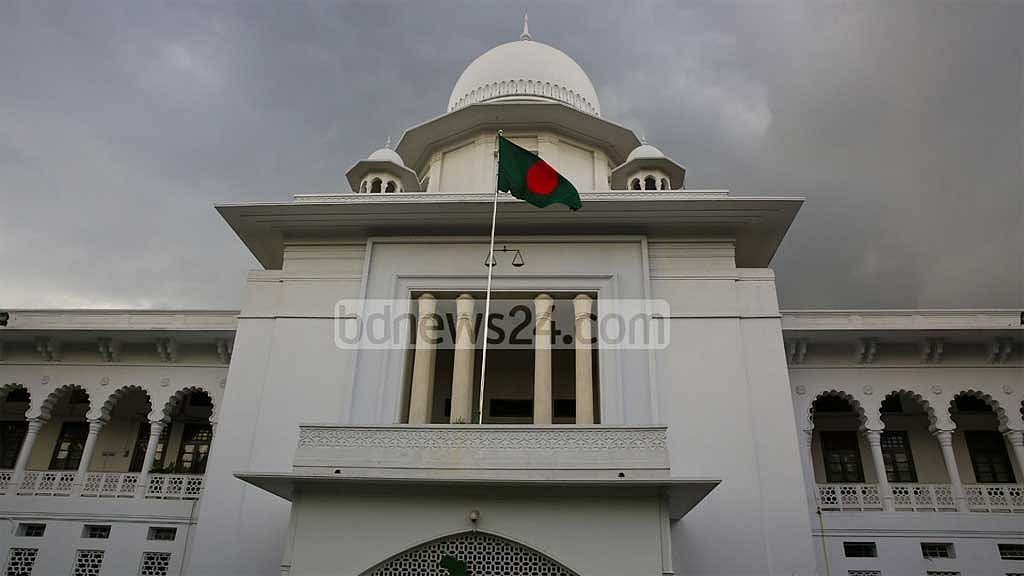
The Supreme Court has ended a long-running dispute over the seniority and promotion of teachers absorbed into the government primary education system.
The verdict has removed the final legal obstacle to appointing headteachers at around 32,500 government primary schools, lawyers say.
On Thursday, a four-member Appellate Division bench headed by Chief Justice Zubayer Rahman Chowdhury delivered the ruling.
The case stemmed from a dispute over seniority and promotion between directly recruited teachers and those whose schools were nationalised.
Under recruitment rules framed in 2013, teachers absorbed following the nationalisation of primary schools were to be placed below the last directly recruited teacher in the seniority list.
A total of 383 nationalised teachers challenged the policy in court, leading the High Court Division to declare the specific provision of the rules illegal.
The ruling ground headmaster appointments to a halt across 32,500 primary institutions.
The state appealed against the High Court judgment, and the Appellate Division has now overturned that decision, leaving the 2013 provision intact.
As a result, teachers absorbed after nationalisation will continue to rank below the last directly recruited teacher in the seniority list.
After the Appellate Division's ruling, Attorney General Ruhul Quddus Kazal told reporters, "The legal complications that persisted in the appointment of 32,000 headteachers at our government primary schools have been resolved through today's ruling."
He said, "Today's ruling will have a positive impact on the education programme at primary schools across the country because discipline will return to the performance of teachers' duties and in teaching."
Why This Case?
The case hearing at the Appellate Division concluded on Jun 18.
Attorney General Kazal and Barrister Muntasir Ahmed represented the state at the hearing. Lawyer Ramzan Ali Sikder took part on behalf of the teachers.
Ramzan spoke about the overall case, the legal context and the content of the hearing, saying there was a time when there were many private primary schools in Bangladesh, which were run by NGOs or their own private managing committees.
There were no specific rules or restrictions on the eligibility for appointment. Later, in view of the applications of teachers at various times, the government decided to acquire or nationalise these schools under The Primary Schools (Taking Over) Act, 1974.
A service rule or regulation was formulated in 2013, specifying how these teachers would be incorporated after nationalisation. According to Article 133 of the Constitution, the opinion of the Public Service Commission (PSC) was required to finalise these rules.
After a positive opinion from the PSC, it was finalised in September 2013, and the appointment of teachers was implemented from Jan 1, 2013.
During the nationalisation, several major concessions and benefits were given to these teachers. First, the general age limit for entry into government service (30 or 32 years) was relaxed for them. Second, those who did not have the required educational or professional qualifications were given three years to qualify.
In addition, 50 percent of the years they had served in the private sector were allowed to count towards seniority and future retirement pension benefits. That is, if someone had taught in a private school for 10 years, a provision was made to count five years as government service.
But then a conflict arose between the directly recruited teachers and the nationalised teachers over promotion and seniority.
Section 9(1) of the “Acquired Private Primary School Teachers (Fixation of Conditions of Service) Rules, 2013” stated that the position of the newly nationalised teachers would be fixed as junior to the last person directly recruited.
But the acquired teachers did not want to accept this. Citing the issue of previous private service, they demanded positions or seniority above those directly recruited government teachers. Based on that demand, 383 teachers filed a writ petition in the High Court challenging Section 9(1) of the Rules.
After hearing the petition, the High Court ruled in favour of the teachers on Mar 11, 2019 and declared that the specific part of Section 9(1) of the rules was “illegal”.
The state filed a leave to appeal against this verdict in the Appellate Division. On Nov 20, 2022, the Appellate Division suspended the High Court verdict and ordered the status quo on seniority and current position to be maintained.
After four years, the Appellate Division, after a final hearing, upheld Section 9(1) of the Rules.
In response to a question from journalists on whether this verdict would create any unrest regarding seniority, the attorney general said: “This is the verdict of the highest court of the country. And the court always publishes its verdicts honestly. Therefore, it is the responsibility of every citizen of the state to accept the court’s verdict.”