Home
+
Published : 09 Jul 2025, 02:09 PM
The leaked audio of a phone call suggests the deadly crackdown on student-led protests in Bangladesh last year was authorised by ousted prime minister Sheikh Hasina, the BBC reports.
The audio of the phone call was verified by BBC Eye.
In the audio, which was leaked online in March, Hasina authorises her security forces to "use lethal weapons" against protesters and that "wherever they find [them], they will shoot", according to the report.
Prosecutors are planning to use the recording as crucial evidence against Hasina, who is being tried in absentia at a special tribunal for crimes against humanity.
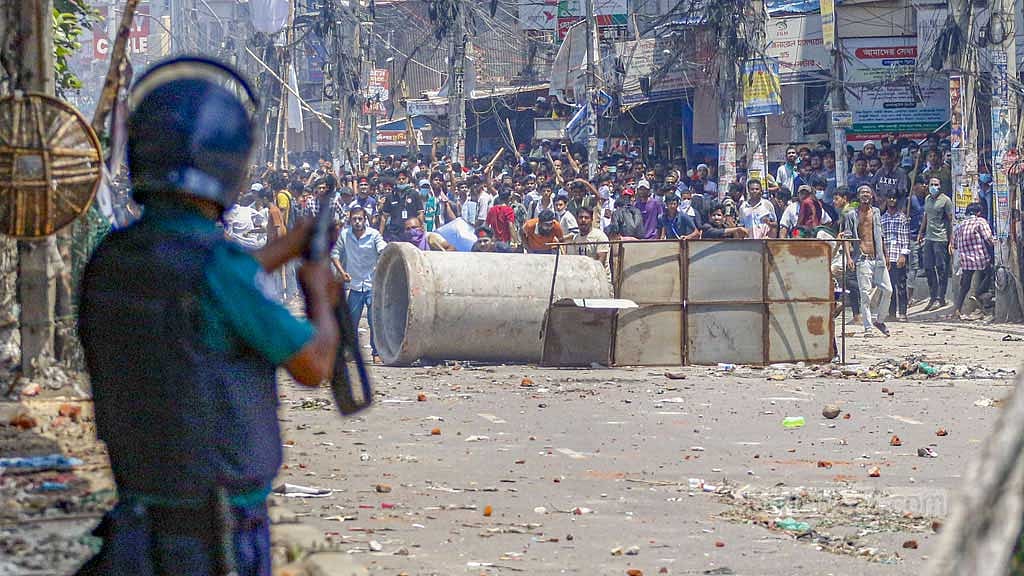
According to UN investigators, up to 1,400 people died in the unrest during July and August last year. Hasina, who fled to India, and her party have rejected all charges against her.
A spokesperson for the Awami League denied the tape showed any "unlawful intention" of a "disproportionate response", the BBC said.
The report calls the leaked audio of Hasina's conversation with an unidentified senior government official as the “most significant evidence” yet that she gave direct authorisation to shoot anti-government protesters, tens of thousands of whom had taken to the streets by last summer.
The protests began against government job quotas for relatives of those who fought in the 1971 Liberation War and escalated into a mass movement that ousted Hasina, who had been in power for 15 years.
It is the “worst violence Bangladesh had seen since the 1971 war”, BBC said.
Some of the bloodiest scenes occurred on Aug 5 last year, the day Hasina fled by helicopter before crowds stormed her residence in Dhaka.
The BBC World Service investigation established previously unreported details about a police massacre of protesters in Dhaka, including a much higher death toll.
Hasina was at her official residence Ganabhaban in Dhaka for the duration of the call which took place on Jul 18, the British broadcaster said, citing a source with knowledge of the leaked audio.
The BBC describes the incident as a “a crucial moment in the demonstrations” as security officials were responding to public outrage at police killings of protesters captured on video and shared across social media. In the days following the call, military-grade rifles were deployed and used across Dhaka, the BBC said, citing police documents.
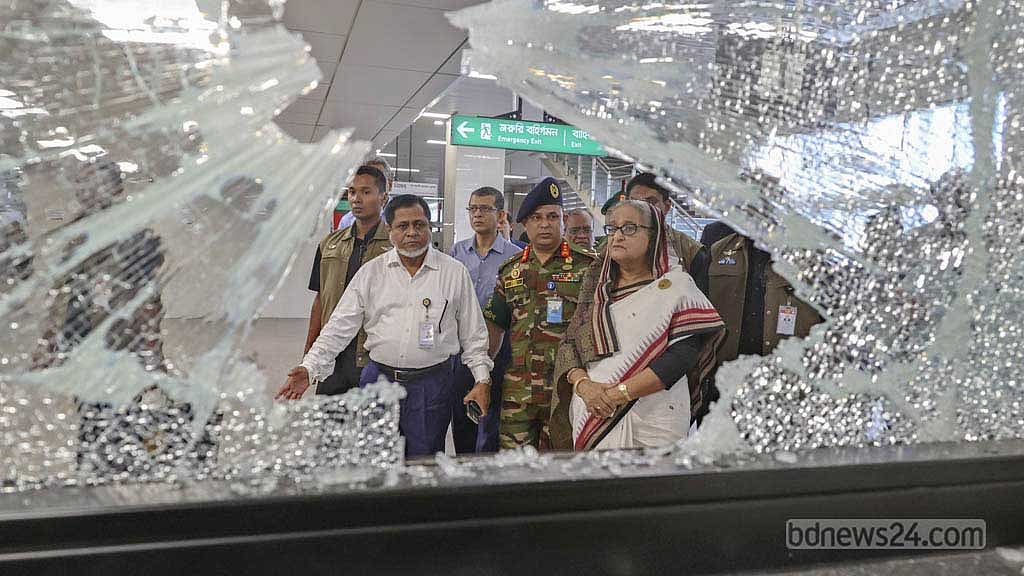
The recording the BBC examined is one of numerous calls involving Hasina that were made by the National Telecommunications Monitoring Centre (NTMC), according to the report.
The audio of the call was leaked in early March this year – though it is unclear by whom. Since the protests, numerous clips of Hasina's calls have appeared online, many of them remain unverified.
The leaked Jul 18 recording was voice matched by the Criminal Investigation Department of police with known audio of Hasina's voice.
The BBC said it conducted its own independent verification by sharing the recording with audio forensics experts Earshot, who found no evidence the speech had been edited or manipulated and said it was highly unlikely to have been synthetically generated.
Earshot said the leaked recording was likely to have been taken in a room with the phone call played back on a speaker, due to the presence of distinctive telephonic frequencies and background sounds.
It identified Electric Network Frequency (ENF) throughout the recording, a frequency that's often present in audio recordings due to interference between a recording device and mains-powered equipment, an indicator that the audio has not been manipulated.
Earshot also analysed Hasina's speech – the rhythm, intonation and breath sounds - and identified consistent noise floor levels, finding no evidence of synthetic artefacts in the audio.
"The recordings are critical for establishing her role, they are clear and have been properly authenticated, and are supported by other evidence," the BBC said quoting British international human rights barrister Toby Cadman, who is advising the International Criminal Tribunal (ICT) hearing cases against Hasina and others.
The British broadcaster also quoted an Awami League spokesperson as saying, "We cannot confirm whether the tape recording referenced by the BBC is authentic."
Alongside Hasina, former government and police officers have been implicated in the killings of protesters. A total of 203 individuals have been indicted by the ICT, of whom 73 are in custody.
BBC Eye analysed and verified hundreds of videos, images and documents detailing police attacks against demonstrators across 36 days.
The investigation found that in one incident on Aug 5 in Jatrabari, at least 52 people were killed by police, making it one of the worst incidents of police violence in Bangladesh's history. Initial reports at the time suggested 30 dead at the scene on that day.
The BBC investigation uncovered new details about how the massacre started and ended.
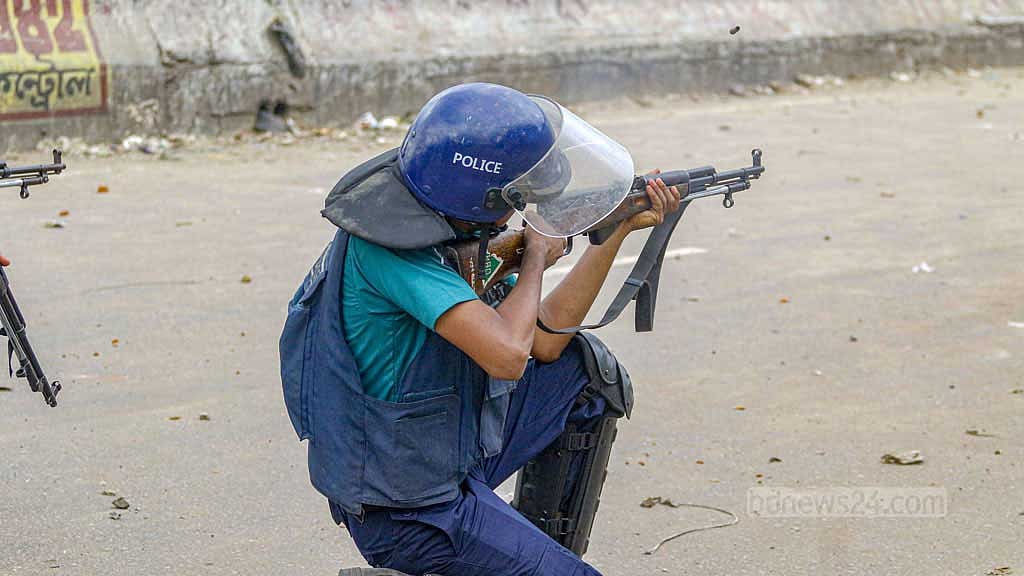
Gathering witness footage, CCTV and drone imagery, BBC Eye reports that police opened fire indiscriminately on protesters immediately after army personnel, who were separating police from the protesters, vacated the area.
For more than 30 minutes police shot at fleeing protesters as they tried to escape down alleyways and on the highway, before they sought shelter in a nearby army camp. At least six police officers were also killed as protesters retaliated hours later, setting fire to the Jatrabari Police Station.
A spokesperson for the Bangladesh Police told the BBC that 60 police officers had been arrested for their role in the violence in July and August last year.
"There were regrettable incidents in which certain members of the then police force engaged in excessive use of force," said the spokesperson. "Police have launched thorough and impartial investigations."
Hasina's trial began last month. She has been charged with committing crimes against humanity, including issuing orders that led to mass killings and targeted violence against civilians, as well as incitement, conspiracy and failure to prevent mass murder.
India has so far not responded to Bangladesh's request for her extradition. It is unlikely that Hasina will return to the country for the trial, Cadman told the BBC.
The Awami League maintains that its leaders are not liable for the force used against protesters.
"The Awami League categorically denies and rejects claims that some of its senior leaders, including the prime minister herself, were personally responsible for or directed the use of lethal force against crowds," a spokesperson for the party said.
"The decisions made by senior government officials were proportionate in nature, made in good faith and intended to minimise the loss of life."
The party has rejected the findings of United Nations investigators, who said they had found reasonable grounds to believe the actions of Hasina and her government could amount to crimes against humanity.
The BBC said it had approached the Bangladesh Army for comment but did not receive a response.