Published : 19 Oct 2025, 09:23 PM
Updated : 21 Aug 2026, 02:36 PM


The Gono Forum, led by Kamal Hossain, has signed the July National Charter, two days after refusing to do so at a ceremony held in the Parliament complex due to disagreements over constitutional wording.
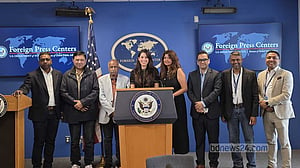
On Saturday, Gono Forum's acting president Subrata Chowdhury and General Secretary Mizanur Rahman signed the document on behalf of the party at the LD Hall of the National Parliament.
On Friday, 24 political parties that had taken part in months-long dialogues convened by the National Consensus Commission signed the charter at the South Plaza of the Parliament building, in the presence of Chief Advisor Muhammad Yunus.
The charter emerged from reform demands raised by leaders of the July Uprising, who sought to capitalise on the momentum for change that followed the 2024 mass uprising.
The National Citizen Party (NCP), formed by the July Movement’s leadership, participated in the dialogue but snubbed the ceremony, citing an “unclear legal basis” for implementing the charter. Four left-leaning parties also withheld their signatures, objecting to what they said was an inaccurate portrayal of history and alterations to the constitution’s founding principles.
Although Gono Forum representatives attended the signing event on Friday, they declined to sign at the time.
Party General Secretary Mizanur said at the time that they had not received the final draft clarifying amendments to Article 150(2) of the Constitution, relating to the Proclamation of Independence and the exclusion of the Fifth, Sixth, and Seventh Schedules.
After receiving the revised copy, Subrata confirmed that Gano Forum had now signed.
“We had said that Article 150(2) should be amended to preserve the Proclamation of Independence. Without it, Bangladesh’s existence and Liberation War would be questioned,” he said.
“We are pleased that the Consensus Commission has decided not to abolish Article 150(2) entirely, but to retain the Seventh Schedule. That is why we are signing today.”
Mizanur said the Gono Forum had worked in full cooperation with the consensus panel.
“Our founder and leader said the Constitution could be amended if required by the needs and aspirations of the people,” he said, thanking the commission for retaining the Seventh Schedule under Article 150(2).
After the signing, Ali Riaz, vice-chairman of the Consensus Commission, urged the parties yet to sign to do so.
“Those who haven’t signed are still major stakeholders. Their discussions and proposals helped shape this document through revision and reform. This is not the commission’s document alone -- it is a collective political commitment.”
He added that even the dissenting parties’ views were reflected in the final draft.