Published : 03 Nov 2025, 05:44 AM
Updated : 21 Aug 2026, 02:40 PM


Unusually heavy rains have lashed Bangladesh over the past three days, flooding vast stretches of farmland with ripening rice and vegetables and setting new records for November rainfall.
The deluge, triggered by the remnants of Cyclone Montha that made landfall in India’s Andhra Pradesh on Oct 28, swept first through the country’s north before soaking its central districts.
According to the Bangladesh Meteorological Department (BMD), Tangail recorded 164mm of rain in the 24 hours to 6am on Nov 2 -- the highest single-day rainfall in November since records began in 1987. The previous record, 87mm, was set on Nov 16, 2007.
“So much rain is rare in November,” said meteorologist Tariful Newaz Kabir.
The remnant of Montha, redirected from Bihar by westerly winds, had unleashed an unusually heavy spell of precipitation across Bangladesh, he explained.
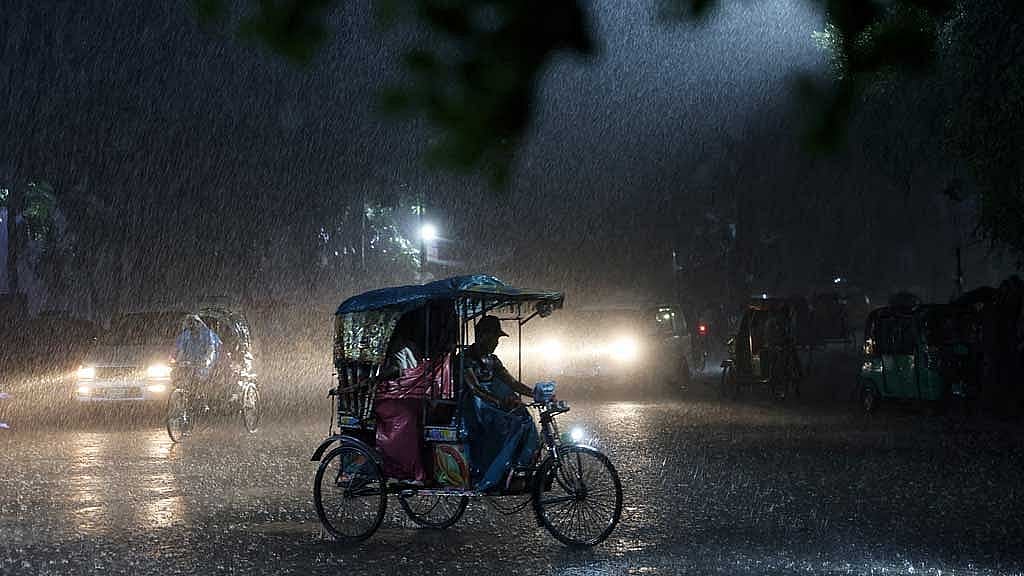
November marks the end of the post-monsoon season, when rainfall typically eases. Cyclones are not uncommon this time of year, but rarely do they bring so much water inland.
Over the past three days, Sirajganj’s Tarash logged 120mm of rainfall, while Tetulia in Panchagarh received 162mm — both considered “very heavy rain”, defined as precipitation exceeding 88mm in a day.
Newly-installed stations in Gopalganj and Narayanganj also reported severe rainfall, though without historical comparisons.
“This kind of rain at this time of year is particularly bad for Aman growers,” said AKM Ruhul Amin, an agronomy professor at Sher-e-Bangla Agricultural University.
Aman is Bangladesh’s second-most important rice crop, accounting for nearly half of its annual production of around 40 million tonnes. Farmers in flood-prone regions often keep Aman rice for household consumption as protection against future calamities.
“Vast areas in the north were flooded, potentially affecting many Aman growers,” Ruhul Amin said.
The damage is compounded by timing. November is also the harvest period for early winter vegetables -- including mustard and lentils -- that farmers rely on for cash income between major crop seasons. Officials said no consolidated damage estimate was immediately available.
Dhaka itself saw 63mm of rain in the 24 hours to Sunday morning -- the seventh-highest November reading since records began in 1981. The capital’s highest-ever November rainfall, 135mm, occurred on Nov 30, 1988.
A Met Office report published last year pointed to shifting seasonal patterns since 1980, noting that the monsoon has become drier and more irregular, interspersed with extended heatwaves.
This year’s monsoon arrived early but proved weaker, with June and July recording rainfall deficits of up to 20 percent. August barely met normal levels, and September ended 20 percent short of average. The October assessment is still pending.
Meteorologists warn that such erratic rainfall patterns may grow more frequent with climate change, increasing the risk of crop losses.
Yet even amid devastation, some scientists see a possible silver lining: heavy rain could temporarily curb the dengue outbreak that has surged this year.
A drop in dengue prevalence depends on a steady decline in temperature and humidity, said epidemiologist AM Zakir Hussain.
“If the rain fails to usher in cooler weather, it may actually expand mosquito breeding grounds -- meaning dengue could persist through the month.”
Across the country’s northern belt, farmers are counting their losses.
Rangpur Sadar farmer Abinash Mohari said, “After so much hard work cultivating Aman across four acres, the rain came just when we were ready to harvest -- and destroyed everything.”
He added, “We were filled with hope seeing the crop’s good yield. But now the fields are underwater and the rice ears are soaking. The yield could fall by half.”
In Pirganj, farmer Abul Hossain said: “Because of this untimely rain, the paddy plants have bent to the ground. At least half the crop will be ruined.”
From Mithapukur’s Dhaper Hat, farmer Khitish Chandra Barmon said: “The rice that’s fallen flat will soon catch pests, and the grains will become hollow. It’s unbearable to think that so much labour is going to waste.”
Further west, in Chapainawabganj’s Bholahat Upazila, farmer Amirul Islam said the rain damaged not only paddy but also pumpkin and tomato crops, while onion and chilli fields were submerged.
The agricultural authorities confirmed significant damage in Rangpur.
Sirajul Islam, additional director of the Department of Agricultural Extension in Rangpur, told bdnews24.com: “Due to the low-pressure system, paddy in at least 75 hectares of land across five Upazilas has been affected. We are advising farmers to tie up the fallen plants in bundles to minimise loss.”
The rains have raised new anxieties among farmers already reeling from erratic weather, rising input costs, and market volatility. Many say this year’s Aman harvest had promised rare relief -- before the downpour reversed their fortunes overnight.
“This is the kind of shock that devastates smallholders,” said Ruhul, the agronomy professor. “When crops fail this close to harvest, farmers lose not only income but also the seed they save for next year.”
Officials in the Ministry of Agriculture said they were gathering data to assess the extent of the damage. Relief support, they said, would depend on those findings.
For now, forecasts offer little comfort. Meteorologists said isolated rain may continue in parts of the country for another day before skies finally clear. But for farmers like Abinash, Abul, and Khitish, the damage is already done.
Standing ankle-deep in his flooded paddy, Abinash Mohari said: “We only needed a few more days of sun. Instead, the sky gave us rain -- and took away our year’s labour.”
[Additional reporting by Rangpur and Chapainawabganj correspondents]