Published : 10 Jun 2026, 04:23 PM
Updated : 08 Sep 2026, 09:14 AM


“The hospital served rotten chicken for the patient meals on the afternoon of the second day of Eid. After eating the meat, I vomited. Many patients fell ill.
“Patients are already suffering physically. Low-quality food can pose an even greater risk to their health.”
These are the words of Raihan, a patient in the Orthopaedics Ward of Khulna Medical College Hospital.
Complaints about the poor quality of food at Khulna Medical College Hospital (KMCH), the largest government healthcare facility in the southern part of Bangladesh, are not new. Patients and their relatives have been raising such concerns for years.
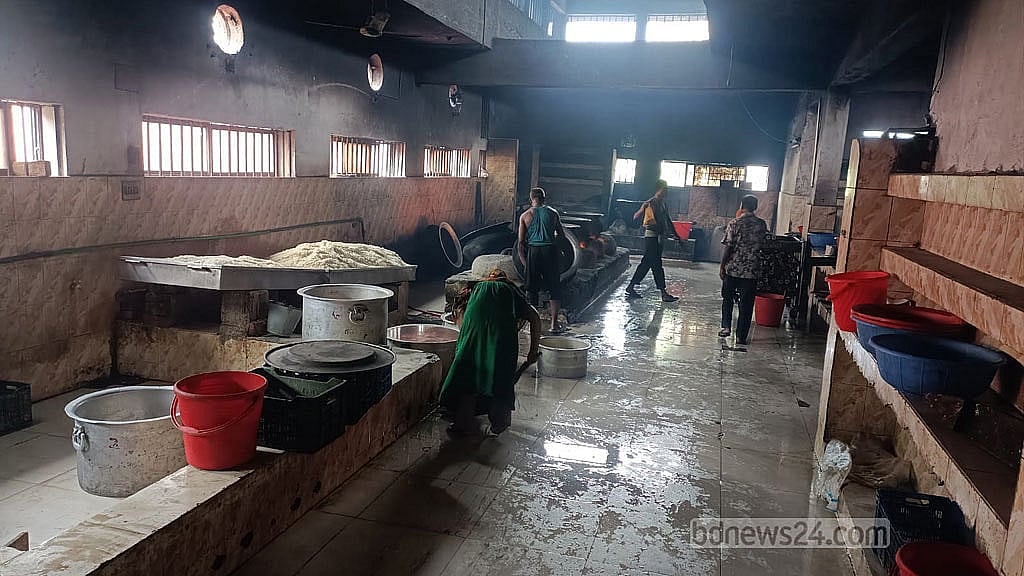
During a recent visit to the hospital, several patients reiterated the same allegations.
However, hospital director Kazi Md Ainul Islam said, “The hospital faces numerous challenges, including a shortage of manpower, and efforts are being made to address them gradually.”
Established on Jan 17, 1989, in Khulna’s Boyra area as a 250-bed hospital, the facility was upgraded to Khulna Medical College Hospital in 1992.
Due to increasing patient pressure, the Ministry of Health upgraded the hospital to a 500-bed facility in 2008. It currently provides treatment through 31 wards under 16 departments.
Hospital authorities say that although the official capacity is 500 beds, around 1,500 patients are admitted daily. In addition, another 700 to 800 patients receive treatment at the outpatient department every day.
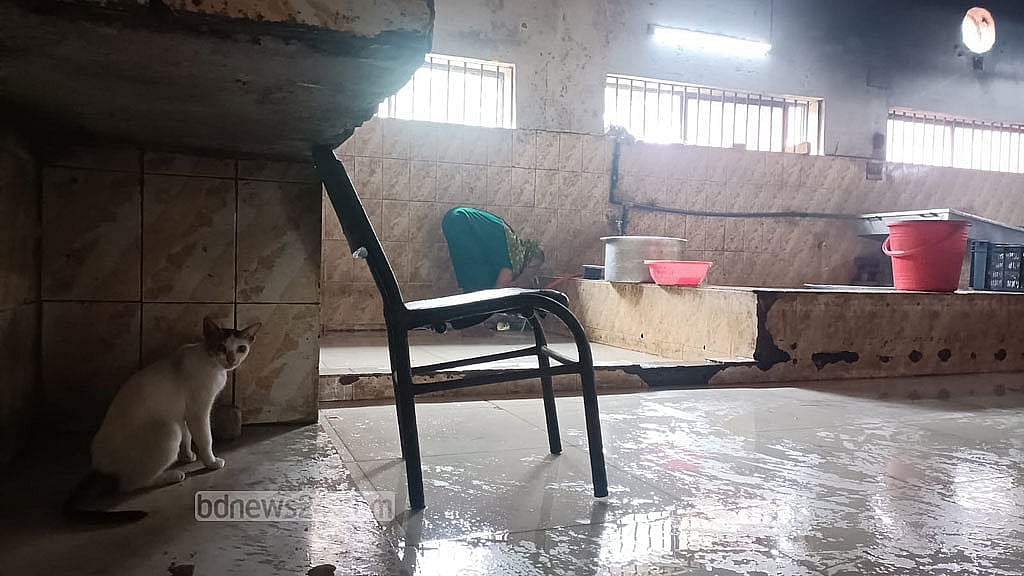
Among the hospital’s various challenges, complaints regarding kitchen conditions and food quality have persisted for years. Patients and their relatives claim that the meals provided are often substandard and, in many cases, unfit for consumption. As a result, many are forced to buy food from outside.
They also allege that repeated complaints to doctors and hospital officials have been futile in bringing about any effective action.
According to hospital authorities, food for patients is supplied annually through contractors appointed via a tender process. The government allocates Tk 175 per patient per day for three meals.
Under the prescribed menu, Diet-1 includes bananas, bread and eggs; Diet-2 includes milk; and Diet-3, intended for a small number of patients with special nutritional requirements, includes high-protein foods.
Authorities say lunch and dinner are supposed to include fish for one meal and broiler chicken or eggs for the other.
Md Al Masum Khan, joint general secretary of the Patients Welfare Association at KMCH, said: “Instead of broiler chicken, eggs are served on most days at lunch. In the evening, patients are given cheaper varieties of fish instead of Rohu or Katla, or sometimes just eggs, vegetables and watery, tasteless lentils. Patients have no choice but to eat what is provided.
“The rice supplied to patients emits a foul smell. The quantity of food is also inadequate, forcing many patients to arrange additional meals.”
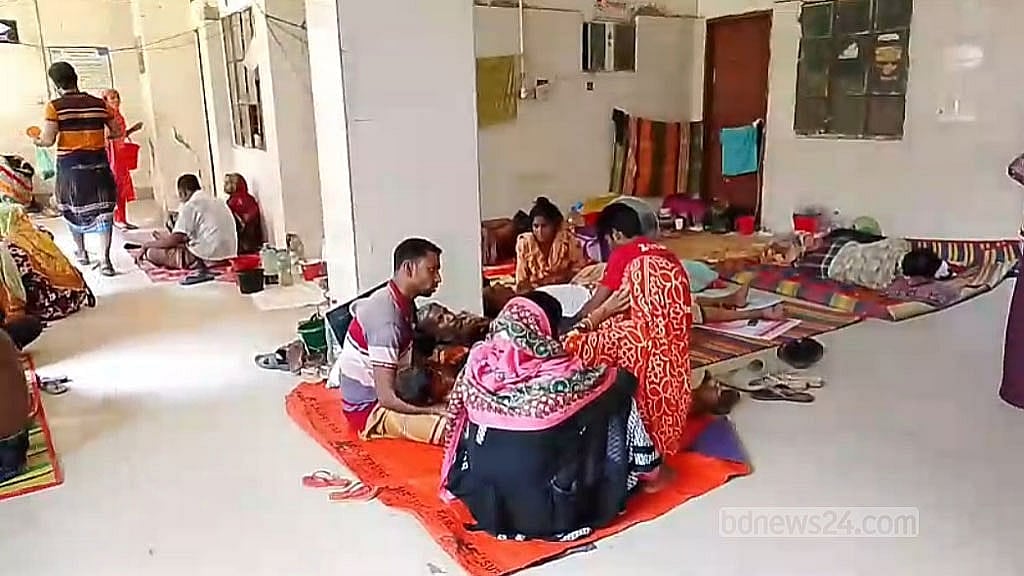
Masum said hospital authorities are well aware of the issue. Although food samples are supposed to be inspected daily, the practice exists only on paper. He alleged that corruption involving certain officials and contractors is causing patients to suffer from poor-quality meals.
He further alleged: “On the second day of Eid-ul-Azha, patients were served rotten chicken. The incident sparked widespread anger and dissatisfaction throughout the hospital. At the time, the responsible officials were absent and tried to avoid accountability.
“The hospital kitchen environment is also unhygienic. The floors and cooking utensils are dirty. Cooking is done with untreated water. Rice and curries are left uncovered while sweeping takes place nearby. Rats and cats roam freely in the area.”
Sabina Akter, a patient admitted to the Gynaecology Unit-1 on the ground floor, said: “I was admitted last week. I did not receive any food on the day of my admission. Moreover, there is often no water in the hospital taps for washing plates and utensils after meals.
“There is no provision for safe drinking water throughout the hospital. We have to collect drinking water from outside, which is very difficult.”
Khabir Sheikh, a patient from Bunorabad in Batiaghata Upazila who was admitted after being injured in a land dispute-related attack, said: “Patients are not provided with adequate food. Many patients leave the hospital between noon and 1pm, leaving meals unused.”
He questioned what had happened to the leftover food.
Several hospital employees told bdnews24.com that Habibur Rahman, the hospital’s steward responsible for food management and known as a close relative of a controversial employee of the Khulna Divisional Directorate General of Health Services, had served in the same hospital for nearly seven years. They alleged that his prolonged tenure enabled him to establish an influential syndicate centred around the hospital kitchen.
Sources accused him of various irregularities in the supply of food allocated for patients. They alleged that portions of the food budget were misappropriated and that inflated patient numbers were used to generate additional bills.
They also alleged that food allocated for patients had long been diverted outside the hospital with the steward’s assistance.
Responding to the allegations, hospital administrative officer Md Mojahar Ali Khan said Habibur Rahman had been relieved of his duties on Jun 3.
He said that on Dec 24, 2024, the Anti-Corruption Commission conducted a raid on the hospital kitchen. Following allegations of irregularities, Habibur was removed from his position on Dec 25. However, he reportedly returned to the same post two months later with the support of certain corrupt health officials.
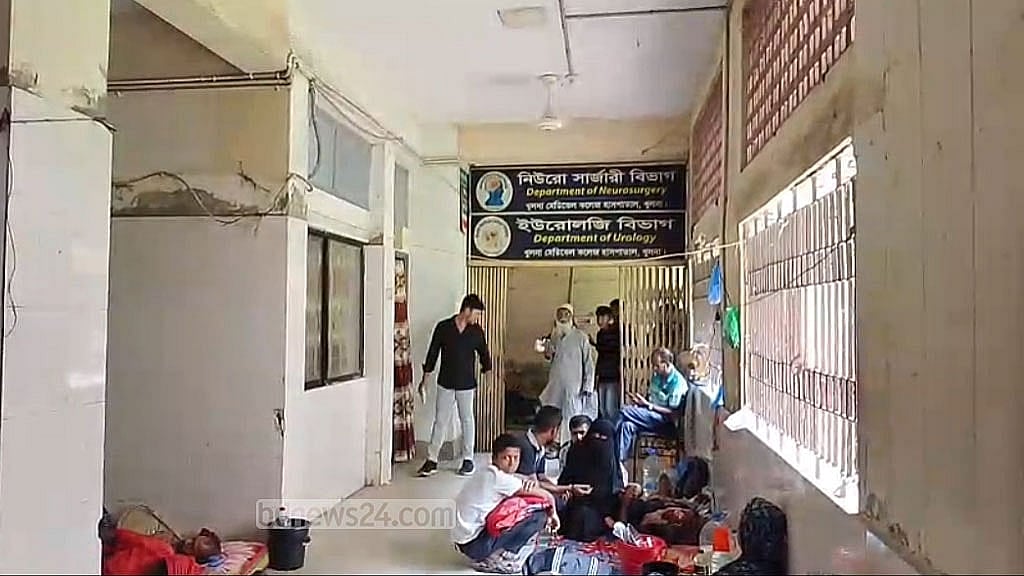
Mojahar said two contractors, Alhaj A Rahman & Sons and Messrs Al Mamun Trading, are responsible for supplying food to patients. “The contractor involved in the incident on the second day of Eid-ul-Azha has also been served a show-cause notice,” he said.
However, Habibur denied all allegations against him.
“I was not in Khulna on the second day of Eid,” he said. He declined to comment on his removal from kitchen management responsibilities.
Repeated attempts to contact Sharmin Sultana, proprietor of A Rahman & Sons, were unsuccessful as her mobile phone was switched off.
Similarly, Abdullah Al Mamun, proprietor of Messrs Al Mamun Trading, disconnected the call after learning the caller was a journalist. He did not respond to subsequent calls or messages.
Hospital director Ainul Islam said: “I took charge of this hospital in August 2025. I do not know what Habib did before that. However, since my appointment, I have been regularly monitoring the kitchen.”
Asked about the allegation that patients were served rotten chicken on the second day of Eid-ul-Azha, he claimed that the administration had taken immediate action.
Md Mosharraf Hossain, director of the DGHS Khulna Division, said: “I have only recently joined. Khulna Medical College Hospital faces many problems, which will be addressed gradually.”
He also assured action regarding the lack of safe drinking water and irregularities in the hospital kitchen.