Published : 30 Jan 2026, 01:43 AM
Updated : 21 Aug 2026, 03:05 PM


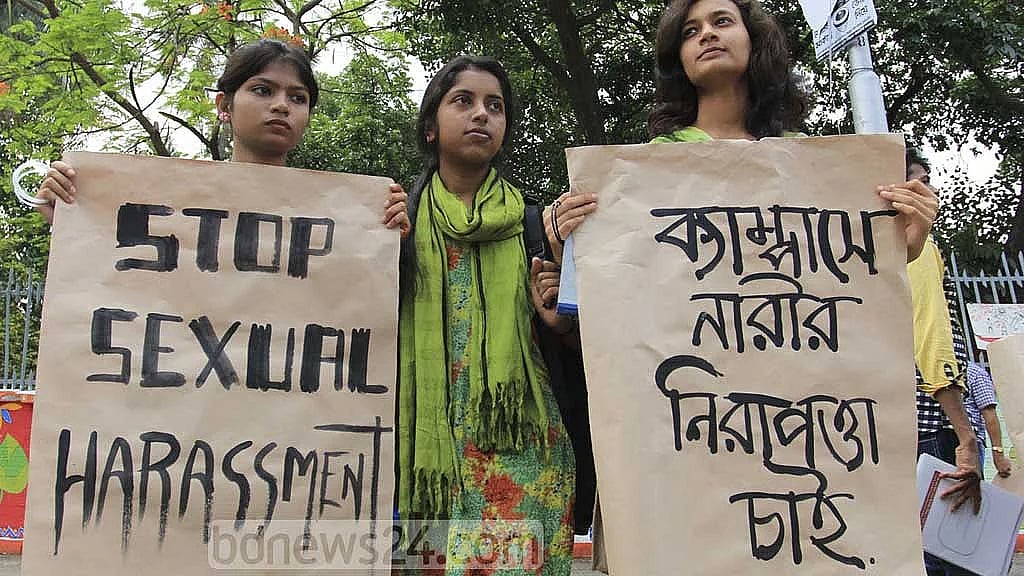
The interim government is framing two separate ordinances to prevent sexual harassment at workplaces and educational institutions, and to curb domestic violence.
The Advisory Council has given policy approval to the draft Workplace and Educational Institutions Sexual Harassment Prevention Ordinance, 2026 and the Domestic Violence Prevention Ordinance, 2026.
The approval came at the Advisory Council’s weekly meeting held on Thursday at the Chief Advisor’s Office (CAO) in Tejgaon.
Press Secretary Shafiqul Alam disclosed the decisions at a briefing at the Foreign Service Academy later in the afternoon.
He said the Advisory Council approved a total of 11 ordinances, proposals, and policies at the meeting.
Assistant Press Secretary Suchismita Tithi said, “The draft Workplace and Educational Institutions Sexual Harassment Prevention Ordinance, 2026 has four chapters and 20 sections.
“One important aspect is that the draft includes physical, verbal, mental, suggestive, and digital-space behaviour as sexual harassment.”
Referring to widespread abuse faced by women online, she said: “A women-led committee will be able to receive complaints verbally, in writing, or online, and the investigation must be completed within 90 days of receiving the complaint.
“The ordinance considers providing security and mental support to the complainant, and includes special provisions separately for children and persons with disabilities.
“Priority has been given to ensuring complete confidentiality throughout the investigation.”
She added that punishments will be determined according to the severity of the offence in cases of sexual harassment at workplaces and educational institutions.
She said, “The ordinance includes provisions for warnings, suspension or dismissal from service, expulsion, or compensation. There are also provisions for punishment if a complaint is proven to be false.
“Complaint committees will be formed at local and national levels, including district and Upazila levels, and it has been made mandatory to formulate rules governing these committees within 90 working days.”
Suchismita added, “The draft [Domestic Violence Prevention Ordinance] has 30 sections across seven chapters. Key features include ensuring access to shelters, medical care, mental support, legal assistance, and emergency protection measures.
“Based on court complaints, temporary protection orders can be issued to restrict contact or proximity with the perpetrator, followed by permanent orders after investigation.
“After receiving a complaint in the prescribed form, a preliminary investigation must begin within seven days, and a report must be submitted within 30 days,” she said.
The Advisory Council also gave final approval to the draft National Sports Council Ordinance-2026 and the draft Bangladesh Animal and Animal Products Quarantine Ordinance-2026. The meeting also approved a proposal to declare Mar 23 as “BNCC Day”.
The Council also approved the proposal to withdraw Bangladesh’s declaration under Article 14(1) of the international convention titled “Convention against Torture and Other Cruel, Inhuman or Degrading Treatment or Punishment (CAT)”, said Shafiqul.
He also informed about the approval for opening a mission in Guyana at the charge d’affaires or first secretary level, staffed by officials from Bangladesh’s existing embassies and missions.
Besides this, the Advisory Council also approved the draft Import Policy Order 2025-2028, the proposal for Bangladesh to become a party to the 1980 Hague Convention on the Civil Aspects of International Child Abduction, and granted policy-level and final approval for the drafts of the Narayanganj Development Authority Ordinance-2026 and the Comilla Development Authority Ordinance-2026, the press secretary said in the briefing.
He added that minor changes to the National Sports Council Ordinance now allow sports organisations to be established at the metropolitan level to promote local sports activities.
The press secretary said the draft Bangladesh Animal and Animal Products Quarantine Ordinance-2026 renames the law for clarity, removes the liability exemption under Section 15, and will repeal the 2005 Act.
Shafiqul also said Bangladesh has withdrawn its reservation under Article 14(1) of the Convention Against Torture (CAT), ensuring state victims and their dependants can claim compensation and rehabilitation. Human rights activists had been urging this development for nearly two decades.