Published : 27 Mar 2026, 07:49 AM
Updated : 21 Aug 2026, 03:31 PM


For nearly two decades, Bangladesh’s second UNESCO-recognised natural heritage site, Tanguar Haor has witnessed an ecological collapse: half its native fish species have vanished.
“The number of birds visiting in winter has drastically decreased,” notes local environmentalists. Migratory patterns are disrupted, and the wetland’s delicate balance teeters on the brink.
Former dean of Fisheries at Sylhet Agricultural University Prof Mrityunjoy Kunda, recounts a recent 2024 study: “We recorded 76 species of fish in Tanguar Haor. But not all species are common or evenly distributed. In some areas, only 35 to 40 species appear regularly. The rest are rare.”
He adds that previous studies in 2022 noted 93 species, and the IUCN’s 2007 assessment documented 141 species, falling to 134 by 2015.
“Within a decade, a substantial number of species has disappeared,” he said.
The IUCN’s 2015 Red Data Book had also listed 19 mammal species, 219 native and migratory birds, 24 reptiles, eight amphibians, and 104 plant species.
By 2024, a joint survey by the Bangladesh Bird Club, IUCN, World Bird Monitoring, and the Forest Department revealed 43,516 birds across 49 species, showing a 77 percent decline in native and migratory birds over a decade.
Geography and History
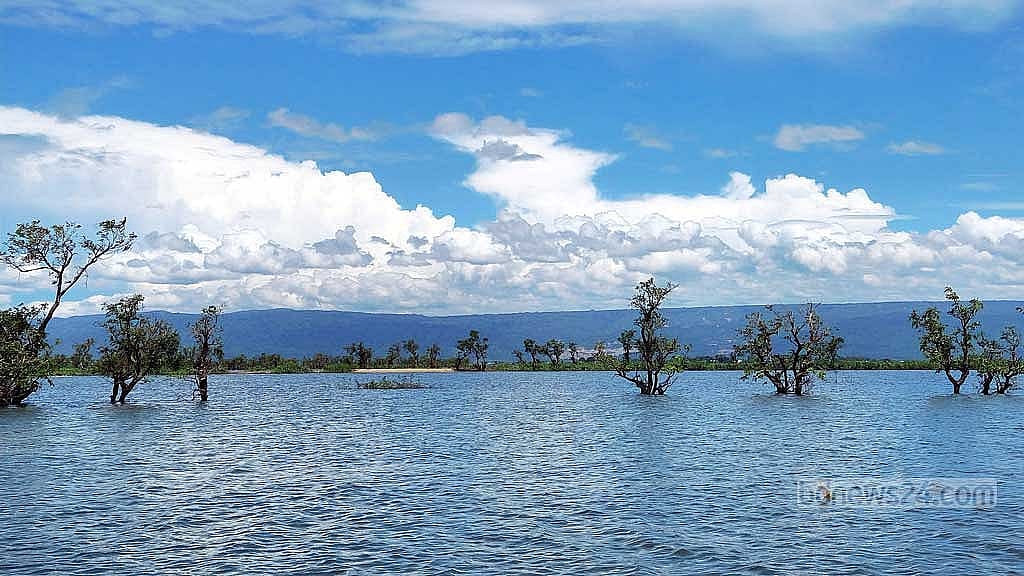
Locally called “Noy Kuri Kanda, Chhoy Kuri Beel”, Tanguar Haor spans the foot of the Meghalaya hills across Madhanagar and Tahirpur Upazilas.
It comprises 180 kandas (raised riverbanks) and 120 beels (wetlands), covering 9,727 hectares. The central waterbody spans 28sqkm, while the rest is farmland and villages.
Seasonal water fluctuations leave only the “Adi Beel” filled in the dry season, with farmers cultivating rice elsewhere.
After 60 years of leasing, the haor was declared an environmentally critical area in 1999, and a Ramsar site in 2000.
In 2001, Bangladesh and Switzerland signed a MoU for sustainable management, implemented under Sylhet district administration since 2003.
In May 2025, a new $4.05 million project launched in Dhaka aims at community-based wetland management, environmental restoration, biodiversity conservation, and eco-friendly livelihood support for locals, including:
• Reforestation and wetland restoration over 1,500 hectares
• Creation of biodiversity sanctuaries
• Micro-enterprise support for women
• Promotion of responsible tourism, wetland farming, and fisheries

The Decline of Native Fish
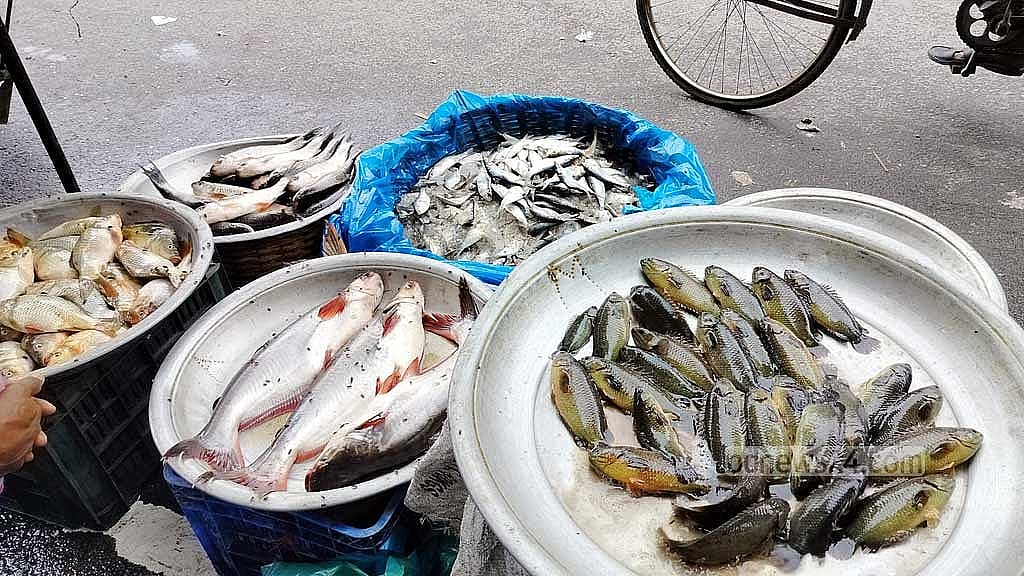
Tanguar Haor’s markets were once overflowing with indigenous fish. Today, availability is scarce. Seasonal cultivation yields pangas, koi, and tilapia in monsoon, with small indigenous fish appearing only in winter.
Local fishermen recount a changing ecosystem.
Ripchan Habib of Pathabuka village said, “The Alam’s Dhowar Beel once teemed with chital, nanid, and baghair fish. Now, they are practically extinct. Even large ponds like Rupavai and Tekhuniya, once abundant with rui, katla, and mahashol, are empty.”
Humayun Kabir from Jaipur village said, “We used to eat haor fish and sell it for a living. Today, we rely on farmed pangas and tilapia. Even those aren’t always enough.”
Prof Kundu notes small signs of hope: “Some species, like bamosh and rani fish, are reappearing. But the total number of species remains worryingly low.”
Traditional fish storage baskets, or chopras, once ubiquitous, have vanished. Villagers now purchase farmed fish from markets, further reducing reliance on the haor.
Illegal Fishing and Environmental Threats
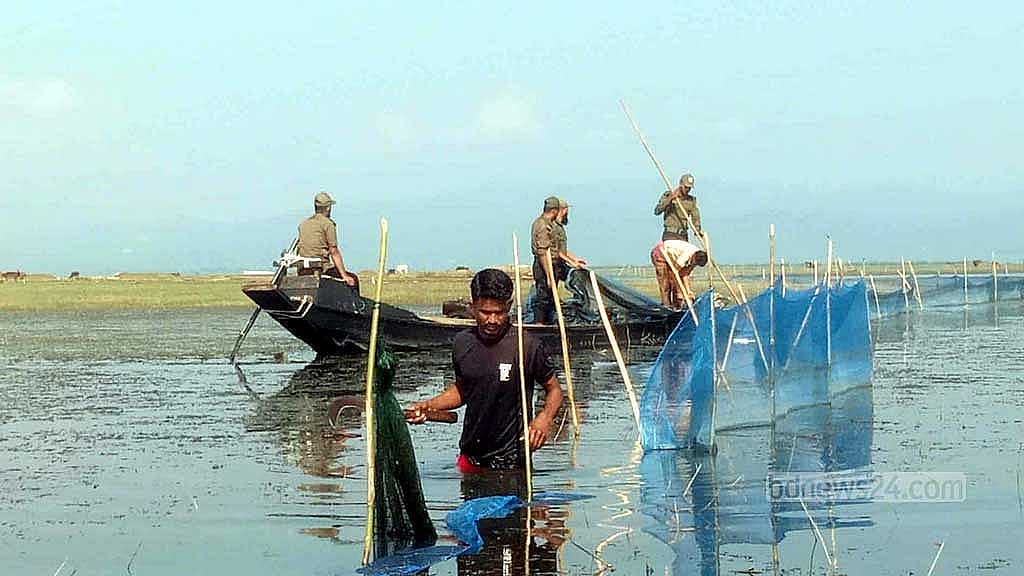
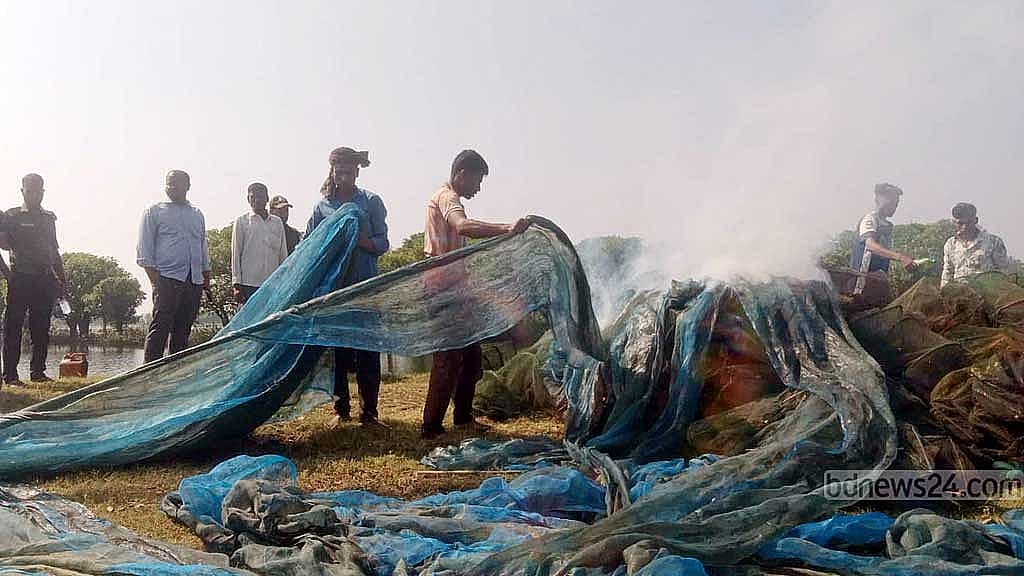
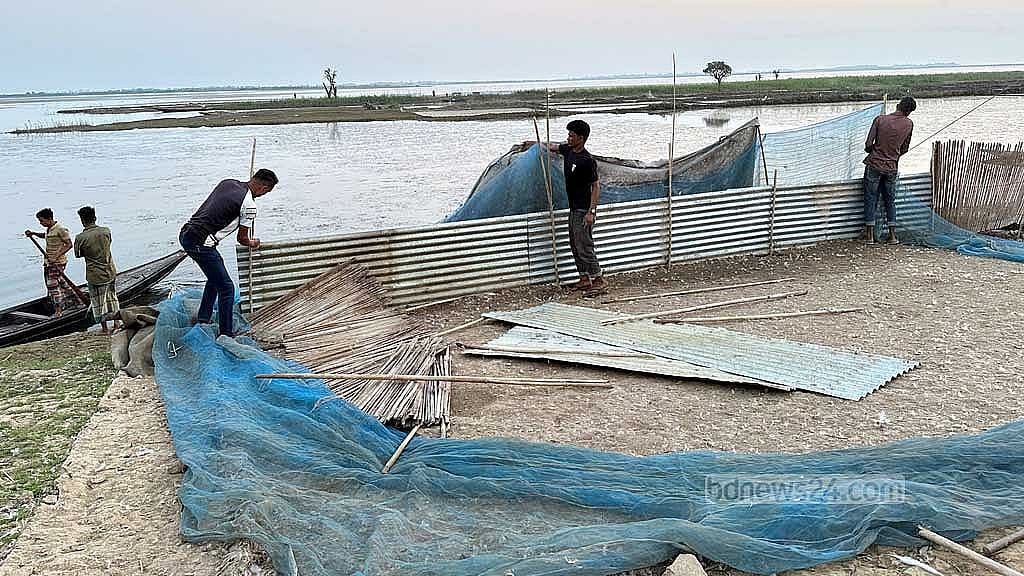
Illegal gear such as China duari nets and Kiranmala Chai traps trap small fish and threaten the broader ecosystem. Electric shocks and chemical poisoning are increasingly observed.
Humayun said, “Next month, China duari nets will start. Those in charge have already ruined the haor. Large motorised boats harvest fish; any attempt to stop them is mocked.”
Other fishermen note unregulated prawn traps that trap all aquatic life, with long-lasting non-degradable materials contaminating the ecosystem.
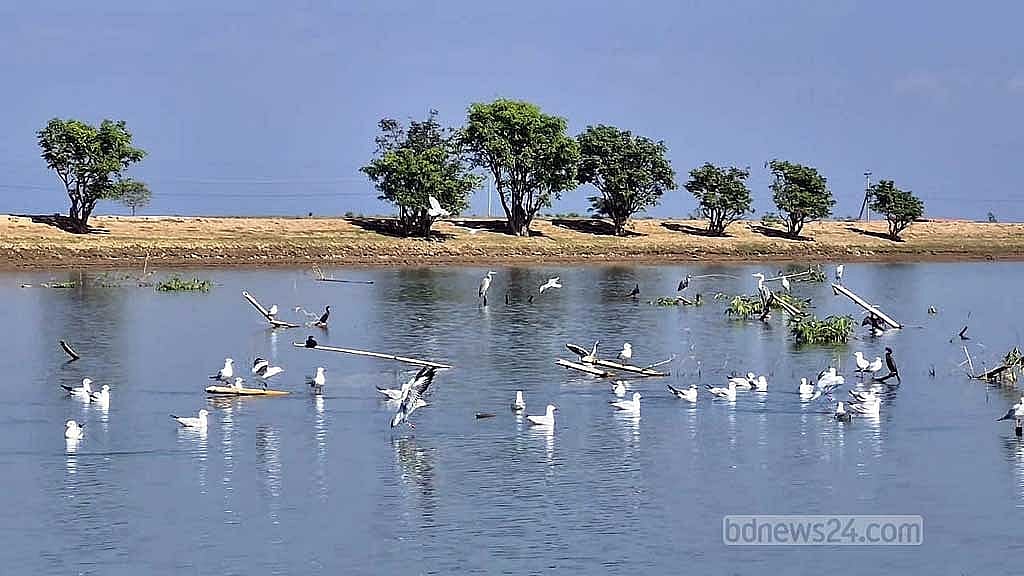
The consequences are apparent for birds too. Wildlife expert Shimanto Dipu cited a 2025 study: “This year, migratory birds arrived in the smallest numbers in two decades: 22,600, compared with 150,000 in February historically.
“Nets, poison, electric shocks, night fishing, free-roaming cattle, and overgrown duck farms have destroyed their habitat.”
Bangladesh Bird Club data corroborates: 60,000 birds in 2018, down to just over 27,000 in 2022, reflecting ongoing habitat degradation.
Restoration and Sustainable Management
Prof Kundu stresses urgent conservation measures:
• Declare five major beels as permanent sanctuaries, free from human disturbance
• Dredge rivers, tributaries, and beels to restore water retention
• Prevent unplanned road construction; incorporate culverts and bridges for fish movement
• Reintroduce extinct or rare species via “bill nurseries”
• Restore aquatic vegetation (Hizal, Tamal, Koroch) for fish food and shelter
Coal transport, houseboats, and industrial waste pollute water.
Prof Kundu said, “Last winter, water from the Boulay and Rakti rivers turned completely black. Without control, fish cannot survive.”
Soil expert Prof Md Abul Kashem said, “Of the 21 rivers feeding the haor, water exits through Titas, old Brahmaputra, and Meghna. Raised land and reduced storage capacity exacerbate floods. Without coordinated measures, local suffering will continue.”
Tanguar Haor stands as a stark mirror of ecological neglect: a wetland once brimming with life is now stripped of half its native fish and most migratory birds.
Yet experts remain hopeful -- through concerted conservation, habitat restoration, and community engagement, this rich ecosystem could rise again, safeguarding Bangladesh’s natural heritage for generations to come