Home
+
Published : 26 Jun 2026, 02:13 PM
The United Arab Emirates has yet to respond to Bangladesh's request to extradite former inspector general of police (IGP) Benazir Ahmed, Home Affairs Advisor Salahuddin Ahmed said.
The minister said the necessary documents had been sent through the foreign ministry and handed to UAE authorities by the Bangladesh embassy, but no reply had come from the other side.
"The UAE government has not yet informed us of anything. I hope we will hear back very soon," he added.
According to him, The UAE had given Bangladesh 30 days to submit the required documents after notifying Dhaka of Benazir's arrest by email, but the government sent the paperwork within three days.
Asked whether reports of Benazir carrying a foreign passport could complicate the extradition, the minister said Bangladesh was still awaiting the UAE's response.
"As far as we know, he is still with the federal police, in their custody. We have no other information.”
Benazir, who wielded absolute authority during the Awami League regime as the head of police and the Rapid Action Battalion (RAB), was arrested in Dubai on Jun 14, a development the home minister had first disclosed in parliament.
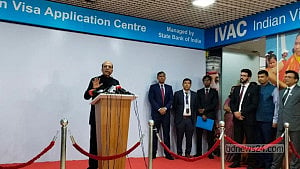
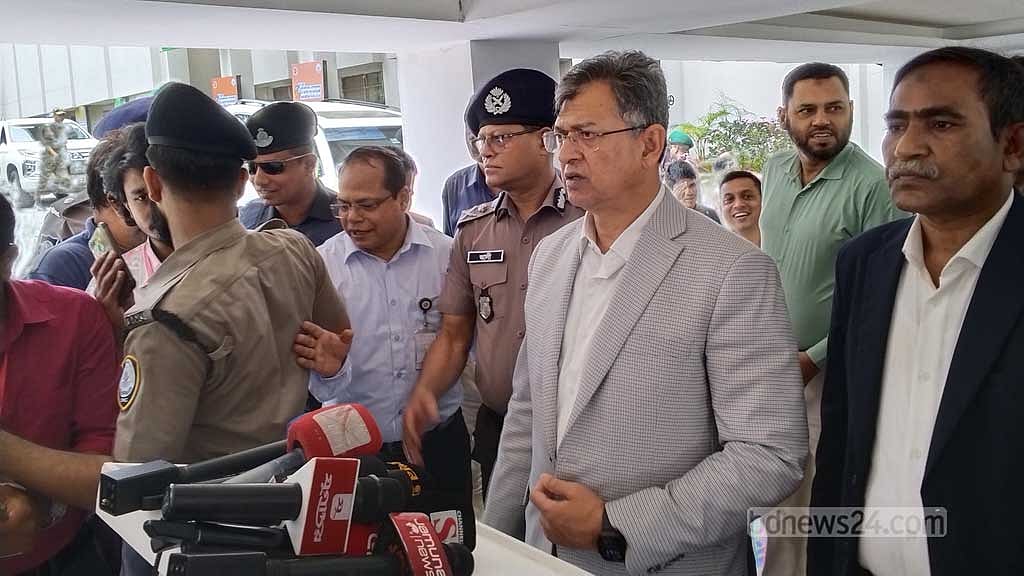
Salahuddin was speaking to reporters on Friday after an event at Osmani Memorial Auditorium in Dhaka marking the International Day Against Drug Abuse and Illicit Trafficking, where he also fielded questions on two other cross-border cases.
He said Dhaka has applied for the repatriation of three individuals arrested in India over the murder of Sharif Osman bin Hadi, the convenor of Inqilab Moncho.
He noted that the government used diplomatic channels to send the arrest warrants and case files to New Delhi in line with bilateral extradition agreements, expecting their return to complete the investigation and press formal charges.
Hadi was shot near the Bijoynagar water tank in the capital on Dec 12 last year, a day after the schedule for the national election was announced.
His death on Dec 18 while undergoing medical treatment in Singapore triggered nationwide protests and unrest.
Sixteen days after the shooting, on Dec 28, the Dhaka Metropolitan Police (DMP) claimed the prime suspect, Faisal Karim, and his motorcyclist accomplice, Alamgir Hossein, were hiding in the Indian state of Meghalaya, though Indian authorities did not initially acknowledge their presence.
Indian police eventually confirmed the arrests of Faisal and Alamgir on Mar 8, later netting Philip Sangma, an Indian national who assisted their escape across the border.
The trio remain behind bars in India.
On the reported surge in push-ins by India's Border Security Force (BSF), Salahuddin says the Border Guard Bangladesh (BGB) is on alert and preventing such attempts along the border.
India has been asked diplomatically to provide a list of anyone they claim is a Bangladeshi national, he added.
"We will verify their nationality. Once verified, we can bring them back through proper legal and diplomatic channels," he said, adding that some Indian nationals pushed into Bangladesh had already been placed in judicial custody.
Salahuddin linked the spike to post-election politics in West Bengal, where a new state government had taken office, suggesting the push-ins may reflect an electoral agenda of removing foreign nationals.
"But the process being followed is not proper," he said.
West Bengal's new Chief Minister Suvendu Adhikari has claimed his government has already pushed back more than 10,000 people.
Salahuddin was sceptical. "We haven't let a single person be pushed in. The BGB is on full alert," he said.