Published : 14 Apr 2026, 05:35 AM
Updated : 21 Aug 2026, 03:35 PM


A quarter-century after the deadly 2001 bomb attack on Chhayanaut’s Pahela Baishakh celebrations at Ramna Botomul, the verdict in the case filed under the Explosives Substances Act remains elusive.
Legal stakeholders are unable to provide a definitive timeline for the conclusion of the trial, which has been stalled at the self-defence testimony stage for over three years.
Four years ago, the case was at the argument stage in the Dhaka Speedy Trial Tribunal-1.
It was transferred to the Dhaka Metropolitan Special Tribunal-1 on Jul 28, 2022, and subsequently moved to Metropolitan Special Tribunal-15 on Jan 3, 2023.
Since then, the trial has made little progress.
The latest hearing, scheduled for Mar 31 for the recording of the defendants' self-defence statements, was deferred as the suspects were not produced in court.
Judge Tawhida Akhter has set Jul 9 as the new date for the hearing, according to Tanjil Hossain Bhuiyan, the court's bench assistant.
Additional Public Prosecutor Mahfuz Hasan said the delay is primarily due to the inability of authorities to produce the seven incarcerated defendants in court.
"These seven suspects are detained in different cases outside Dhaka,” he said.
Their presence is mandatory for the self-defence hearing, he added.
“We are ready for arguments and are sincere about a quick disposal, but the process cannot move forward until they are brought before the court," the prosecutor said.
Dhaka Metropolitan Sessions Judges' Court Public Prosecutor Omar Faruq Faruqi attributed the long-term delay to a previous stay order from the High Court.
He expressed optimism that the case could be resolved within the next "two to three months" once the self-defence and arguments are completed.
In contrast, defence lawyer Jasim Uddin, representing suspects Akbar, identified with a single name, and Abu Taher, claimed the case was "fabricated" by the Awami League government based on forced confessions.
He maintained that his clients are innocent and expects an acquittal if a fair trial is conducted.
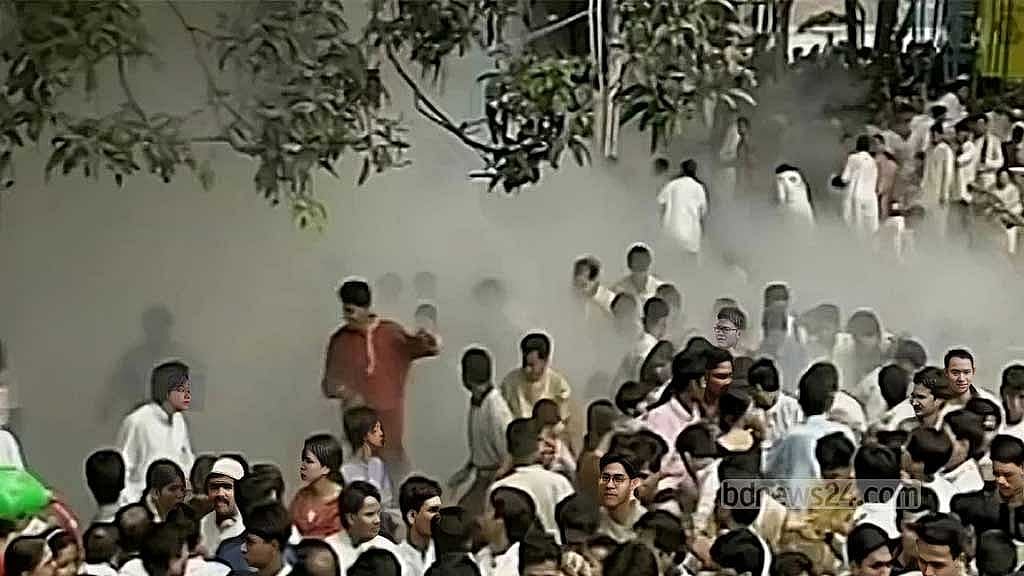
On Apr 14, 2001, a series of blasts during the New Year festivities killed 10 people.
Investigations revealed the attack was carried out by the militant outfit Harkat-ul-Jihad-al-Islami (HuJI) to strike at the heart of Bangladesh's secular culture.
Two cases -- one for murder and one under the Explosives Act -- were filed on the day of the attack.
It took the Criminal Investigation Department (CID) nearly eight years to submit a chargesheet against 14 people, including the late HuJI chief Mufti Abdul Hannan.
The murder case saw a verdict on Jun 23, 2014, where a lower court sentenced eight people to death and six to life imprisonment.
Following appeals, a High Court bench in May 2023 commuted several sentences, upholding one life term and sentencing nine others to 10 years in prison.
The explosives case currently involves 11 defendants, with their legal statuses varying significantly.
While seven of the suspects -- including Arif Hasan Suman, Shaukat Osman, and Shafiqur Rahman -- remain in custody, two others, Akbar Hossain and Abu Taher, are currently out on bail.
Md Tajuddin and Jahangir Alam Badar have been on the run.