Published : 07 Dec 2025, 06:13 PM
Updated : 28 Aug 2026, 01:30 AM


The Criminal Investigation Department (CID) has said the identification of the July Uprising activists buried near the Martyred Intellectuals Memorial will begin in line with international protocols.
CID chief Sibgat Ullah said around 114 activists were laid to rest at the site, but the process of identifying them through exhumation and DNA testing “will take some time”.
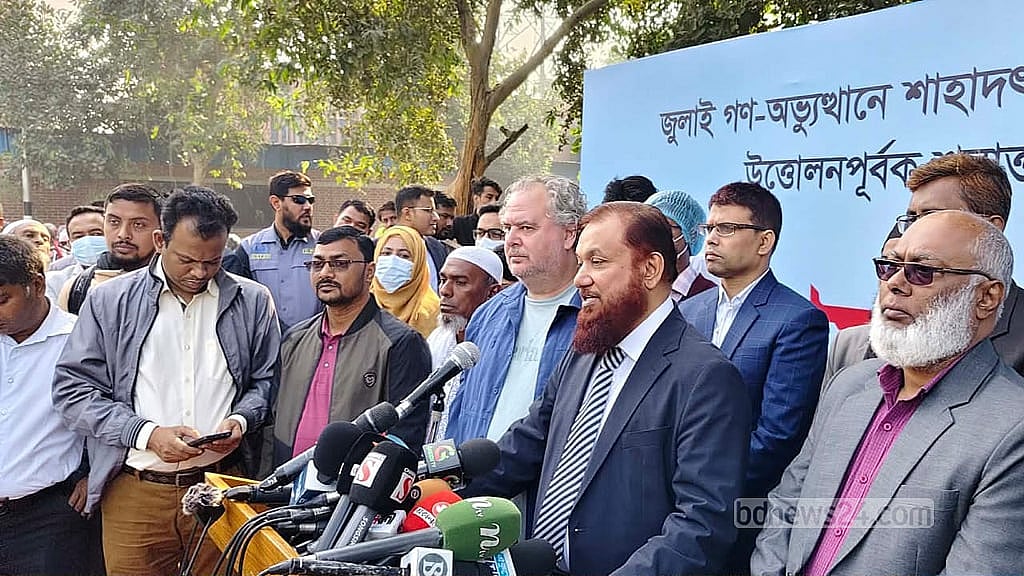
He made the remarks on Sunday at a press conference titled “Identification of the bodies of the unknown activists who died in the July Uprising by exhuming them” at the Rayer Bazar graveyard.
A temporary forensic lab has been set up inside the graveyard to collect DNA samples from the exhumed remains. The exhumation work has already started.
“These bodies will be exhumed as per international protocols. After that, their DNA tests will be completed,” Sibgat said.
“If the relatives want, the bodies will be handed over to them so they can bury them. Otherwise, after the tests, the bodies will be reburied with proper religious solemnity.”
He said the investigation is being conducted under the Minnesota Protocol, a UN-endorsed guideline widely followed in cases involving genocide or unlawful deaths.
“This process is time-consuming. So, it is not possible to say when it will be completed.”
The CID chief urged journalists not to take photographs of the remains during the process.
Argentine forensic anthropologist Luis Fondebrider, who arrived in Dhaka through the UN Human Rights Office, was present at the briefing alongside relatives of the activists.
Sibgat said Fondebrider is leading the entire process, having conducted similar operations in 65 countries over four decades.
He said every step -- exhumation, post-mortem examination, sample collection, and DNA profiling -- would follow the Minnesota Protocol.
“We have trained all stakeholders, including the city corporation, Dhaka Medical, forensic experts, DMP, and divisional commissioners.”
According to him, 114 graves have initially been identified based on applications submitted by families, though the actual number may vary.
After exhumation, officials will conduct post-mortems, collect bone or tissue samples, generate DNA profiles, and finally rebury the bodies with religious respect once identities are confirmed.
In response to a question, Sibgat said relatives can take custody of the identified bodies if they wish.
So far, 10 family members have applied, and more can contact the CID hotline to submit DNA samples.
“We do not know who is in which grave, so it is not possible to say how long the entire process will take.
However, we firmly believe that we will be able to identify all the martyrs,” he said.
More than a hundred July Uprising activists were buried at the Rayer Bazar graveyard, where the city corporation has demarcated the burial area with marble and tiles.
During a visit to the cemetery on Aug 2, Home Advisor Jahangir Alam Chowdhury said the government would take steps to identify the bodies.
At the time, he noted that many previously opposed exhumation, but the families had now largely agreed to it.
“If everyone agrees, we will identify them through DNA,” he said.
“If someone wants to take them to their village home, we will allow that too.”