Published : 18 Jul 2025, 06:44 PM
Updated : 28 Aug 2026, 01:23 AM


The four men shot dead during Wednesday's violent clashes between members of the Awami League and security forces in Gopalganj have been buried or cremated without inquest or postmortem examination, raising troubling questions about accountability and justice.
A Supreme Court lawyer said the lack of postmortems means the opportunity to establish who fired the fatal shots has likely been lost.
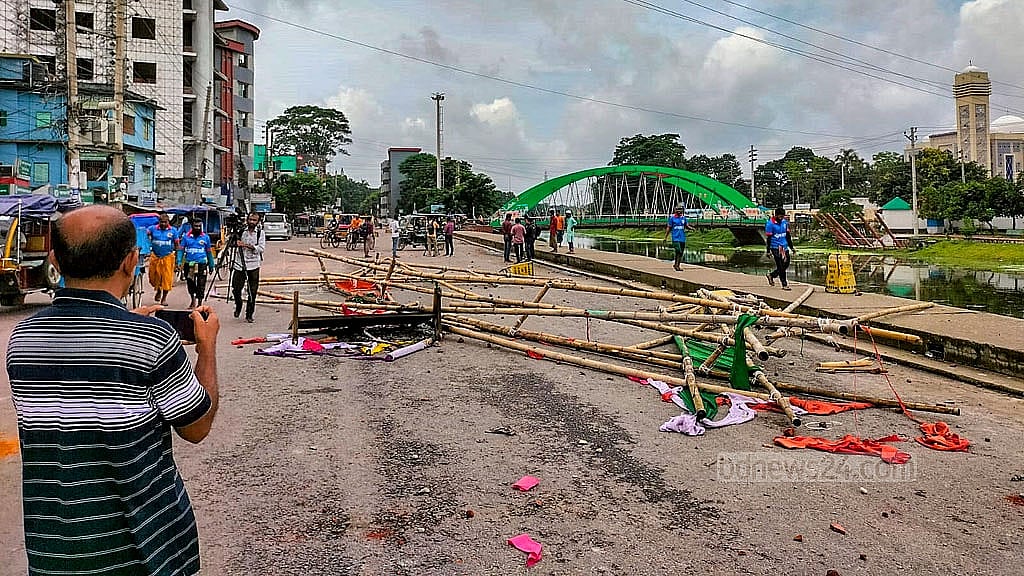
Wednesday’s unrest unfolded after repeated attacks on a National Citizen Party (NCP) rally in Gopalganj escalated into direct clashes between alleged Awami League activists and police and Army personnel.
The situation quickly spiraled into town-wide violence, leaving four dead and more than 50 injured, at least nine of them from gunfire. By Thursday night, no case had yet been filed over the incident.
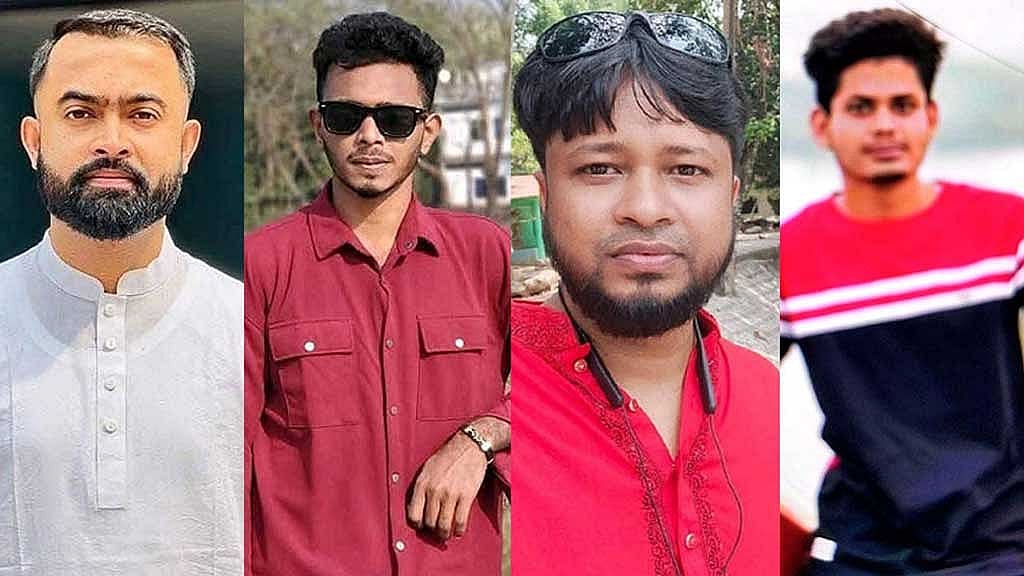
The deceased were identified as Dipto Saha, 30, a clothing trader from Udayan Road; Ramzan Kazi, 17, from Harinahati village in Kotalipara; Sohel Rana, 35, a mobile phone seller from Shanapara; and Imon Talukder, a crockery shop assistant from Bherar Bazar, Gopalganj Sadar.
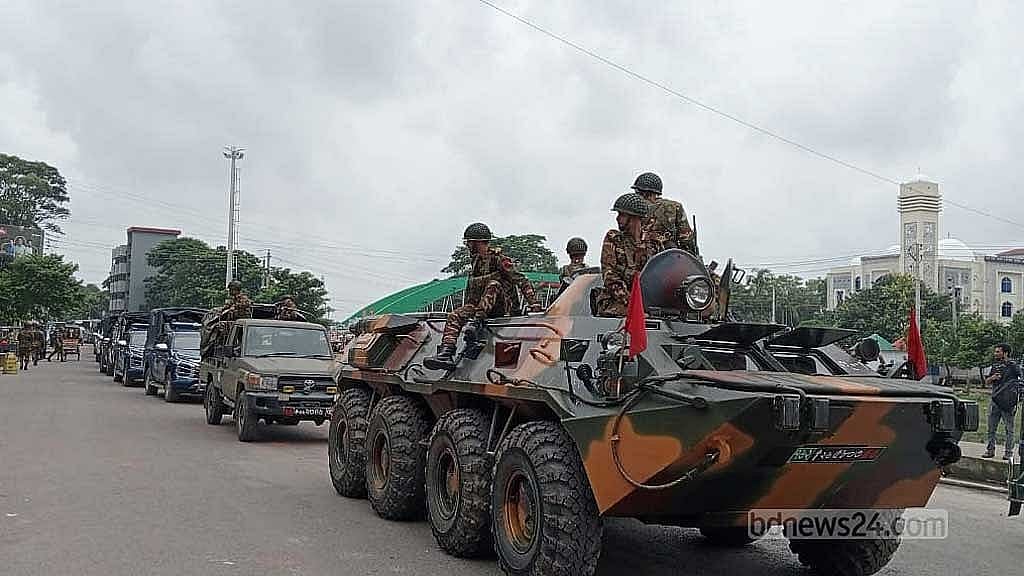
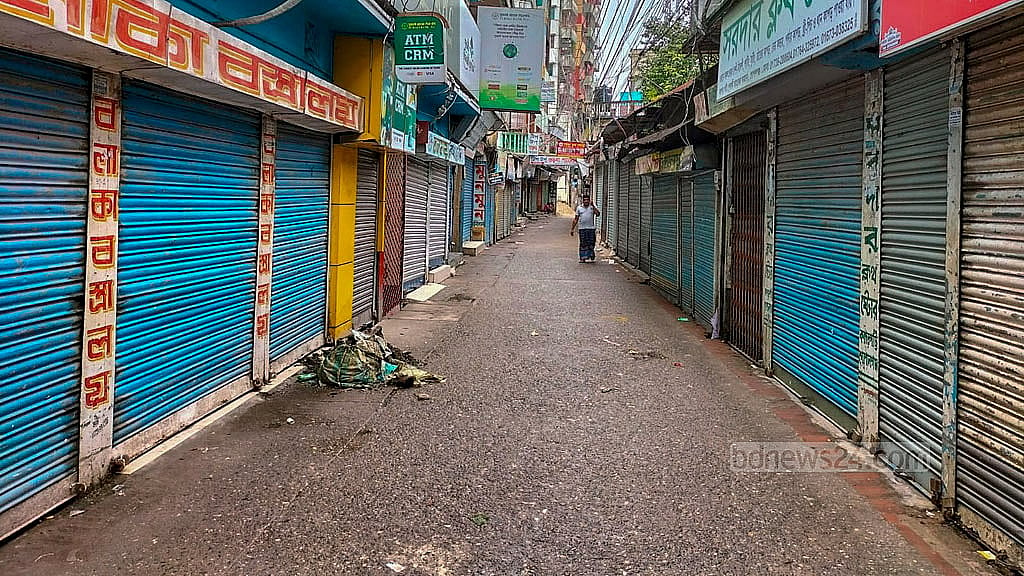
Authorities imposed a curfew across the town starting Wednesday night in an attempt to restore control. On Thursday evening, the curfew was extended through Friday, with a three-hour break between, until further notice.
Security forces detained at least 24 individuals in connection with the unrest.
Dipto was cremated at the municipal cremation grounds Wednesday night. Ramzan was buried after the evening prayer that same night. Rana and Talukder were buried Thursday morning at the municipal cemetery.
According to police, the bodies were removed by families before autopsies or even standard inquest reports could be completed. The families have refused to speak publicly about the burials.
This is not the first time security forces in post-coup Bangladesh have been accused of bypassing due legal process. In July last year, over a hundred protesters shot dead during a student-led uprising were also buried without autopsy.
In some cases, families alleged they were pressured into accepting the bodies without medical examination. For a few victims, months-later murder cases led to exhumations for delayed autopsies -- though many families refused to exhume their dead, raising concerns over their access to justice.
A police statement shared Wednesday by the Chief Advisor’s Office on Facebook claimed that “around 7:30pm, an unruly mob forcibly removed the bodies of the four deceased from Gopalganj District Hospital to prevent postmortems.”
Asked to elaborate on the circumstances under which the bodies were taken, Gopalganj Civil Surgeon Dr Abu Sayeed Mohammad Faruq told bdnews24.com on Thursday night, “We had limited support, meaning our security arrangements were inadequate.”
“There was a large crowd at the hospital, and when it became clear that two or three people had died, tensions escalated. Those accompanying the dead forcibly removed the bodies,” he said.
“Our hospital staff were not sufficient in number to physically stop the mob from taking the bodies. So they took them.”
Supreme Court lawyer Jyotirmoy Barua said such removal of the bodies was unlawful. “Regardless of what the incident was, if we look at it from a legal standpoint, how can you bury someone without an autopsy?”
“This is clearly a matter of criminal investigation. In such cases, postmortem reports are vital pieces of evidence.”
WHO FIRED THE SHOTS?
On Wednesday, Inspector General of Police Baharul Alam claimed officers did not use any “lethal weapons” to suppress the unrest in Gopalganj. However, by Thursday, it remained unclear who had fired the bullets that killed the four.
In a statement issued on Thursday, the Army said its troops had used “force in self-defense” after repeated public warnings failed to deter attackers. But the Inter Services Public Relations Directorate (ISPR) made no mention of gunfire, nor did it offer any casualty figures.
The legal rights group Ain o Salish Kendra (ASK) responded with concern. In a Thursday statement, it noted: “While the police chief claims no lethal force was used, video footage widely circulated on social media clearly shows the use of firearms and audible gunshots. So who fired these weapons?”
ASK added, “Without a clear and evidence-based explanation, public confusion, fear, and distrust of the administration will only deepen.”
Asked how such questions could now be resolved, lawyer Barua said: “A postmortem would have revealed what type of bullets or injuries were involved. Ballistics tests could have determined what kind of bullets struck the bodies.”
“In cases like this, autopsies are absolutely essential. The failure to conduct them is a violation of the law. It could even be an attempt to hastily cover up a crime. We strongly object to this.”
“State institutions must act with neutrality, especially when the stakes are this high. This is precisely what so many gave their lives for in 2024,” he added, referring to last year’s mass uprising.
Barua continued, “Of course families won’t say they’re happy their sons were killed. They want justice. But now, if they want to file a case, they may have to exhume the bodies for autopsies. That is another traumatic hurdle.”
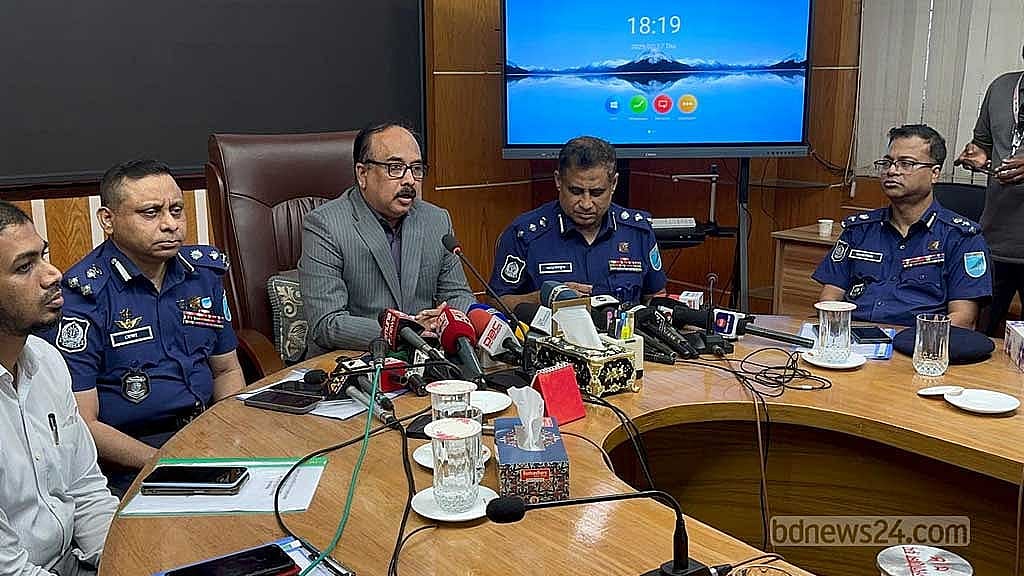
Asked about this at a press briefing Thursday evening, Dhaka Range Deputy Inspector General Rezaul Karim Mallik said, “We will bring this matter under legal process.”
THE INJURED
Three of those shot during the Gopalganj violence were brought to Dhaka Medical College Hospital late Wednesday night. They were identified as Sumon Biswas, 25, Ramzan Munshi, 28, and Abbas Ali Sarkar, 30.
Doctors say Abbas, a rickshaw driver, still has a bullet lodged in his leg and will require surgery to remove it.
“A bullet is still lodged in my leg, and the doctors say I’ll need an operation,” Abbas told bdnews24.com Thursday.
“But where will I get the money? I’m in so much pain.”
Lying in bed and grimacing in discomfort, Abbas said he had been passing through the launch terminal area when he was struck twice. One bullet passed through his body, but another remained lodged just above his left knee.
Dr Faruq, the civil surgeon in Gopalganj, said around 20 people sought treatment for injuries sustained in the clashes. Two remained hospitalised as of Thursday evening.
“They had penetrating injuries and received stitches after surgery,” he said, though he did not specify what had caused the injuries.
THE ARRESTEES
At a press conference at the Gopalganj deputy commissioner’s office Thursday evening, DIG Mallik provided updates on the situation and arrests.
“So far, more than 24 people have been arrested,” he said. “Anyone involved in Wednesday’s regrettable events will be brought to justice. That process is ongoing.”
He said preparations were under way to file criminal cases.
“We believe that some of the perpetrators came from outside the area. Intelligence suggests they are still in Gopalganj. We are trying to identify them and continue to monitor the situation closely,” Mallik said.
“We will maintain operations for as long as necessary to ensure the safety of the public.”
APPREHENSIVE SILENCE
With the town still reeling from the violence, the government opted to extend the curfew in Gopalganj.
The Ministry of Home Affairs said the curfew, initially imposed from 8pm Wednesday to 6pm Thursday, would continue until 11am Friday. There would be a three-hour pause until 2pm, after which the curfew would resume indefinitely.
This means the first break in the lockdown will come 39 hours after it began.
Zubair Hossain, president of the Gopalganj Press Club, told bdnews24.com on Thursday night: “The town is calm now. Security forces are patrolling heavily.”
Looking back at the clashes, Hossain said: “We saw a lot of unfamiliar faces -- very young boys, 18 to 20 years old. None of us imagined it would come to this.”
INQUIRY COMMITTEE
In response to the unrest, the government has formed a three-member inquiry committee to investigate the incidents in Gopalganj.
The committee will be headed by Home Secretary Nasimul Gani and include one additional secretary each from the public administration ministry and the law ministry. The committee has been asked to submit its findings within two weeks.
The Chief Advisor’s Office reiterated its commitment to public safety and rule of law in light of Wednesday’s events.
[Writing in English by Syed Mahmud Onindo and Sheikh Fariha Bristy]