Home
+
Published : 04 Jun 2026, 10:34 AM
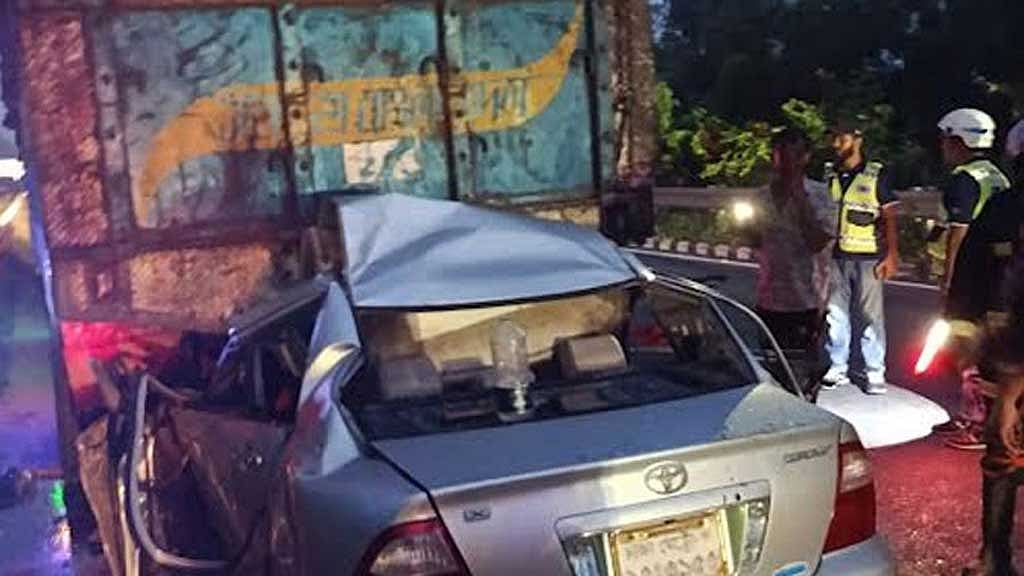
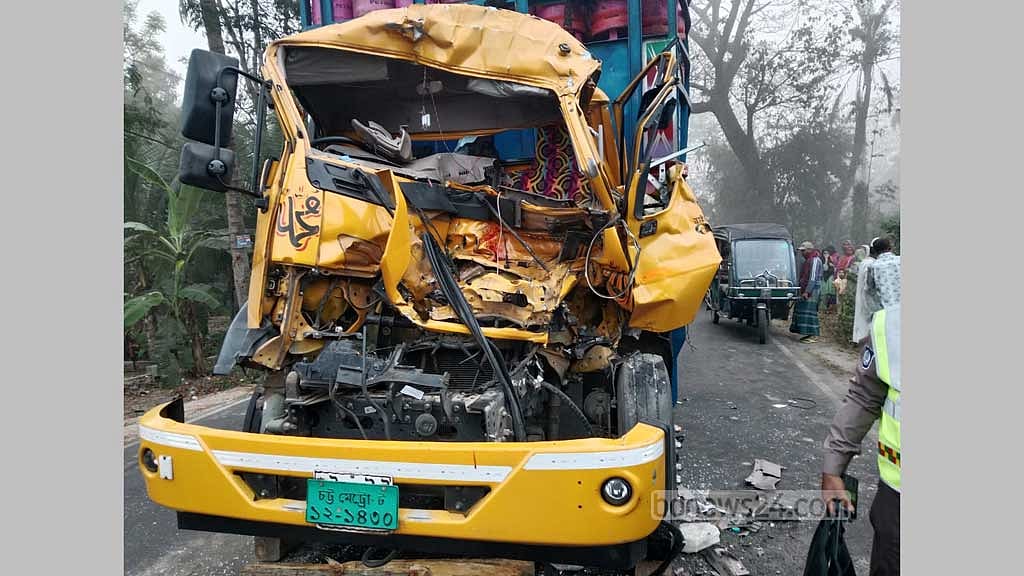
Rear-end collisions on Bangladesh's upgraded expressways have been rising sharply, with broken-down or parked vehicles emerging as a deadly new hazard on roads that were widened to prevent head-on crashes.
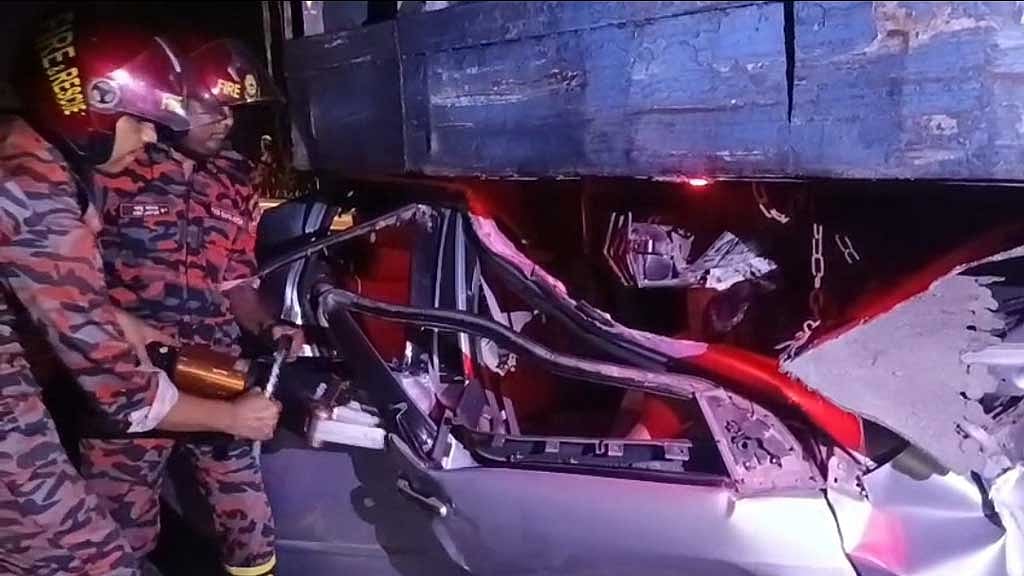
Five people died on Monday morning when a car ploughed into a stationary cylinder-laden truck on the Dhaka-Mawa-Bhanga Expressway in Faridpur at the end of the Eid-ul-Azha holiday.
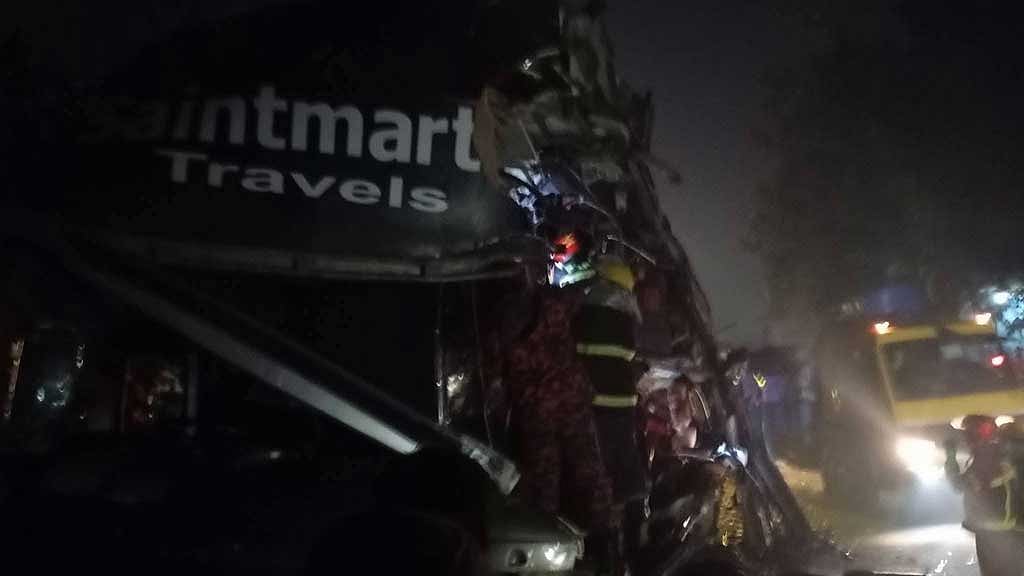
On May 31, two workers died when a bus rammed into another bus standing still in Sylhet’s Osmaninagar.
On May 5, a bus driver lost a leg and four passengers were injured when their bus hit a stationary cement truck in Gaibandha.
Police and transport sector insiders say rear-end collisions on the country's main highways are becoming more frequent.
The problem has emerged precisely because the roads have been upgraded -- wider, one-directional expressways have allowed vehicles to travel faster, leaving drivers with less time to react when they suddenly encounter a stationary vehicle ahead.
When the highways were two-way, slower speeds meant head-on collisions dominated the headlines.
Now the danger has shifted.
Police say vehicles are mostly forced to stop on expressways after breaking down.
In developed countries, drivers on high-speed roads are required by law to switch on hazard lights and place reflector cones or beacon lights some distance behind the vehicle to warn oncoming traffic.
In Bangladesh, however, a broken tree branch hanging from the back of a vehicle often serves as the only warning sign.
At night, that makes it difficult for approaching motorists to realise a vehicle ahead is immobilised.
Most major highways now have divided lanes. The Dhaka-Bhanga route has been upgraded to an expressway, while the highway linking Dhaka and Rangpur is largely divided and functions much like an expressway from Chandra to Rangpur.
The Dhaka-Chattogram and Dhaka-Mymensingh highways have also been separated by medians, allowing vehicles to travel at higher speeds.
The Road Safety Foundation, a non-government organisation that tracks crash data, says between 10 and 15 rear-end collisions occur every month.
Its Executive Director Saidur Rahman said buses and trucks frequently remain stranded on roads before being struck from behind by other vehicles.
He added that police bear responsibility for these incidents. “Every day, hundreds of vehicles break down on highways because police allow unfit vehicles to operate.”
“After an accident, it comes out that the vehicle has no fitness certificate and the driver has no licence,” he said, pointing to Monday’s Bhanga crash as one such case.
Shibchar Highway Police chief Mizanur Rahman said the Mawa Expressway has designated safe zones for broken-down vehicles.
“As soon as a vehicle breaks down, if we are informed or our patrol team receives the information, we tow it to the safe zone. But accidents sometimes happen in the time it takes us to reach the spot.”
According to him, the law requires stalled vehicles to keep all lights on and switch on hazard lights so other drivers can spot them from a distance.
Professional drivers, however, said the reality on the ground is that a broken tree branch is the customary signal.
At night, some drivers switch on parking lights, but in fog or heavy rain, even those are not visible.
Rahman from the Road Safety Foundation reiterated that developed countries deploy reflective cones or beacon lights, whereas “corruption remains the only consistent practice locally” despite daily loss of lives, urging for stringent legal measures.
Microbus driver Md Babul said the problem is more severe for smaller vehicles. “It is a major issue on the left lane. Big buses and trucks have helpers sitting on the left, so they can see better.
“But we who drive small vehicles without helpers are more at risk.”
He added that many trucks do not use proper lights. “Some don’t even have proper rear lights. They just hang a branch behind the vehicle.”
Bus driver Abdul Jabbar, who has been driving on the Dhaka–northern route for around 20 years, mentioned that transport workers refer to roadside parked vehicles as “Joma Gari” or “deposited cars”.
Such vehicles were once common, but roads from Chandra to Rangpur have improved significantly and traffic now moves much faster, he added. “That makes it difficult to regain control when a parked vehicle suddenly appears ahead”.
Drivers either crash into the vehicle or brake sharply and overturn, Jabbar said, adding that he always instructs helpers to keep watch on the left side.
Truck driver Md Israfil, who travels across the country, said hundreds of buses and trucks are parked along roadsides every night in areas such as Gazipur, Narayanganj and Narsingdi on the outskirts of Dhaka.
If a loaded truck develops a problem, drivers often have no option but to stop on the road, he said.
Israfil added that new trucks come equipped with triangular reflective warning signs that can be placed behind a disabled vehicle, but many drivers and helpers either do not bother using them or are unaware of their purpose.
He believes better enforcement and greater awareness are needed to improve safety.