Published : 17 Jul 2025, 09:09 AM
Updated : 28 Aug 2026, 01:23 AM


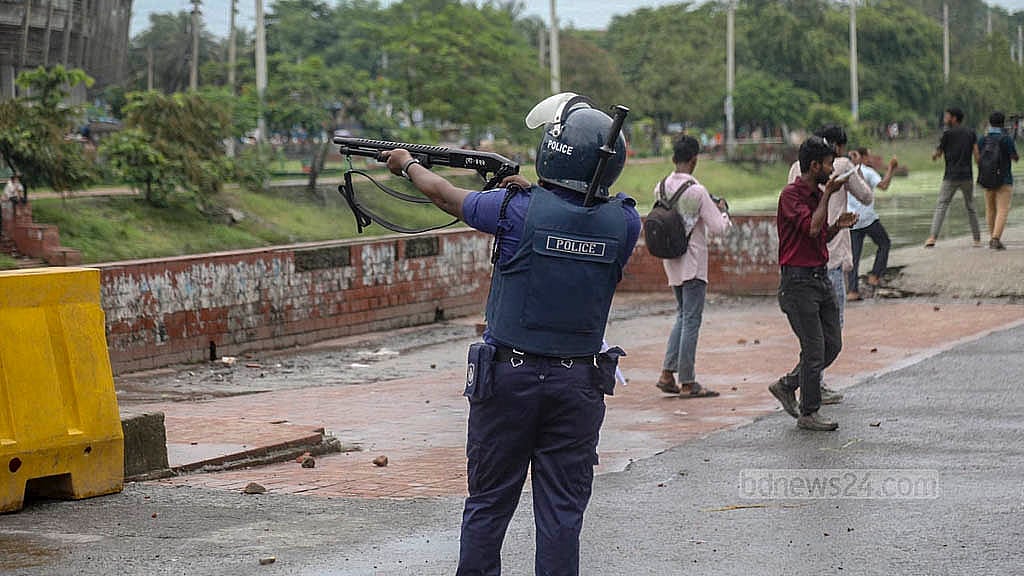
With the National Citizen Party’s (NCP) “July March” rebranded as the “March to Gopalganj” and a night of opposing rumours fuelling unrest, tensions in Gopalganj intensified, culminating in violence that have claimed at least four lives after Awami League supporters attacked the peaceful rally.
With police and Army reportedly failing to contain the unrest, authorities first imposed Section 144 to restrict public gatherings.
When that proved ineffective, a 10-hour curfew was enforced from 8pm on Wednesday.
The BNP, Jamaat-e-Islami, and other political parties condemned the attack, calling it “disgraceful” and demanding swift justice.
Several have since announced nationwide protest programmes.
The interim government also issued a stern response, calling the assault a “shameful breach” of human rights.
“Those responsible for this brutal attack must be brought to justice,” the statement read. “There is no place for political violence in this country. The rule of law must prevail.”
Gopalganj, a traditional Awami League stronghold, had remained relatively quiet since the government's fall in August 2024 after a student-led mass uprising.
But Wednesday's violence has sparked fears that unrest could spread and threaten the general election set for February.
Political analysts warn of deeper instability if tensions are not urgently defused.
“What happened in Gopalganj is tragic and deeply worrying,” said senior journalist Mozammel Hossain.
“There’s a real risk of a chain reaction. At a time when the nation is hoping for a peaceful transition, this sort of violence is the last thing we need.”
He added, “Another point is that we are remembering the martyrs of July, particularly on the day of Abu Sayed’s death. To see such a reprehensible incident on this day is completely unacceptable.”
When asked if the incident might lead to more violence, Mozammel said: “That will depend on how different sides act. Already, in many places, certain political groups -- sometimes disguised as angry mobs -- have carried out actions that violate individual rights, human rights, and law and order.
“The government has been indifferent and has not handled these matters properly.
“If the government or the administration fails to take proper responsibility and continues to turn a blind eye to chaos and mob violence, while selectively intervening elsewhere, then this sort of thing will only continue and grow,” he added. “It all depends on their role now.”
BUILD-UP TO VIOLENCE
Tensions began to rise in Gopalganj from Tuesday, ahead of the NCP’s planned march and rally.
Social media saw a surge of activity, with both supporters and detractors amplifying the event online.
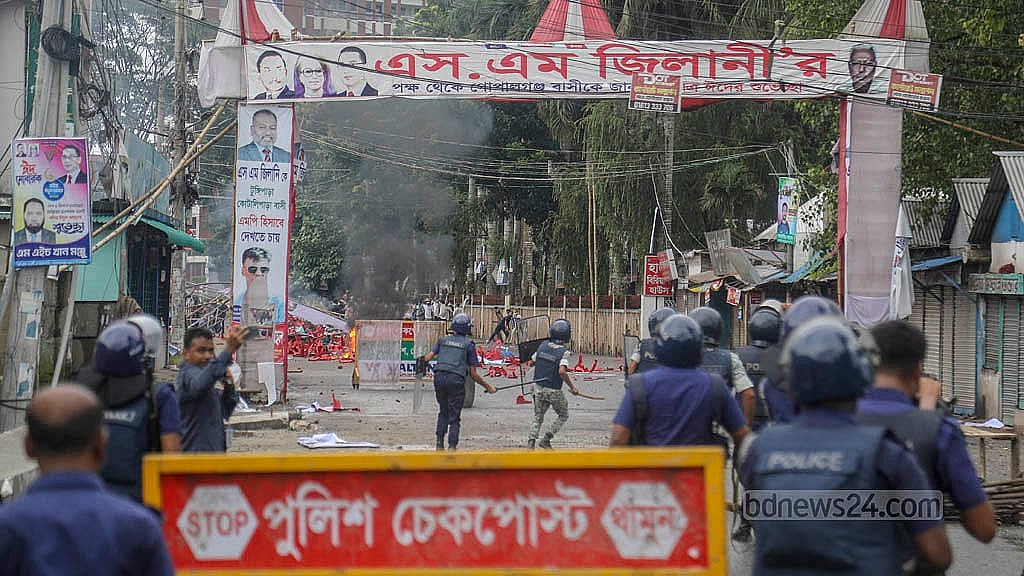
The unrest began in the morning before the NCP leaders could enter Gopalganj with their motorcade.
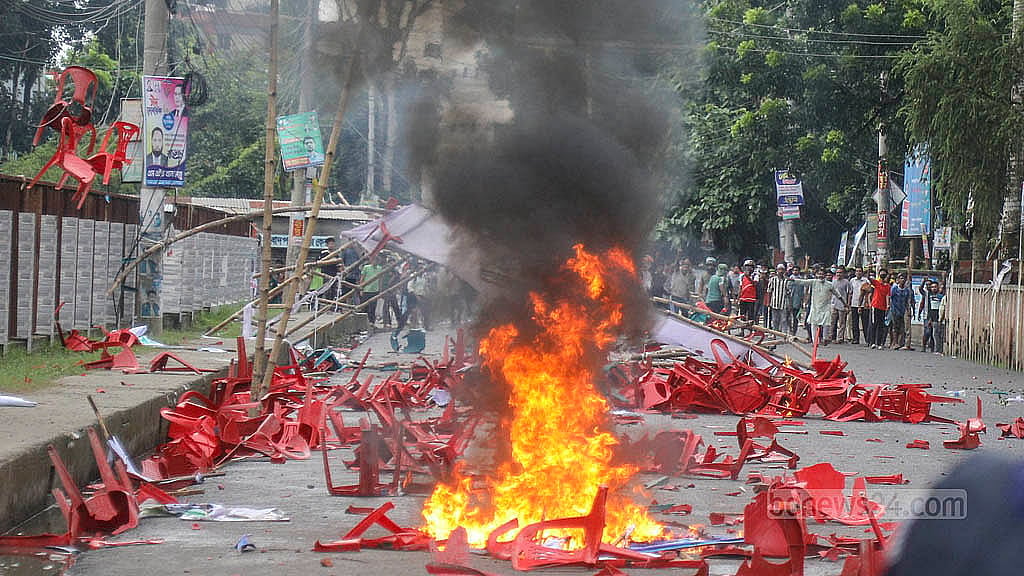
A police vehicle was torched, followed by an attack on the Upazila Nirbahi (executive) Officer’s (UNO) car.
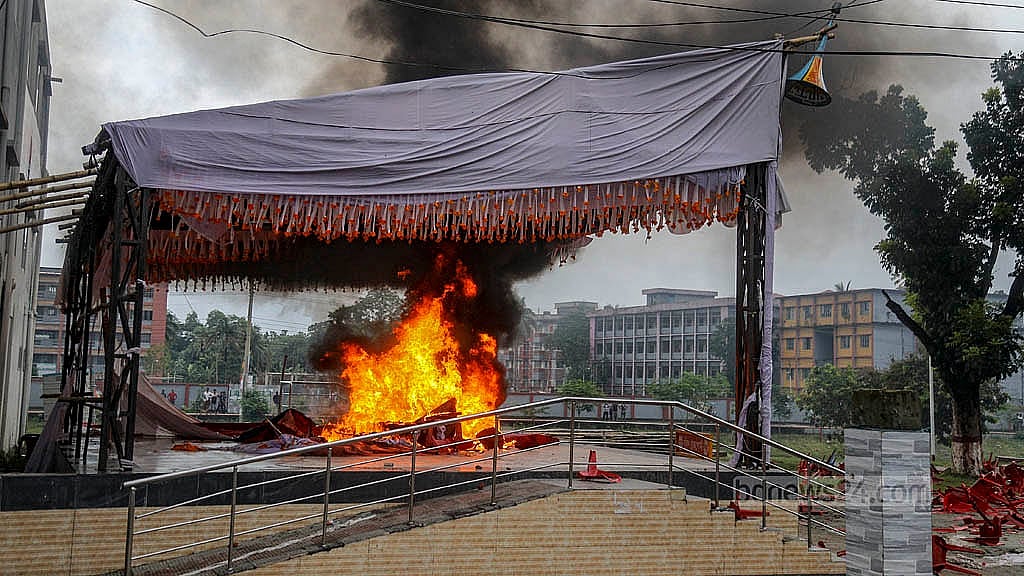
Around 1:30pm, Awami League and Bangladesh Chhatra League activists marched through the town shouting “Joy Bangla” and stormed the NCP rally stage at the municipal park.
After a short rally, the NCP leaders attempted to leave for Madaripur via Tekerhat under police escort.
But around 2:45pm, as the convoy reached near Gopalganj Government College in the Launch Ghat area, they came under renewed attack.
In the face of the chaos, the NCP’s central leaders sought refuge at the district police superintendent’s office.
Later, escorted in Army armoured vehicles, they left the premises.
The local administration enforced Section 144 at noon, banning public gatherings.
Later in the evening, the Chief Advisor’s Office (CAO) announced a curfew from 8pm Wednesday to 6pm Thursday to bring the situation under control.
By 8pm, at least four deaths had been confirmed. Jibitesh Biswas, superintendent of Gopalganj General Hospital, said four bodies had been brought in amid the unrest.
Although the NCP had planned to travel on to Madaripur, their leaders instead diverted to Khulna.
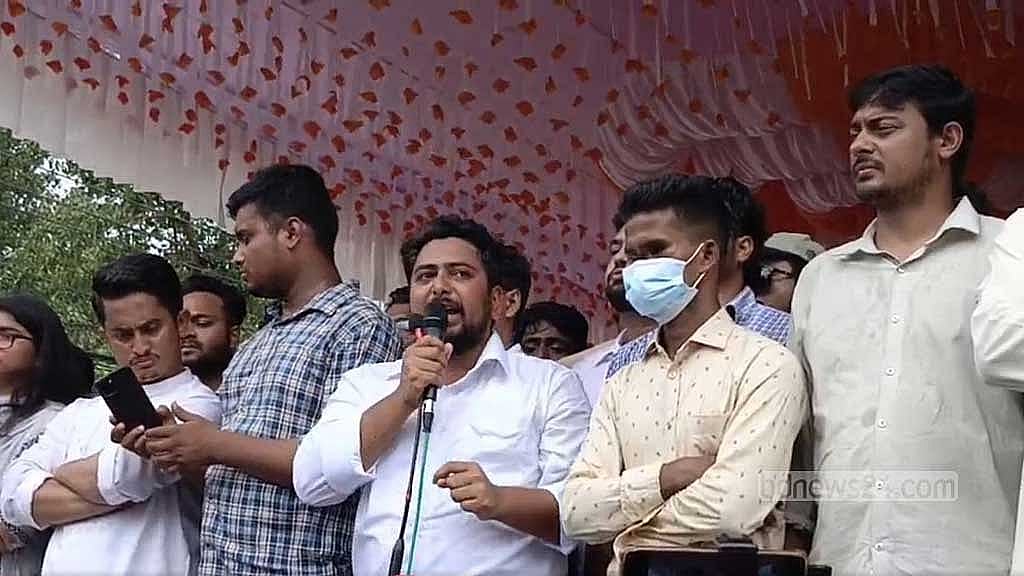
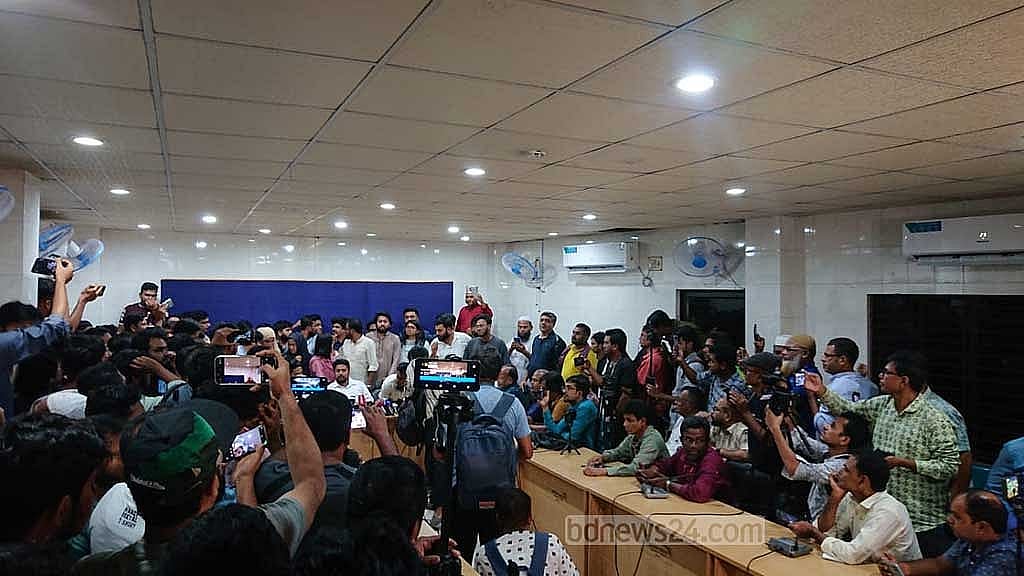
There, party convener Nahid Islam addressed a late-night press conference.
He alleged that “Mujibists” had carried out the attack in a “militant fashion”, aiming to kill the NCP activists.
“Fascists and Mujibists armed themselves and launched this assault -- even attacking police.”
The NCP leader issued a 24-hour ultimatum for the government to arrest those responsible.
“The Awami League has turned into a terrorist organisation. It is no longer a political party, and they have made that perfectly clear,” Nahid said.
“We have long said that Gopalganj has become a sanctuary for 'fascists' across the country. Those accused in criminal cases are sheltering there. This attack was carried out with intent to kill.”
He added, “No party other than the Awami League is allowed to hold rallies in Gopalganj -- we’ve shattered that myth today.”
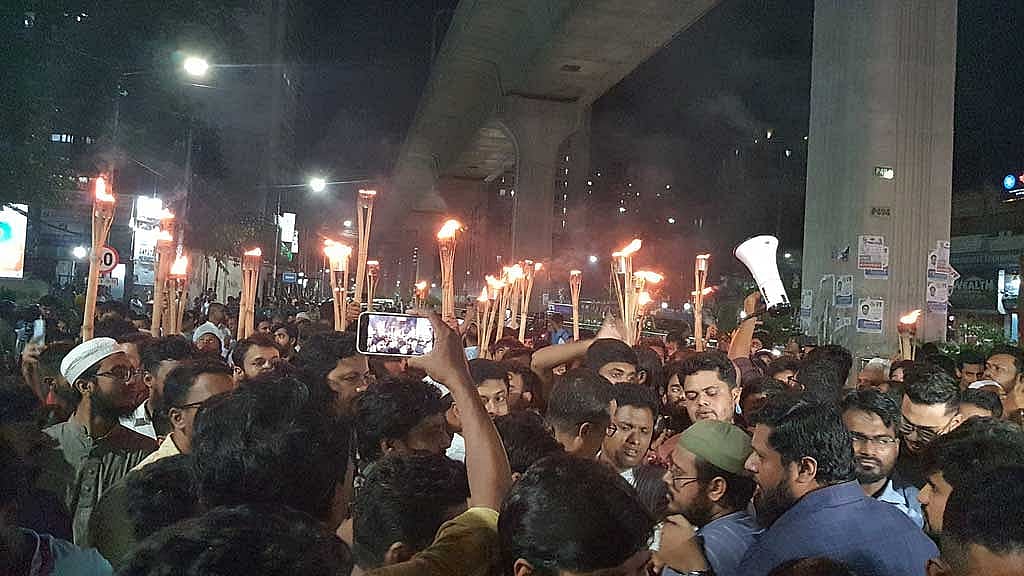
In protest, the NCP announced a nationwide demonstration for Thursday. The party also confirmed it would go ahead with its scheduled rally in Faridpur that day.
The Anti-discrimination Student Movement held brief blockades in Dhaka and other places in response to the attack.
‘VIOLENCE COULD HAVE BEEN PREVENTED’
Mozammel believes the clashes in Gopalganj could “certainly” have been prevented, blaming both the NCP and the government for failing to communicate their plans clearly.
“If the government and the NCP had exercised caution, a peaceful atmosphere could have been created in advance,” he said.
“This tragic outcome -- four dead and the risk of more -- was avoidable.”
At the same time, the analyst also attributes the incident to the Awami League’s “refusal to soften” its tone about past misdeeds during its time in power, instead choosing a harsher approach.
“If we ask who is most responsible for creating this tense situation, I would say the primary responsibility lies with the NCP, who led the march,” he said.
“They called it a 'July March' in earlier districts, so why did they change the name before reaching Gopalganj? Why did they label it ‘March to Gopalganj’? The English phrasing naturally echoes ‘March to Dhaka’, which led to the government’s fall.”
He argued that the shift in language from “July March” to “March to Gopalganj” carried provocative undertones.
“They are a new party, a youth-driven force. They could have framed their announcement differently: ‘We are visiting Gopalganj to honour the July martyrs, to share our ideals with the public, and to engage in a democratic conversation’. Instead, they took a confrontational tone from the outset -- even though they knew the environment was already charged.”
He also said several social media influencers had painted the NCP programme as a continuation of earlier provocations, including the destruction of Bangabandhu’s residence on Dhanmondi 32, now extending to his grave in Tungipara.
“There were posts saying ‘We’ve destroyed the house on 32, now we’ll destroy the grave’,” Mozammel said.
“These were deeply inflammatory and should have raised red flags,” he added. “Gopalganj is a sensitive place. The grave of Bangabandhu is there.
“Neither the NCP nor the government showed the level of caution they should have. That has created a dangerous situation.”
He recalled previous instances where the Awami League supporters clashed with law-enforcing agencies in Gopalganj and criticised the government’s failure to anticipate an attack by the Chhatra League, which is officially banned.
“The government could have issued a pre-emptive statement, something like: ‘Maintain peace and order across the country. Everyone has the right to express political opinions. Those who are banned are banned by law. If they incite violence, the government will act firmly’. But they didn’t.”
He warned that the clashes could fuel suspicions of a conspiracy to delay the upcoming national election.
“Everyone should have been more alert,” said the analyst. “If people begin to believe that the Gopalganj incident was engineered to justify a postponement of the election, that suspicion will be hard to dismiss.”
Mozammel claimed that the Awami League, instead of accepting its past failures and offering introspection, was pushing its remaining supporters toward “danger”.
He said most of the party’s leaders are either absconding or have been arrested, and the leadership has shown no clear strategy for political re-entry.
“During their rule, the Awami League committed many wrongs -- repression, corruption, the destruction of electoral systems. The public’s outrage erupted a year ago, leading to the government’s fall.”
He added, “They caused deep wounds while in power. Now, instead of reflecting and softening their approach, they’re saying ‘We’ll return, and no one will be spared, no one will escape’.
“This kind of rhetoric is increasing tensions and has played a role in what happened in Gopalganj.”
Former secretary Abu Alam Shahid Khan called the incident in Gopalganj “deeply regrettable” and told bdnews24.com it may not have been entirely spontaneous.
“The NCP held a march, it went to Gopalganj, and suddenly rumours began to swirl about Tungipara,” he said.
“People became victims of misinformation. We must examine more closely why this happened.”
Shahid added, “It’s tragic that lives were lost. We don’t want any more deaths. We want democratic practice to flourish in this country, and we want solutions to come through democracy.”
Asked if the incident might affect the upcoming polls, he said: “Certainly. People are already questioning how elections can be held when law-enforcing agencies, including the Army, police, and BGB, cannot control the situation in a single district.”
“This is already being said. So the key question is whether this was spontaneous or deliberately staged. That needs to be investigated,” he added.
REACTIONS, PROTEST PROGRAMMES
Several political parties have condemned the attack on the NCP rally and the clashes with law enforcers in Gopalganj, demanding the immediate arrest and trial of those responsible.
They have also announced fresh protest programmes.
BNP Secretary General Mirza Fakhrul Islam Alamgir termed the attack an “evil attempt to exploit chaos for political gain”.
“After the fall of the Awami authoritarian regime through the student–public uprising, the troublemakers are once again trying to destabilise the country and benefit from anarchy,” he said.
He described the assault on the NCP rally in Gopalganj, including crude bomb explosions, arson attacks on the UNO’s vehicle and injuries to policemen, as clear signs of such “destructive intent”.

Fakhrul demanded the immediate arrest and exemplary punishment of the culprits and wished a speedy recovery to the injured police personnel.
Jamaat-e-Islami chief Shafiqur Rahman, speaking on Wednesday afternoon amid the violence, said: “What is happening in Gopalganj? Isn’t Gopalganj a part of Bangladesh? From what I’ve learned, the NCP leaders held prior discussions with all levels of the administration to implement their programme. That is their political right.”
“Now that the situation has deteriorated, there appears to be no effective presence of law-enforcing agencies on the ground. The government must act swiftly and decisively. Otherwise, history will hold them fully accountable.”
Jamaat subsequently called for peaceful protests on Thursday across all districts and metropolitan cities to condemn the attacks by the banned Chhatra League and the ensuing violence.
The Anti-discrimination Movement, which had earlier led protests to topple the Awami League government, also issued a 24-hour ultimatum for the arrest of the Awami “terrorists” responsible for the Gopalganj attack.
Speaking at a press conference in Shahbagh, the organisation’s President Rifat Rashid said: “What has begun in Gopalganj is a proxy state orchestrated by the autocrat Sheikh Hasina and Delhi.
“Sovereignty in that region is being controlled by Hasina and the looters who sit on Delhi’s throne, always trying to undermine Bangladesh’s independence,” he added. “We say clearly: this proxy game will not be allowed to continue.”
Reacting to the violence, Rashed Pradhan, spokesperson of the Jatiya Ganatantrik Party (JAGPA), said the “fascist” Awami forces continue their rampage under Delhi’s assurances.
“They talk about justice for police killings but attack the police themselves. This country no longer belongs to the killer Hasina, chief minister of Delhi. It now belongs to Mugdho, Wasim, and Abu Sayed.
“Let us send Gopal back to Delhi and turn Gopalganj into Sayedganj,” he said.
Syed Muhammad Rezaul Karim, chief of Islami Andolan Bangladesh, said: “Even on the anniversary of the Uprising, the allies of tyranny have shown audacity, which highlights the government’s overall failure.
“The slow pace of justice for fallen ‘fascism’ is what gave them the courage.”
Bangladesh Khelafat Majlish strongly condemned the attack by what it called the “banned Awami League terrorists” on the NCP rally in Gopalganj.
“The ‘fascist’ Awami League, defeated in the mass uprising, is regrouping amid the worsening law and order. They must not be given another chance,” the party said.
“The administration must take immediate and stern action against these terrorists. The attackers must be arrested and punished.
“The government must stay alert so this fascist force cannot endanger lives and property again,” it added.
Liberal Democratic Party (LDP) President Oli Ahmad also expressed deep concern and strongly condemned the failure of law-enforcing agencied.
He demanded the immediate arrest and exemplary punishment of the attackers.
Gano Forum General Secretary Mizanur Rahman said, “The Gopalganj attack proves that the forces defeated by the 2024 mass uprising are regrouping with a deliberate aim to sabotage the upcoming national election and obstruct democracy.”