Published : 14 Apr 2026, 03:14 AM
Updated : 21 Aug 2026, 03:35 PM


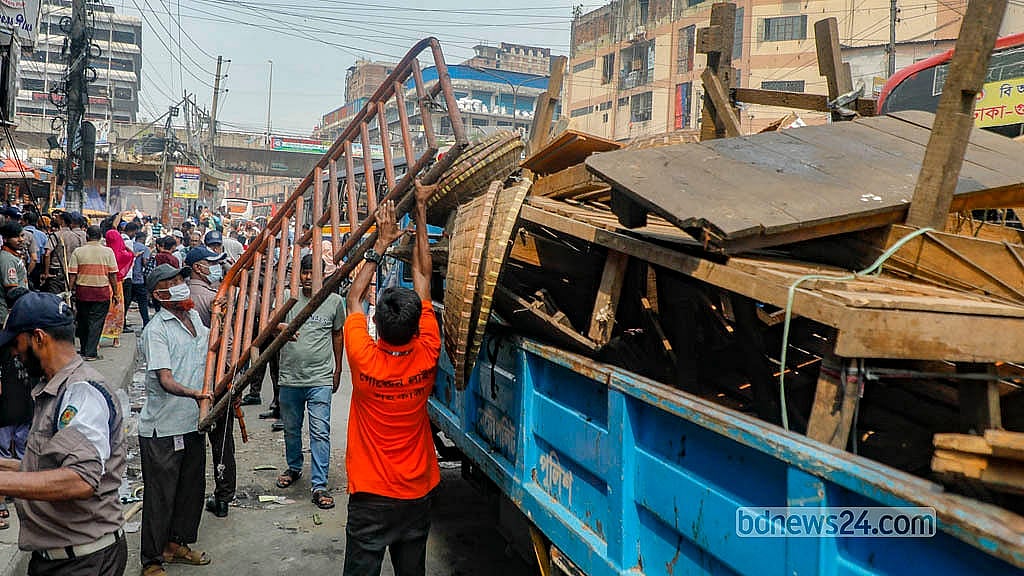
The Institute for Planning and Development (IPD) has warned that the recent drives to evict hawkers from Dhaka’s footpaths will not yield lasting results unless the government addresses urban poverty and dismantles the powerful syndicates profiting from illegal street trade.
In a statement on Monday, the planners' body criticised the current crackdown for lacking a "coordinated plan", arguing that while the moves have offered temporary relief to pedestrians, they remain unsustainable without structural reforms.
The IPD highlighted that the "informal economy" of street hawking is a survival mechanism for the city’s poor.
However, the organisation pointed out that the sector is governed by a deep-rooted "political economy" involving influential syndicates.
"It is essential to identify the forces behind the extortion and ‘footpath trade’ syndicates," the IPD said.
The organisation alleged that in some areas, the eviction drives are being used as a pretext to demand even higher bribes, with new "political occupiers" emerging to fill the vacuum.
The planners urged the government to bring those who benefit from the extortion -- including "linemen", influential local leaders, and corrupt officials within the administration, law enforcement, and city corporations -- under the purview of the law.
While acknowledging that some areas have seen improved pedestrian flow, the IPD noted that hawkers have already returned to several locations.
In others, the cleared spaces have quickly been occupied by illegal car parking, the statement said.
The organisation expressed surprise that Dhaka still lacks an effective hawker policy or legal framework.
"In the absence of a law, eviction drives become merely a temporary measure, while the controlling syndicates remain hidden and untouched," the statement read.
To ensure a long-term solution that balances the rights of pedestrians with the livelihoods of the poor, the IPD proposed several strategic measures.
These include creating a comprehensive database of hawkers and introducing a licencing system to regulate their numbers.
It also suggested establishing designated hawker zones and alternative markets.