Published : 14 Nov 2025, 06:21 AM
Updated : 21 Aug 2026, 02:44 PM


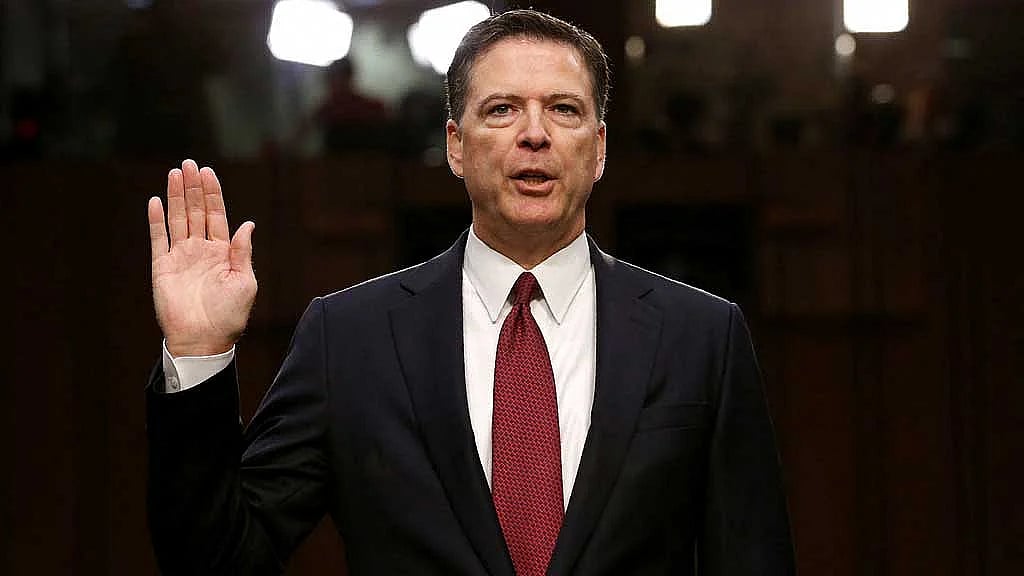
Lawyers for former FBI Director James Comey and New York Attorney General Letitia James asked a judge on Thursday to drop the criminal charges against them, arguing that President Donald Trump's hand-picked US attorney who obtained the indictments against them was unlawfully appointed.
In a surprise twist, US District Judge Cameron McGowan Currie revealed that she has not been provided by the Justice Department with a complete transcript of the grand jury proceeding that resulted in Comey's indictment, raising questions about the validity of the charges.
The hearing at the federal courthouse in Alexandria, Virginia, marked the first time a judge considered one of several efforts that James and Comey - two prominent critics of Trump who each oversaw investigations into him - have made to dismiss their indictments before trials set for January. Both were charged by Halligan's office shortly after Trump openly called on U.S. Attorney General Pam Bondi to prosecute them.
The judge said she would issue her ruling later this month.
The arguments centered on whether Lindsey Halligan, Trump's former personal attorney, was illegally installed as interim US attorney for the Eastern District of Virginia. If Halligan is deemed unlawfully appointed, the charges could be invalidated since Halligan was the only federal prosecutor to present evidence to the grand juries in both matters.
"The only thing that matters is whether Ms. Halligan had a proper appointment when she stood before the grand jury, and she did not," Ephraim McDowell, one of Comey's attorneys, told the judge.
Justice Department lawyer Henry Whitaker said Halligan's appointment was lawful. And even if it were invalid, Whitaker said, dismissal of the Comey and James indictments would be unwarranted. At best, Whitaker said, a problem with Halligan's appointment would be nothing more than a "paperwork error."
Comey has pleaded not guilty to charges of making false statements and obstructing Congress. James has pleaded not guilty to charges of bank fraud and lying to a financial institution.
Bondi appointed Halligan at Trump's request in September. Her predecessor, Erik Siebert, was forced out of the job after expressing concerns about a lack of evidence to support criminal charges against both Comey and James.
APPOINTMENT LENGTH LIMIT
Attorneys for Comey and James have argued that Halligan's appointment violates a federal law they said limits the appointment of an interim US attorney to one 120-day stint. Repeated interim appointments would bypass the US Senate confirmation process and let a prosecutor serve indefinitely, they said.
Siebert previously had been appointed by Bondi for 120 days and was then appointed by the US District Court for the Eastern District of Virginia, since the Senate had not yet confirmed him in the role.
Currie, a South Carolina-based federal judge appointed by Democratic former President Bill Clinton, was assigned to decide the issue because of the role federal judges in Virginia played in Siebert's appointment.
MISSING TRANSCRIPT
Currie signaled concerns with how the Justice Department obtained its indictment of Comey on Sept 25.
In the US legal system, indictments typically are approved by a grand jury, which hears evidence presented by a prosecutor.
In an unusual move, Halligan made the presentation to the grand jury alone, without career prosecutors in her office present.
The Justice Department has said the indictment should not be dismissed if Halligan's appointment is ruled invalid because it was also ratified by Bondi. The judge cast doubt on this claim, saying Bondi could not have reviewed the grand jury proceeding to properly ratify the indictment because only part of it was transcribed.
"It's become obvious to me that the attorney general could not have reviewed" that portion of the transcript, Currie said, noting that from 4:28 p.m. until the indictment was later returned, there was either "no court reporter present" or no one documented what took place after that time.
When the indictment was made public, court records showed that the grand jury rejected one criminal count and only narrowly approved the other two.