Published : 17 Mar 2026, 03:55 AM
Updated : 21 Aug 2026, 03:28 PM


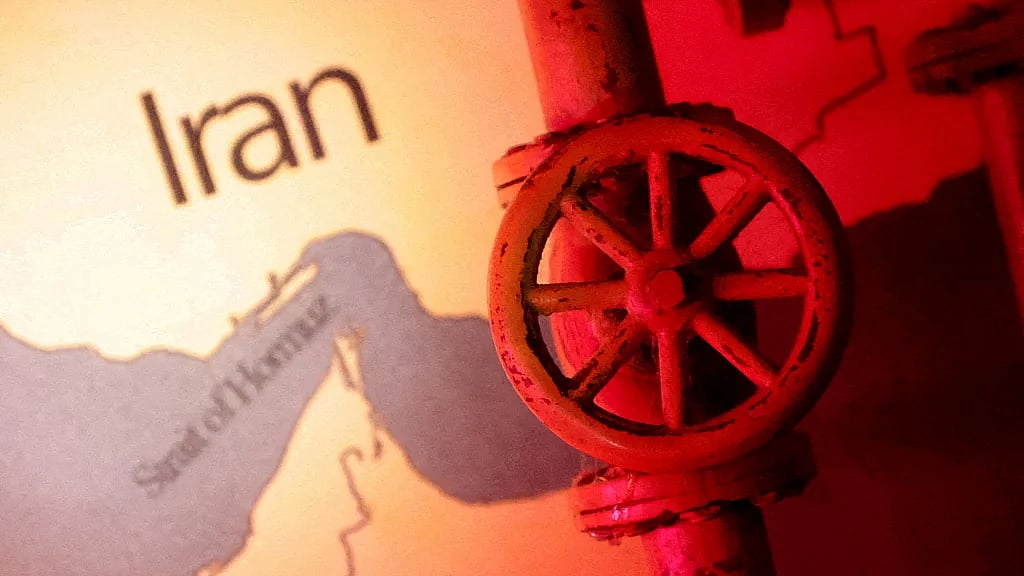
US President Donald Trump has demanded help from allies to reopen the Strait of Hormuz, which usually carries about a fifth of global energy supplies, but even if he can assemble a major coalition it could prove very hard to end Iran's blockade.
Iran lies along one side of the narrow strait and has responded to the US-Israeli attack from Feb 28 by using drones, missiles and mines to make the vital waterway unsafe for the colossal oil and gas tankers that slowly traverse it each day.
WHY HAS IRAN CUT OFF THE STRAIT NOW?
When a commander in Iran's Islamic Revolutionary Guard Corps warned in 2011 that cutting off the strait would be "easier than drinking a glass of water", the threat to the strait had already been made many times before.
In the years since, the Guards have continued to warn they could close it, including during tensions over sanctions and Iran's nuclear programme in 2016 and 2018, and again during Israeli and US strikes in June last year.
Analysts have always regarded the closure of the strait as a measure of last resort because of the long-term strategic changes it might prompt among Iran's enemies, and the potential for retaliation against its own energy sector.
The attack on Iran starting on Feb 28 with the killing of its supreme leader has changed that equation. Iranian officials describe the war as existential and the hardline Guards have increasingly taken charge of strategy.
WHAT IS AT STAKE?
The narrow passage of water between Iran and Oman that links the Gulf with the Gulf of Oman is the only sea exit for oil- and gas-producing countries such as Kuwait, Iran, Iraq, Qatar and the United Arab Emirates.
Oil prices briefly climbed to their highest level since 2022 on Monday. High oil prices could trigger another cost-of-living crisis, as happened after Russia's invasion of Ukraine in 2022, according to the United Nations.
A prolonged conflict could also cause a fertilizer shock, risking global food security. About 33 percent of the world’s fertilisers, including sulphur and ammonia, pass through the strait, according to analytics firm Kpler.
An extended war could fuel fears of a global economic crisis similar to those that followed the Middle East oil shocks of the 1970s.
WHY IS THE STRAIT SO HARD TO SECURE?
Shipping lanes are just two nautical miles wide and ships must make a turn opposite Iranian islands and a mountainous coast that provides cover for Iranian forces, according to shipping broker SSY Global.
Iran's conventional navy has largely been destroyed but the Guards still have plenty of options including fast-attack craft, mini submarines, mines and even jet skis packed with explosives, said Tom Sharpe, a retired Royal Navy commander.
Tehran has the capacity to produce around 10,000 drones a month, according to the Centre for Information Resilience, a non-profit research group.
Escorting three or four ships a day through the strait would be feasible in the short-term using seven or eight destroyers providing air cover, and would depend on whether the risk from mini submarines has been reduced, but doing so sustainably for months would require more resources, Sharpe said.
Even if Iran's capacity to deploy ballistic missiles, drones and floating mines were destroyed, ships would still face a threat from suicide operations, said Adel Bakawan, Director of the European Institute for Middle East and North African Studies.
If the war does continue for weeks, some kind of escort will come together, said Kevin Rowlands, Editor of the RUSI Journal at the Royal United Services Institute.
"The world needs oil to flow through from the Gulf, and so there is planning ongoing to put protection measures in place,” he said.
WHAT DOES TRUMP WANT AND WHAT ARE US ALLIES DOING?
Trump said on Sunday he expected many countries would send warships and demanded that they do so, adding that his administration was in touch with seven countries about helping.
That step came a week after he ordered the US International Development Finance Corporation to provide insurance and guarantees for shipping companies.
British Prime Minister Keir Starmer has discussed the need to reopen the strait with Trump and had previously said London was working with allies on a range of options.
EU foreign ministers are on Monday to discuss bolstering a small naval mission focused on protecting Red Sea shipping from Yemen's Houthis, but are not expected to discuss expanding the mission to the Strait of Hormuz.
French President Emmanuel Macron said before Trump's demand that several European and Asian countries were planning a joint mission to provide protection, but only after the conflict ends.
Germany has said it is sceptical about even bolstering the Red Sea mission, saying it had not proven very effective.
Japan and Australia both said on Monday they were not planning to send naval vessels to help escort ships through the strait.
WHAT HAPPENED IN OTHER SHIPPING CHOKEPOINTS IN THE REGION?
Yemen's Houthis, a group allied with Iran but with a far smaller military arsenal at their disposal, shut down most traffic passing through the Red Sea for more than two years despite US and EU naval efforts.
Most shipping companies are still using a far longer route via the southern tip of Africa. Danish shipping company Maersk had said it would begin a staggered return to the Suez route from January.
An EU-led force has been more successful at countering piracy off Somalia's coast, but that has been against forces far less well-equipped than Iran's Revolutionary Guards.
ARE THERE ANY ALTERNATIVES TO USING THE STRAIT?
The UAE and Saudi Arabia have sought to find ways to bypass the strait by building more oil pipelines.
But those are not currently operational and an attack on an east-west Saudi pipeline by Houthi militia in 2019 showed those alternatives were also vulnerable.