Published : 27 Sep 2025, 05:21 PM
Updated : 21 Aug 2026, 01:51 PM


Cox’s Bazar, home to the world’s longest natural sea beach, is one of Bangladesh’s most popular tourist destinations. But while domestic visitor numbers are booming, the town has struggled to attract foreign travellers.
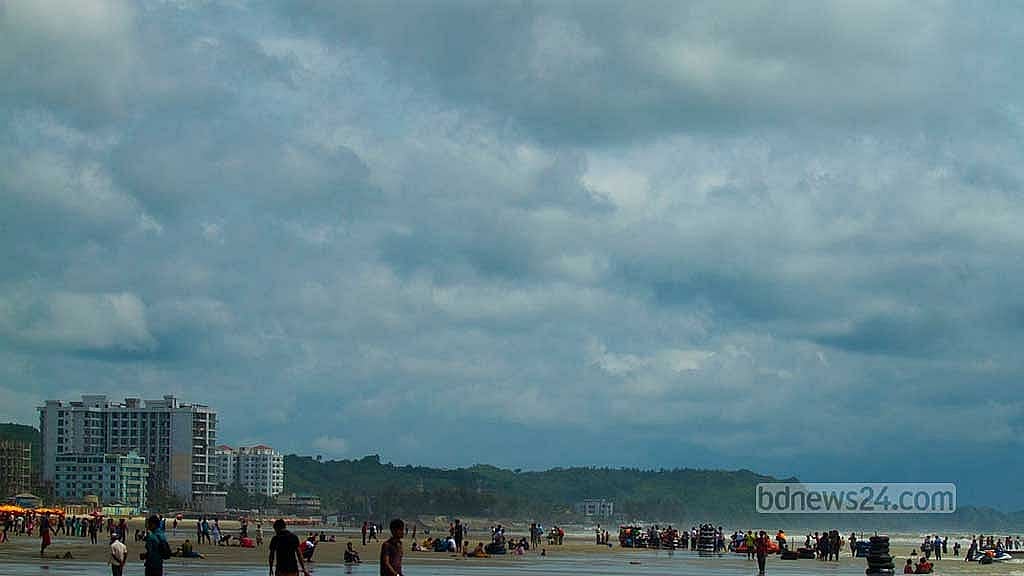
Critics say the beach town has become increasingly “concrete”, with high-rise hotels and poor planning eroding the natural environment that once defined it.
Official records show that Cox’s Bazar has nearly 600 registered hotels, motels, and resorts. The Cox’s Bazar Hotel & Guest House Owners’ Association says that just the 3-square-kilometre area of Kolatoli alone sprawls with 538 hotels, motels, resorts, and cottages.
According to the Cox’s Bazar Chamber of Commerce and Industry, as many as 2–2.5 million Bangladeshis travel to the beach during peak season. But officials cannot provide figures for foreign arrivals.
Hoteliers say the numbers are negligible.
"Over the past year, foreign guests were virtually zero,” said Abu Taleb, a senior official at The Cox Today hotel.
CONCRETE OVERTAKES NATURE
Environmental groups warn that unregulated construction is damaging the very asset Cox’s Bazar depends on: its natural beauty. Instead, high-rise hotels and restaurants are being built around the beach.
Areas like Maheshkhali, Sonadia, Inani, and Himchhari hold immense potential for tourism, yet no initiatives have capitalised on their promise.
Moazzem Hossain, chairman of Save the Nature of Bangladesh, said: “Unplanned hotel construction seems to have become the norm in Cox’s Bazar. Yet nature-based tourism is the only long-term sustainable solution. Foreigners will not come to see concrete -- they will be drawn by nature and culture.”
Prof Moinul Hasan Palash, head of the Department of Tourism and Hospitality Management at Cox’s Bazar City College, says tourism in Cox’s Bazar has always been unplanned and disorderly.
He stressed the importance of nurturing quality domestic tourism, which would then lay the foundation for international tourism.
"No government has ever given tourism proper importance. The clearest proof is the absence of an independent Ministry of Tourism. Attracting foreign tourists is becoming increasingly difficult.”
"Tourism is a service. If service quality isn’t improved, sustainable tourism cannot be achieved just by building infrastructure. Foreign guests won’t come merely to stay in air-conditioned rooms -- they come to see and experience Bangladesh. If that opportunity isn’t given, tourism could die out.”
Citing Bhutan and Maldives as examples, Prof Palash added: “To attract foreign tourists, you need more than just sightseeing spots. You need quality, diverse experiences, eco-conscious policies, and international branding. If Cox’s Bazar can be elevated into a reliable platform for the country’s tourism sector, then foreigners will come.”
DEARTH OF ECO-TOURISM, ENTERTAINMENT OPTIONS
Tourism experts say Cox’s Bazar offers little beyond the beach itself. There are no international-standard leisure facilities, limited eco-tourism initiatives, and virtually no nightlife or cultural attractions.
Government initiatives to bolster eco-tourism have been few and far between. Local entrepreneurs are also reluctant to invest in large-scale projects. As a result, tourists get no experiences beyond enjoying the natural scenery.
Abu Morshed Chowdhury Khoka, president of the Cox’s Bazar Chamber of Commerce and Industry, said: “We are busy just building hotels and inflating land prices. But to attract foreigners, we must ensure safety, cleanliness, quality service, and world-class experiences. A coordinated master plan is essential for sustainable tourism. Otherwise, this city will remain stuck with only domestic crowds, and foreign currency won’t flow in.”
Local tourism operator Kalim Ullah believes there are multiple reasons why foreign tourists are not coming.
“First, safety is still a major issue for foreigners. There’s no exclusive zone or safe environment for them. Second, there are no nighttime entertainment opportunities -- no nightlife, no international-standard events. The beach is often dirty, which leaves a negative impression. Even basic facilities like sunbathing aren’t available. So those who do come, don’t want to return.”
TOURISTS VOICE FRUSTRATION
Many Bangladeshi visitors also complain about crowding, poor facilities and high costs.
“It feels like nothing is planned,” said Mokammel Hossain, who travelled with his children from Dhaka. “There are shops and vendors everywhere. There are no modern changing rooms or proper showers.”
Others point to safety concerns after dark, unhygienic beach conditions and rising hotel prices, with some saying a trip abroad would be better value.
The rapid growth of makeshift shops and poor waste disposal have drawn further criticism. Beaches are often littered with plastic bottles, food packaging and polythene, while some hotels discharge waste directly into the sea.
Officials say a new masterplan is being drawn up to regulate development, but environmentalists argue that stronger, coordinated action is urgently needed.
A SUSTAINABLE FUTURE?
Experts warn that until foreign tourists begin arriving in larger numbers, the sector will struggle to contribute significantly to Bangladesh’s economy.
“Bangladesh’s tourism lifeline is nature,” said Prof Palash. “Unless we build tourism around it, Cox’s Bazar will become nothing more than a jungle of concrete.”