Published : 02 Nov 2025, 06:45 AM
Updated : 21 Aug 2026, 02:39 PM


India’s suspension of the Indus Waters Treaty earlier this year has put Pakistan at severe risk of water scarcity, according to the Ecological Threat Report 2025.
According to NDTV, the report, published by the Sydney-based Institute for Economics and Peace, said the suspension allows India to control the westward flow of the Indus River and its tributaries into Pakistan.
The decision was taken in retaliation for the Pahalgam attack in April, which New Delhi described as “barbaric”.
The development marks a major setback for Pakistan, whose agriculture depends 80 percent on the Indus River system.
“Even small disruptions at critical moments could hurt Pakistani agriculture since Pakistan lacks sufficient storage to buffer variations. Pakistan's own dam capacity can hold only about 30 days of Indus flow; any prolonged cut would be disastrous if not managed,” the report said.
Highlighting the danger, it added, “Interruption of Indus flows threatens Pakistan’s food security directly, and thus its national survival. About 80 per cent of Pakistan’s irrigated agriculture depends on the Indus basin rivers.”
The report warned that while India’s infrastructure limits its capacity to completely stop river flows, even minor interruptions could trigger severe short-term impacts on Pakistan’s farming sector.
It noted that “if India were truly to cut off or significantly reduce Indus flows, Pakistan’s densely populated plains would face severe shortages, particularly during winter and dry seasons.”
In May, India carried out “reservoir flushing” operations at the Salal and Baglihar dams on the Chenab River without notifying Islamabad.
The process, used to clear silt by draining reservoirs, was previously restricted under the treaty because of the risk of sudden downstream changes.
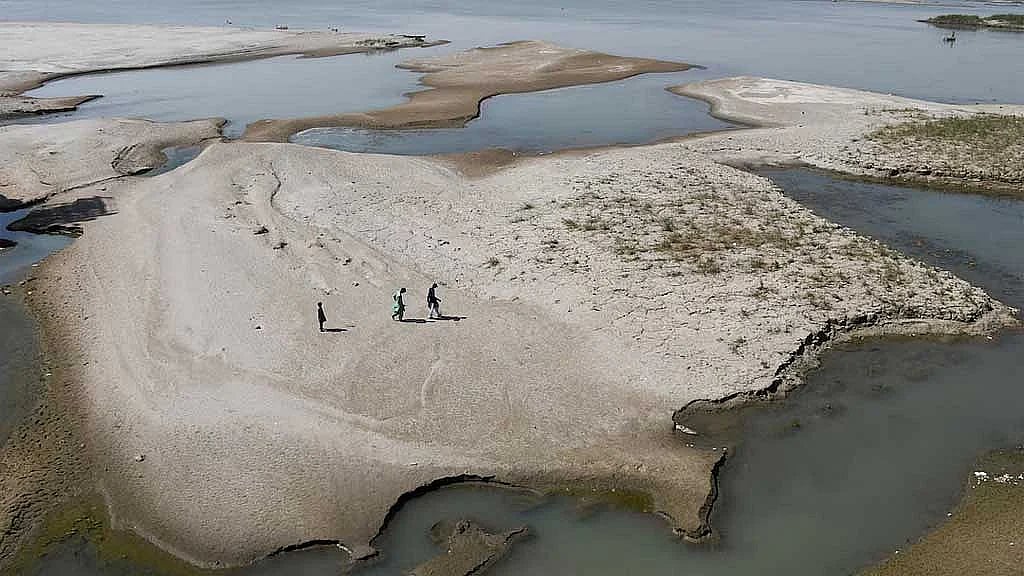
The effects were immediate, NDTV said. Stretches of the Chenab River in Pakistan’s Punjab reportedly ran dry for several days after India closed the dam gates, before sediment-filled torrents surged downstream when they were reopened.
Signed in 1960 with World Bank mediation, the Indus Waters Treaty had long stood as a rare example of India-Pakistan cooperation, dividing six major rivers between the two neighbours.
The treaty survived three wars and decades of political hostility.
The treaty's stability began to erode in the 2000s as political tensions deepened. India, under Prime Minister Narendra Modi, sought to fully utilise its share of eastern river waters.
Following the Pahalgam terror attack in April 2025, India suspended the IWT, prompting Islamabad to warn that “any diversion of Pakistan's water is to be treated as an act of war.”
In May 2025, Operation Sindoor raised fears of a wider conflict. A month later, Home Minister Amit Shah said the treaty would remain suspended permanently.