Published : 09 Aug 2025, 07:57 AM
Updated : 21 Aug 2026, 01:37 PM


On the edge of India’s capital New Delhi lies the modern city of Gurgaon.
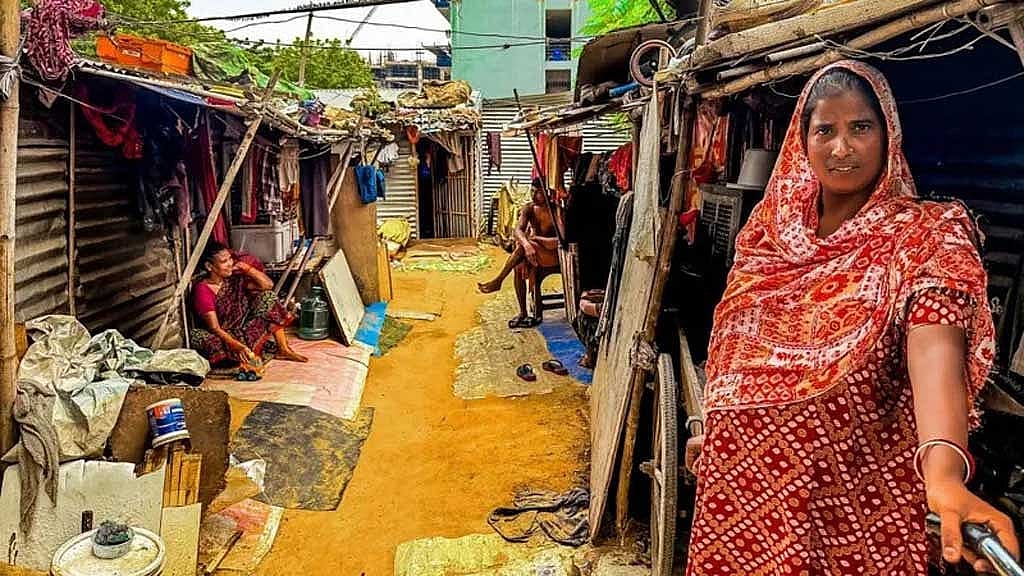
One side of the city gleams with high-rises, luxury cars, and designer apartments; the other survives under plastic sheets, swarming mosquitoes, and piles of garbage.
Behind the walls of gated complexes live India’s affluent classes. Outside those walls, in sprawling slums, reside the migrant workers -- sweepers, waste collectors, domestic helpers -- who keep this luxury lifestyle running.
According to a BBC report, local authorities in Gurgaon last month detained hundreds of labourers during a verification drive aimed at identifying illegal Bangladeshi immigrants. Most of those held said they were Bengali-speaking Muslims from West Bengal.
The detained workers were taken to holding centres, where they were asked to prove their citizenship by presenting documents.
Many have alleged that they were beaten, mistreated, and harassed while in custody.
Police, however, have denied the allegations.
"I had my voter and national ID cards, but they told me they were fake. I spent six days not knowing my fate before I was finally released," said Ather Ali Sheikh, a daily-wage worker, who has lived in the city for 15 years.
Following the operation, fear has spread across the area.
Many immigrants fled overnight, leaving behind their jobs, homes, and even families.
As a result, residents in affluent neighbourhoods of the city are now facing a shortage of domestic workers and drivers.
"Our house help and her husband, who worked as a driver, both left and now we have no help," said Tabassum Bano, who lives in one of the complexes.
Gurgaon Police public relations officer Sandeep Kumar told BBC that although 250 people were detained, only 10 were found to be illegally residing in India and will be deported.
"Neither religion nor class has anything to do with the drive,” he added. “Everyone else was released. No one was mistreated at the centres. We have been completely fair and objective.”
After his release, Ather said: "I still don't understand why they suddenly came after me.”
"Was it because of my language, my religion or because I am poor? Why weren't the rich Bengali residents held up?" he asked.