Published : 30 Jan 2026, 07:35 AM
Updated : 21 Aug 2026, 03:05 PM


Among all parliamentary constituencies in the country, Dhaka-12 stands out not only for having the highest number of candidates but also for marking a notable convergence that has turned the race into political theatre.
Three of the most discussed contenders share the same first name -- Saiful.
The seat, comprising Tejgaon, Hatirjheel and Sher-e-Bangla Nagar zones, was initially allocated by the BNP to Saiful Alam Nirob in its preliminary nominations.
But as alliance negotiations took shape, the party ultimately relinquished the constituency to its ally, the Revolutionary Workers Party, nominating its General Secretary Saiful Haque instead.
Nirob did not step aside.
Defying the party’s final decision, he entered the race as an independent candidate, prompting the BNP to expel him. The rebellion has fractured loyalties within the party’s local ranks.
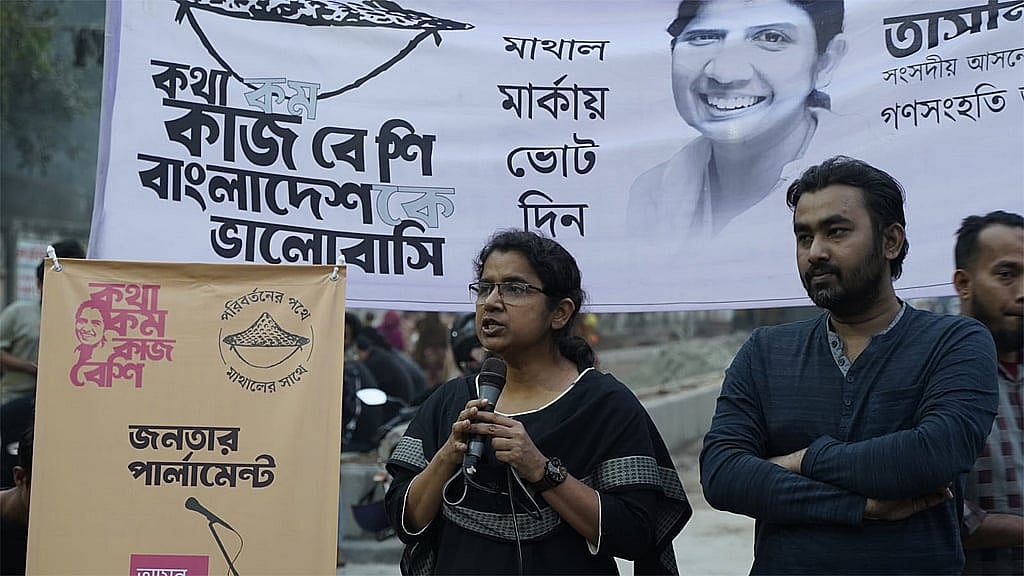
Adding another layer to the contest, Taslima Akhter, a leader of the BNP-led alliance partner Ganosamhati Andolon, is also contesting in the seat.
This division -- between alliance candidate and “rebel” -- has created an opening that appears to benefit the third Saiful in the race: Jamaat-e-Islami’s Saiful Alam Khan Milon, who is running under the party’s “Weighing Scale” symbol.
Due to electoral technicalities, the BNP’s traditional Sheaf of Paddy symbol will not appear on the ballot in Dhaka-12.
For distinction, the report will refer to the BNP candidate as Saiful, Jamaat’s as Milon, and the independent as Nirob hereon.
A BALLOT WITHOUT SHEAF OF PADDY
Saiful, leader of the Revolutionary Workers Party, is contesting under his party’s “Spade” symbol, while Nirob has been allocated the “Football”.
In contrast, Milon is campaigning freely with the party symbol, projecting unity and organisational discipline.
The constituency includes Karwanbazar, one of Dhaka’s largest wholesale food markets, alongside Tejgaon Truck Stand, Mohakhali Bus Terminal, and the Tejgaon Industrial Area -- zones where political mobilisation is both visible and volatile.
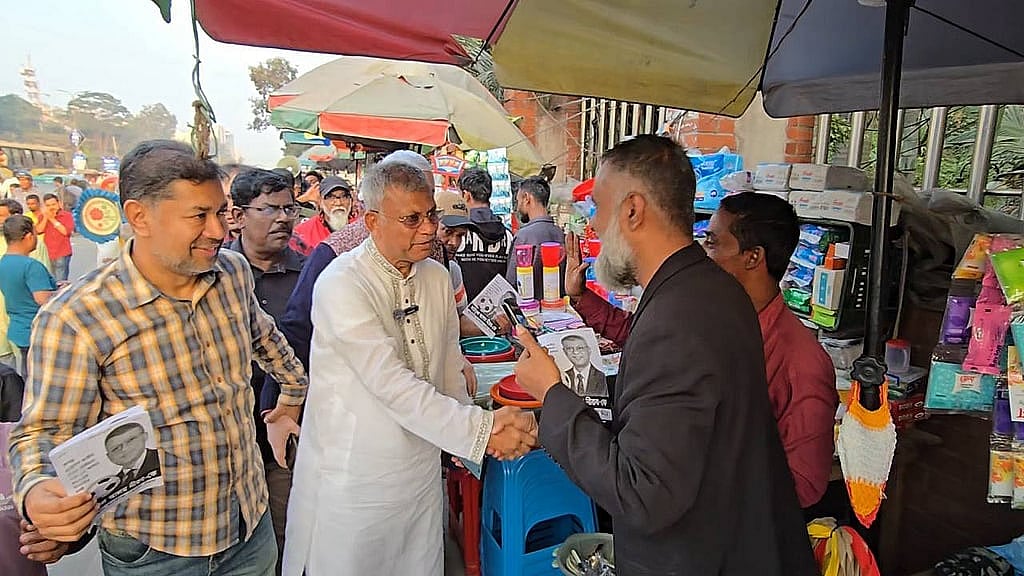
Local BNP activists are visibly conflicted. Some are campaigning for the alliance candidate with the Spade, others are openly backing Nirob and the Football symbol, while many have simply withdrawn from active canvassing.
Mohammad Sumon, a shopkeeper at Tejgaon Truck Stand, said: “This is really Nirob’s area. When his name was first announced, the neighbourhood came alive.
“But once the alliance candidate arrived, everything went quiet. BNP supporters are now split -- some on one side, some on the other.”
Slogans reflect that confusion. Some chant, “Stand with the Sheaf of Paddy -- vote for the Spade,” while others simply shout, “Football, Football.”
FROM PARTY ORGANISER TO “REBEL”
Nirob rose through the ranks of Chhatra Dal and Jubo Dal, later serving as convenor of Dhaka North BNP. His defiance of the party line has cost him his membership, but not his support base.
During the Awami League government’s tenure, Nirob spent time in jail facing nearly 400 cases, a story that drew international media attention.
On Nov 3, the BNP had officially named him its candidate for Dhaka-12 before alliance arithmetic forced a reversal.
Saiful, by contrast, is a veteran of left-leaning politics and currently serves as convenor of the Ganatantra Manch, a coalition of progressive parties active in anti-Awami League movements.
Many voters expect BNP-leaning votes to split between the Spade and the Football, particularly in areas where local loyalties outweigh alliance discipline.
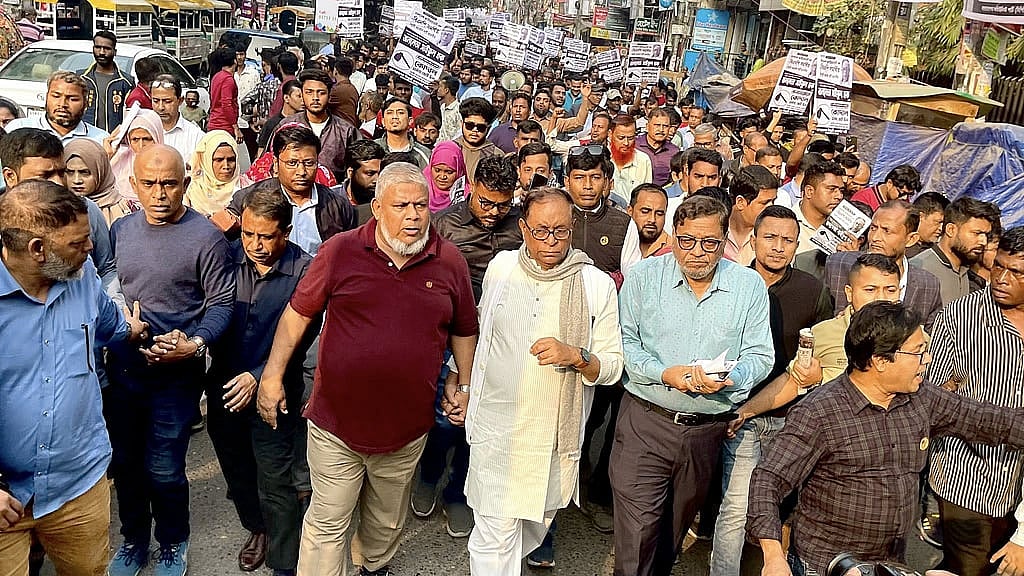
Former ward commissioner Anwaruzzaman Anwar, whose backing strengthens Saiful’s position in Ward 27 and Sher-e-Bangla Nagar, is coordinating the Spade campaign.
“We are campaigning in line with the party decision,” he said.
“At most, 10 percent are over there. Those who vote for the Sheaf of Paddy will ultimately vote for the Spade.”
JAMAAT’S UNITY, BNP’S DIVISION
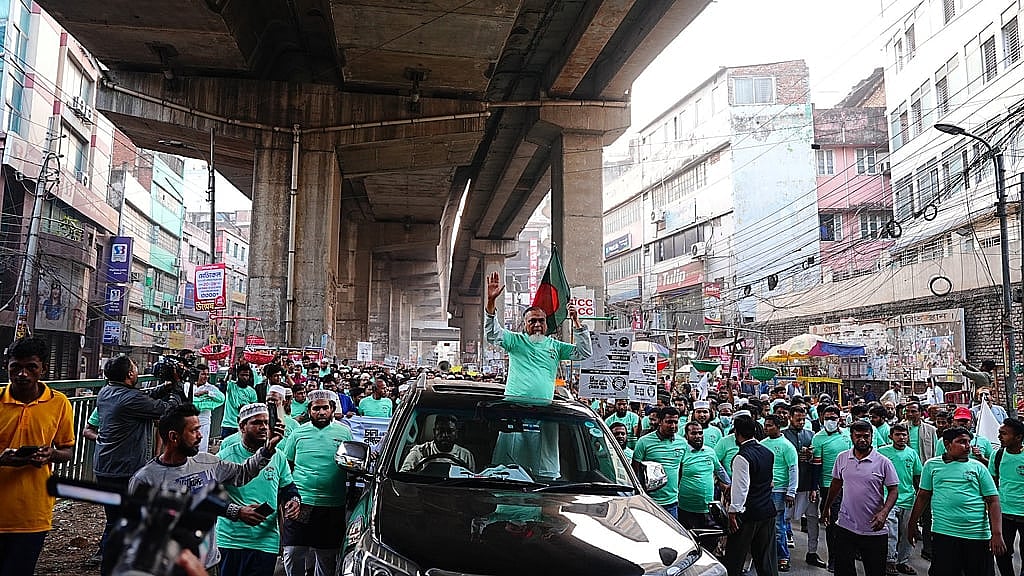
While the BNP remains divided, Jamaat’s campaign is unified and methodical. Female activists are conducting door-to-door outreach, and party leaders are downplaying calculations about the BNP’s internal split.
Jamaat candidate Milon is a former Islami Chhatra Shibir president from the early 1980s and currently a member of Jamaat’s Central Executive Council.
He once served as executive director of the Ibn Sina Trust and has lived in Tejkunipara for nearly 37 years, according to party leaders.
Noman Ahmadi, chief of Jamaat’s Tejgaon unit, said: “We are not over-analysing whether the BNP votes stay together or split. There is still time. Many things can change.”
VIOLENCE, SERVICES, AND DAILY SURVIVAL
Campaigning has largely remained peaceful, but the election atmosphere has been marred by violence.
During the campaign period, Azizur Rahman Musabbir, a leader of the Swecchasebak Dal, was killed in West Tejturi Bazar, while Anwarullah, a Jamaat leader, was murdered in West Rajabazar.
Candidates are focusing on law and order, drug proliferation, gas and water shortages, and waterlogging as key local issues.
Restoring discipline at Karwanbazar and Tejgaon Truck Stand features prominently in campaign pledges.
Abu Sufian Dulal, a coordinator for the Football campaign, argued that better use of government land could ease congestion.
“There is plenty of [government] land. If managed properly, trucks can be moved off the roads and people’s suffering reduced.”
Jamaat leaders, meanwhile, are highlighting extortion around markets and transport hubs, promising administrative discipline.
DHAKA-12: AT A GLANCE
The constituency comprises DNCC wards 24, 25, 26, 27, 35 and 37, with voters totalling at 333,138.
Ward-wise voters:
• Ward 24: 63,343
• Ward 25: 62,543
• Ward 26: 46,730
• Ward 27: 58,519
• Ward 35: 55,792
• Ward 37: 46,211
• 15 candidates are contesting -- the highest number nationwide
With the BNP’s division opening up space for Jamaat in the seat, Dhaka-12 is no longer a straight contest.