Published : 18 Jan 2026, 08:03 AM
Updated : 28 Aug 2026, 03:42 AM


For decades, political alliances in Bangladesh have been built not only on ideology, but on symbols -- powerful, recognisable emblems that could turn a marginal candidate into a viable one overnight.
This election breaks that spell.
By compelling alliance partners to contest under their own symbols, the new rules have exposed how uneven those coalitions truly were. As parties scramble to survive, the ballot has become a test not just of popularity, but of political authenticity.
The impact has been swift and unsettling. As nomination deadlines approach, some parties have begun to dissolve quietly, others are negotiating defections, while a few are weighing whether contesting independently is worth the risk of exposure.
What was once a technical arrangement has turned into a test of relevance, stripping away layers of alliance arithmetic to reveal which political actors command genuine support -- and which survived largely through proximity to power.
In this election, analysts say, the disappearance of borrowed symbols may matter more than any campaign slogan. It is not merely changing how candidates contest; it is redrawing the internal balance of coalition politics itself.
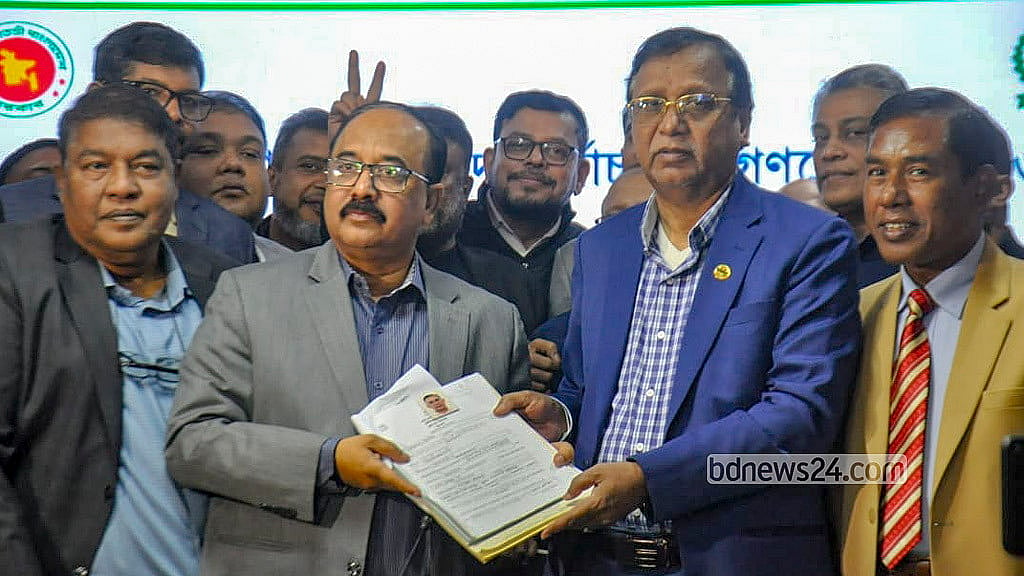
The architecture of electoral alliances for the Feb 12 elections is largely in place. Seat-sharing negotiations have been finalised, coalitions announced, and candidates named.
The immediate question reverberating through political circles is unavoidable: what has changed in candidacy, in vote transfer, and in political behaviour as a result?
Candidate selection has moved from the grassroots to the high command, trading internal democracy for calculated electoral optics.
END OF BORROWED SYMBOLS
Political analysts say the short- and long-term effects of this reform are already visible.
Abdul Alim, a member of the Electoral System Reform Commission, said the immediate impact was unmistakable.
“We are already seeing the short-term effects. Because of this provision, at least one party has effectively disappeared.
“We often hear claims that Bangladesh has ‘mushroom parties’. This has now been proven. Some of these parties have dissolved themselves and merged into larger parties.”
In the 2008 elections, Bangladesh Jatiya Party-BJP contested in two seats. Abandoning its symbol -- Gorur Gari, or cow cart, both candidates ran under the BNP-led alliance’s Paddy Sheaf, winning one seat.
That election saw seven alliance candidates contest under the Paddy Sheaf, while the BNP conceded 41 seats to partners.
This time, three BJP candidates submitted nominations. Party chief Andaleeve Rahman Partho is running from Bhola-1, while BNP candidate Golam Nabi Alamgir withdrew as part of seat-sharing.
HOW BIG PARTIES FARED
Below is a historical snapshot of vote share and seats won by major parties:
|
Year |
AL – Vote % |
Seats |
BNP – Vote % |
Seats |
Jatiya Party – Vote % |
Seats |
Jamaat – Vote % |
Seats |
|
1973 |
73.20% |
293 |
– |
– |
– |
– |
– |
– |
|
1979 |
26.83% |
39 |
41.16% |
207 |
– |
– |
– |
– |
|
1986 |
26.83% |
76 |
– |
– |
42.43% |
153 |
4.61% |
10 |
|
1991 |
30.08% |
88 |
30.81% |
140 |
11.92% |
35 |
12.13% |
18 |
|
1996 |
37.44% |
146 |
33.60% |
116 |
16.40% |
32 |
8.61% |
3 |
|
2001 |
40.13% |
62 |
40.97% |
193 |
7.25% |
14 |
4.28% |
17 |
|
2008 |
48.04% |
230 |
32.50% |
30 |
7.04% |
27 |
4.70% |
2 |
|
2014 |
72.14% |
234 |
– |
– |
7% |
34 |
– |
– |
|
2018 |
76.80% |
257 |
13.51% |
6 |
5.37% |
22 |
– |
– |
|
2024 |
66% |
222 |
– |
– |
3.41% |
11 |
– |
– |
SMALL PARTIES, SHRINKING SPACE
In the 2008 election, seven Jamiat Ulema-e-Islam Bangladesh candidates contested -- five under the “date palm” symbol and two under the paddy. This time, five candidates are running: four with their own symbol, and one after joining the BNP.
The BNP has conceded at least 16 seats to allies this time. Several partner candidates have either dissolved their parties or formally joined the BNP to contest under the paddy.
The Jamaat-e-Islami, meanwhile, has formed alliances with 10 parties. Of 253 agreed seats, Jamaat has secured 179. The remaining 47 are yet to be finalised.
In seats not allocated, both Jamaat and its allies must withdraw candidates accordingly, with all alliance partners contesting under their own symbols.
REFORM, RESISTANCE AND REALIGNMENT
The BNP had demanded changes to the revised Representation of the People Order (RPO), which bars alliance symbols. Jamaat and the National Citizen Party (NCP), however, supported retaining the reform.
The BNP staged sit-ins at the Election Commission and later appealed to the law advisor. The government ultimately declined to amend the provision.
Analyst Abdul Alim said many parties exist solely to “secure an MP seat by riding on the back of a major party for five years”.
“That effort hasn’t stopped entirely. But now we are seeing its limits.”
He added: “Several senior leaders of small parties have joined major parties. They believe they cannot win under their own symbol. The long-term effect will be that parties must go to the people with their own ideology and identity.”
He predicted the decline of opportunistic formations.
“Those who want alliances without their own symbols will not survive. Genuine political parties -- even small ones -- will endure. Mushroom organisations will not.”
Yet, problems remain. Parties continue to sideline internal democracy, ignoring grassroots input during nominations.
“If registered, parties must follow certain rules,” Abdul Alim said.
“One key purpose of registration is practising internal democracy. But this time, nominations were centralised. There were no grassroots panels or recommendations. Victory was prioritised over democracy. That is unfortunate.”
HOW CANDIDATES ARE WITHDRAWING
With polling scheduled for Feb 12, the Election Commission is finalising the candidate list. Appeals against nomination rejections are ongoing, with hearings continuing until Sunday.
Jan 20 is the final date for withdrawals. Symbols will be allocated the next day, followed by official campaigning.
On Saturday, the eighth day of appeal hearings, the commission restored eligibility for 44 candidates. Nearly 400 candidates have regained eligibility so far, bringing the total number of valid contenders to 2,237.
A Chattogram-based candidate said: “We are part of a 10-party alliance. If the final decision comes from the centre, I will have to withdraw. We have time until Jan 20.”
He added that withdrawal letters were signed in advance.
Election Commissioner Abdur Rahmanel Masud said, “Appeals will continue until Jan 18. Eligible candidates may withdraw within the legal timeframe. After that, final contestants will receive symbols.”
SEAT CONCESSIONS BY BNP
The BNP last contested in a national election in 2018, forming the Jatiya Oikya Front with parties beyond its traditional 20-party alliance.
That year, the party conceded 19 seats to the Oikya Front and 17 to other allies, while Jamaat received 22 seats -- most contesting under the paddy.
This time, the BNP has fielded 331 nomination papers. In 2018 it contested 242 seats; in 2008, 260.
Due to the amended RPO, the BNP has conceded fewer seats to allies.
Agreements have been reached with parties including Nagorik Oikya, Jatiya Party (Zafar), Jamiat Ulema-e-Islam Bangladesh, Ganosamhati Andolon, Revolutionary Workers Party, NPP and Gono Odhikar Parishad.
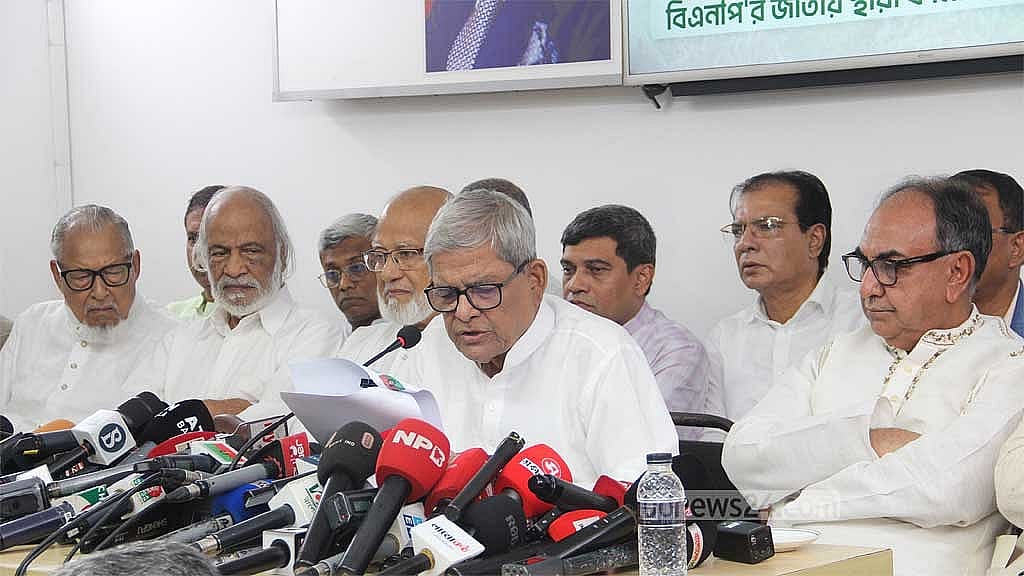
BNP Secretary General Mirza Fakhrul Islam Alamgir said, “After long discussions with our partners from the joint movement, we reached seat-sharing agreements. Under the new rules, our allies will contest under their own symbols.”
JAMAAT’S ELECTORAL BLOC
Jamaat submitted 276 nomination papers, with 179 single candidates. In 2008, it vied for 39 seats.
This time, its 11-party alliance has announced candidates in 253 seats.
Of these:
● Jamaat: 179
● National Citizen Party: 30
● Bangladesh Khelafat Majlis: 20
● Khelafat Majlis: 10
● Liberal Democratic Party: 7
● Amar Bangladesh Party: 3
● Bangladesh Nezame-e-Islam Party: 2
● Bangladesh Development Party: 2
Islamic Andolon Bangladesh opted out and will contest in 268 seats independently, backing others in 32.