Home
+
Published : 11 Jun 2026, 11:37 PM
The proposed budget for FY2026-27 has nearly doubled the allocation for the Health Services Division and the Medical Education and Family Welfare Division.
Finance Minister Amir Khosru Mahmud Chowdhury proposed a Tk 694.09 billion outlay for the sector, equivalent to 1.02 percent of gross domestic product (GDP).
Presenting the budget in parliament on Thursday, the minister said the government plans to gradually raise public investment in healthcare to 5 percent of GDP.
He also outlined plans to establish at least one modern primary healthcare unit in every union and one or more units in every urban ward.
The health sector received Tk 354.77 billion in FY26, accounting for 0.58 percent of GDP.
Khosru said years of unplanned infrastructure projects and equipment purchases during what he described as the “fascist period” failed to improve healthcare services because a significant portion of spending was lost to “corruption”.
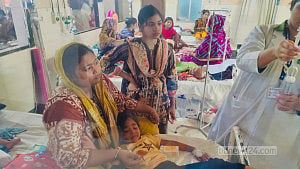
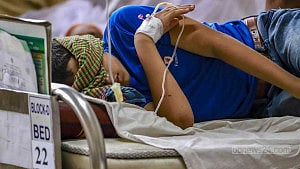
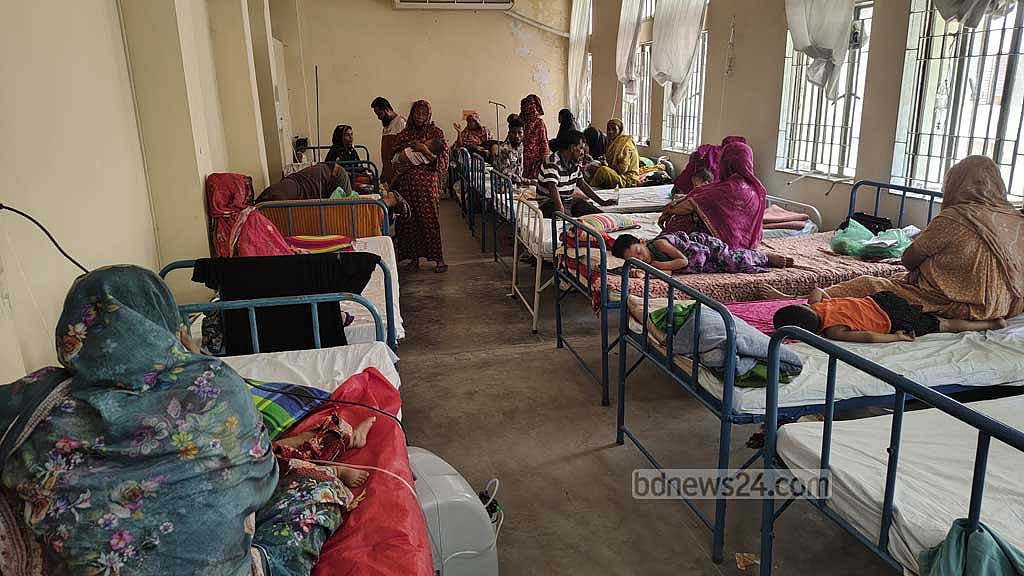
As a result, hospitals are struggling under growing patient pressure, many citizens remain deprived of quality treatment, and large numbers of patients continue to seek care abroad, leading to an outflow of foreign currency, he said.
According to him, the key objectives behind the larger allocation are ensuring universal and equitable healthcare, shifting from treatment-centric to prevention-focused services, expanding access for rural and marginalised communities, strengthening maternal and child health, nutrition and vaccination programmes, and supporting healthcare technology and medical industries.
The senior BNP leader also outlined a series of reform measures aimed at improving healthcare delivery.
He said implementation has already begun for the planned network of primary healthcare units, while every citizen will be brought under a National Health System through modern e-health cards.
To improve access to specialist treatment, district hospitals and Upazila health complexes will be developed into integrated secondary healthcare units.
Upazila facilities will see more beds alongside expanded maternal, newborn, child and reproductive healthcare services, as well as physiotherapy facilities.
Complex and specialist treatments, including surgery, coronary care and kidney dialysis, will be concentrated at district hospitals.
A national ambulance pool and emergency service network will also be introduced to ease patient transport difficulties.
Khosru said the government is working on an integrated, science-based national nutrition programme and will roll out a coordinated multi-sector initiative to tackle stunting among children under five.
He also pledged continued support for the pharmaceutical industry through industrial parks, research, investment and policy assistance.
With Bangladesh preparing to graduate from Least Developed Country (LDC) status, the government will provide financial incentives and policy support to strengthen innovation and improve the sector’s position in global markets, he said.
The minister also promised a modern nationwide medicine and vaccine distribution network to ensure timely supplies in remote areas.
He blamed “poor planning and negligence” in vaccine procurement and immunisation programmes by previous administrations for the recent measles outbreak and child deaths, saying the government has moved swiftly to vaccinate nearly all children against measles and rubella within its first 100 days.
A new MBBS curriculum will also be introduced, incorporating integrated modular learning, modern clinical education and artificial intelligence-based medical knowledge and technology.
On healthcare staffing, Khosru said the government has launched a drive to recruit 5,000 MBBS doctors to fill longstanding vacancies.
Opportunities for higher education and professional advancement in nursing and midwifery will be expanded, while a nationwide recruitment programme for 100,000 healthcare workers has begun, with women expected to make up 80 percent of the workforce.
He also said a four-month General Caregiver training programme has been introduced to create jobs for educated unemployed youths and meet domestic and overseas demand.
In addition, the government has identified medical equipment and medical device manufacturing as a priority industry for future development.
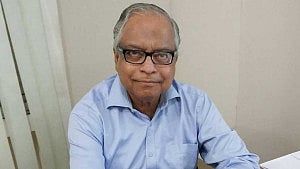
Public health expert Mushtuq Husain described the increased allocation as a positive step, although he said spending remains modest relative to GDP.
He welcomed the focus on grassroots healthcare, arguing that stronger primary healthcare services would help reduce pressure on hospitals.
The budget contains encouraging indicators because expanding beds and purchasing equipment alone cannot deliver lasting improvements in healthcare services, he added.