Published : 28 May 2026, 06:40 AM
Updated : 21 Aug 2026, 03:47 PM


Fatal ‘Failure’: Neonatal Nightmare
Overnight catastrophe: Six newborns die within hours at a Dhaka hospital, triggering an immediate investigation
Infrastructure under scrutiny: Health officials suspect a technical fault or a total failure of the ward's ventilation system
Timeline of distress: Air conditioning was turned off at the mothers' request shortly before the infants developed breathing issues
Forensic inquiry launched: Specialist police units and forensic teams seal the post-operative ward to investigate potential negligence
In the quiet hours before dawn, as Dhaka edged towards Eid-ul-Azha, a private hospital ward meant for new life became the centre of a medical catastrophe.
Inside Ad-din Hospital’s post-operative unit on the second floor, six newborns -- each only a few days old -- died within hours of one another.
By morning, what should have been a routine neonatal ward had turned into a sealed scene of investigation, grief, and unanswered questions.
The sequence was sudden, compressed, and still not fully explained: infants developing breathing distress in the middle of the night, being shifted to intensive care, and then dying one after another.
Within hours, six families were left in shock, and health authorities were struggling to agree on even the most basic cause.
What is clear is this: the deaths have triggered a cascade of allegations, technical fault claims, official inspections, and competing narratives.
Conflicting Explanations Emerge
Director General of the Directorate General of Health Services (DGHS), Prof Pravath Chandra Biswas, described the ward environment after visiting the site as “suffocating”, suggesting ventilation conditions may have played a critical role.
He said the section of the ward where the infants died appeared dangerously dependent on air-conditioning systems.
“Whether due to AC complications or any other reason, we found a suffocating environment there,” he said. “If the AC is turned off, there is no ventilation system.”
DGHS Additional Director General (Administration) Prof Md Zahid Raihan went further, suggesting the deaths were unlikely to be linked to clinical illness.
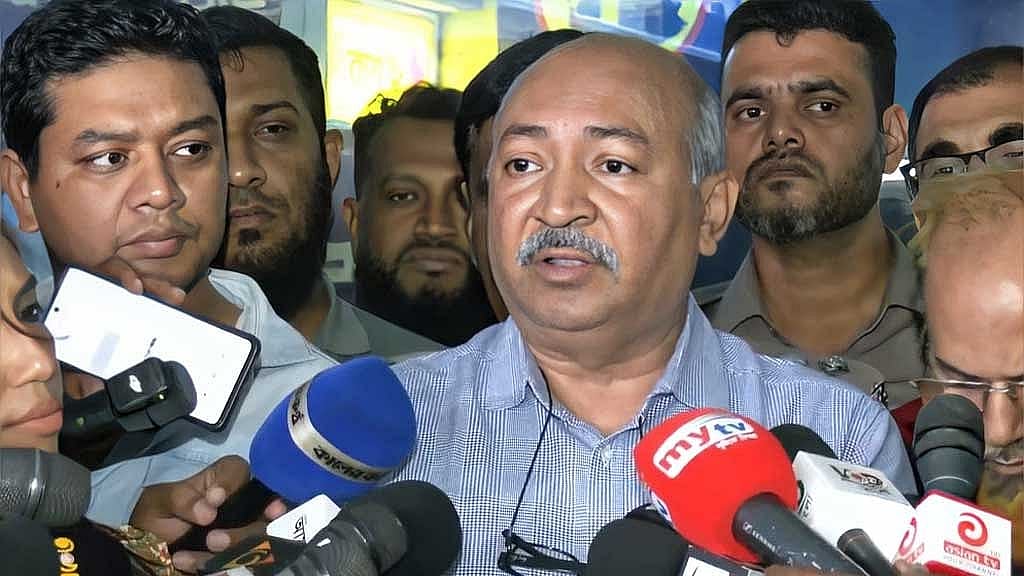
“Six infants dying suddenly like this is not due to medical complications,” he said. “In our view, this appears to be due to a technical fault.”
He added: “It does not require a doctor to understand this. It is common sense to ask how six infants died suddenly within one or two hours.”
His comments added weight to speculation that the deaths may have been due to environmental or infrastructural failure.
Inside the Ward: How the Night Unfolded
According to officials, 11 mothers were staying in the post-operative ward at night, each with a newborn aged between 1 and 3 days.
Five additional newborns were already in the neonatal intensive care unit (NICU).
Around 2am on Wednesday, some mothers reportedly requested that the air-conditioning be switched off, saying their infants were feeling cold. The AC remained off for about an hour before being turned back on.
Around 4am, one newborn reportedly showed signs of distress and was transferred to NICU. Nurses observed crying and abnormal behaviour before the transfer.
The infant initially appeared to stabilise after treatment and was briefly returned to the ward before conditions began deteriorating again.
By 6am, staff discovered one infant had died. The infant was immediately transferred to NICU, but other infants began showing distress almost simultaneously.
All six newborns were eventually transferred to NICU, where they were declared dead between early morning hours and 9am.
Hospital’s Account
Ad-din Foundation Director General Dr Nahid Yasmin gave a broadly similar but slightly different timeline.
“Suddenly we received news that they developed breathing complications and at 6am they were taken to NICU. After being taken there, two infants were found dead and the remaining four were in very critical condition. They were put on ventilators,” she said.
Despite intensive care efforts, all six newborns died.

“Our doctors tried their best in the NICU,” she said.
She confirmed that five other newborns already in NICU were stable.
Hospital Statement and Timeline Variation
In a written statement expressing “deep grief and sorrow”, the hospital said AC units were operating at 2am before being switched off at the request of mothers and later turned back on at 3am.
Around 4am, one infant reportedly began crying abnormally and was moved to NICU, followed quickly by the others.
The hospital said, “By 6am, the first infant died and between 6am and 9am the remaining five newborns died.”
The ‘Suffocation’ Question
Health DG Prof Pravath said the ward’s ventilation appeared dependent on mechanical cooling.
“In effect, when the AC is switched off, there is no ventilation,” he said.
He added that nurses followed standard procedure by shifting deteriorating infants to NICU, but acknowledged systemic weaknesses.
“We have identified a weakness in this system,” he said. “We will investigate whether there was any lapse in care.”
‘Technical Fault’ Theory
Prof Zahid said the pattern did not resemble a typical medical outbreak.
“This is not a case of disease outbreak like measles or diarrhoea where six children die within hours in a hospital,” he said. “This is most likely a technical fault.”
CID technical experts and specialists in electrical systems and air-conditioning infrastructure are inspecting the ward.
“The investigation team is examining the room and its systems,” he said. “We will receive their report and then reach a conclusion.”

Postmortem Dilemma
On postmortems, Prof Zahid said legal and emotional concerns complicated the decision.
“Normally, in unnatural deaths, postmortem is required,” he said. “But these are very small infants.”
He added: “Without postmortem, identifying the exact cause is difficult.”
Investigation Expands
The Ministry of Health and Family Welfare has formed a three-member committee to investigate the incident and report within three days.
Separately, the CID’s crime scene unit, Dhaka Metropolitan Police’s bomb disposal unit and forensic teams have inspected the ward. The area has been sealed.
A senior police officer said, “The CID team is collecting samples. The exact cause will be known after investigation.”
Grief-stricken Ward
Families gathered in shock outside the ward.
A grandmother from Munshiganj said, “We came here believing it was a good hospital. We never thought about money. We only thought they would take responsibility.”
She recalled, “Suddenly all the infants started crying at once.”
Nazma Begum lost her twins. Four other mothers -- Mim, Farah, Jannat and Fahima, all identified by single names -- each lost their newborns.
Hospital Response and Allegations
Dr Nahid rejected allegations of concealment.
“We are extremely saddened and distressed,” she said. “We cannot return the pain of the parents.”
Responding to negligence claims, she said: “We will investigate this. We have not yet had the opportunity to complete a full inquiry.”
On technical issues, she added: “That must be determined through investigation. Forensic teams are looking into it.”
System Under Scrutiny
The hospital said it is cooperating fully with authorities and conducting an internal investigation.
It added that disciplinary action will follow if negligence or faults are found.
As multiple agencies examine ventilation systems, medical records and emergency response protocols, the central question remains unresolved: whether this was a technical failure, a systemic lapse, or both.
For six families, however, uncertainty has already hardened into irreversible loss.
And for investigators, what remains is the task of reconstructing the final hours of six newborn lives inside a sealed ward, in the narrow gap between night and morning, just before Eid.