The Executive Committee of National Economic Council, the top body of the government for development project approval, on Tuesday revised the project expanding its implementation period by three years until June 2016 and almost tripling the allocation.
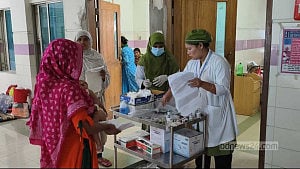
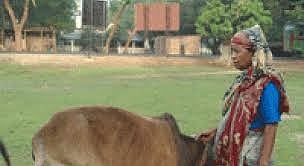
The working papers of the project say based on surveys, rural poor people are being provided with training, loan, aid and technical assistance under it.
Shortly after assuming office, the Awami League-led government had approved the Tk 12 billion project, whose implementation period was scheduled to end in June 2014.
But later the government cut down the allocation and the period by one year.
Presently the project is running in 932 unions.
The Tuesday meeting, presided over by Prime Minister Sheikh Hasina, decided to expand it to all 4503 unions and raise the allocation to Tk 31.63 billion for its implementation.
Asked if the project was expanded ahead of the elections in a bid to get the ruling parties extra political mileage, Planning Minister AK Khandker told bdnews24.com: “We’re working for the development of the country and for the development of the fate of the poor. We’ve nothing to say if anyone senses election gains from it.”
The project was launched during the previous 1996-2001 Awami League government but scrapped by the subsequent BNP-led administration.
The government expects the project will play a role in developing every house as an independent centre point of economic activities and reducing poverty to 20 percent by 2015.
A recent World Bank report said Bangladesh, where 57 percent of population lived below the poverty line in 1990, was going to attain the poverty reduction target in MDGs – cutting down the rate to 28.5 percent – two years ahead of the deadline in 2015.
According to the Bangladesh Bureau of Statistics, Bangladesh’s poverty was 31.5 percent in 2010.
A total of 10 projects involving Tk 45.32 billion were approved in Tuesday’s meeting. Of the money, the government will provide Tk 39.28 billion and the rest will come as development assistance.