Home
+
Published : 30 Jun 2026, 05:21 PM
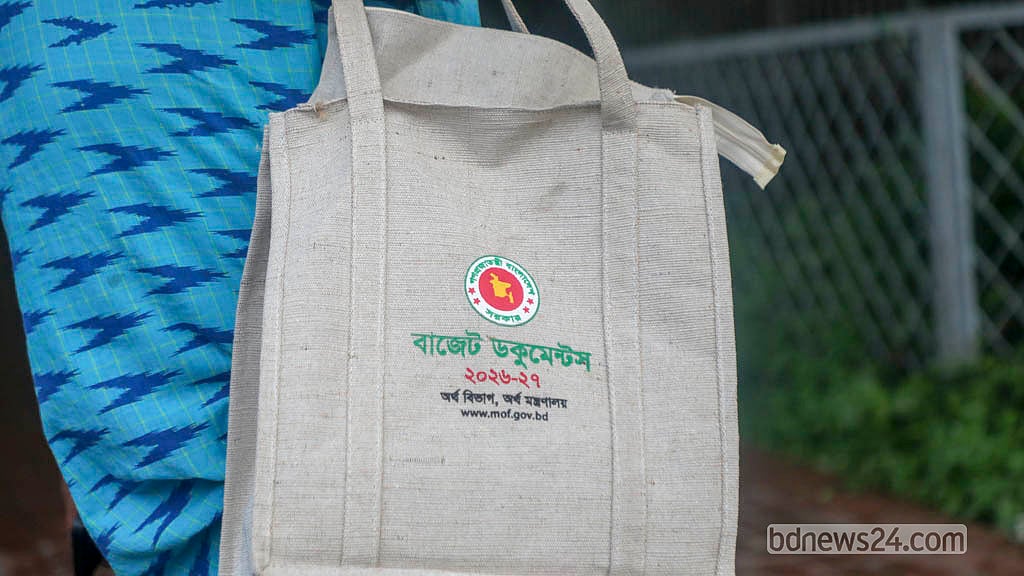
Parliament has greenlit a Tk 9.38 trillion national budget for the 2026–27 fiscal year, clearing the government's spending plan for the new financial year beginning on Jul 1.
The budget was passed through the Appropriation Bill, 2026 on Tuesday, after lawmakers approved the Finance Bill, 2026 the previous day with 64 amendments, including a higher tax-free income threshold and tax relief in several areas.
Finance Minister Amir Khosru Mahmud Chowdhury unveiled the budget proposal on Jun 11 under the theme "Journey Towards a Democratic, Humane and Inclusive Economy".
The proposed expenditure is 19 percent higher than the revised budget for FY2025–26 and is equivalent to 13.73 percent of Bangladesh's gross domestic product (GDP).
The original budget for FY2025–26 stood at Tk 7.90 trillion, before being revised down to Tk 7.88 trillion.
Appropriation Bill Authorises Spending
The Appropriation Bill authorises payments from the Consolidated Fund to finance government operations during the new fiscal year.
It states that the Appropriation Act, 2026 will come into effect on Jul 1, 2026.
Under the schedule attached to the law, parliament authorised the government to spend up to Tk 15.15 trillion from the Consolidated Fund.
Of that amount, Tk 6.85 trillion has been earmarked for charged expenditure, while Tk 8.3 trillion comprises grants approved by parliament through voting.
According to the statement of objectives attached to the bill, the legislation provides the legal authority to meet charged expenditure from the Consolidated Fund and appropriate funds approved by parliament for the government's estimated expenditure during the fiscal year ending Jun 30, 2027.
As a money bill, the Appropriation Bill required the president's recommendation under Article 82 of the Constitution before being introduced in parliament.
Grants and Cut Motions
As part of the budget approval process, parliament voted on expenditure demands other than charged expenditure.
The budget contained 59 demands for grants. Against those, 43 lawmakers submitted 1,343 cut motions.
The Opposition proposed discussions on cut motions relating to 36 ministries and divisions, and debate began accordingly.
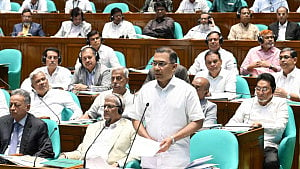
After voting on Demand No. 33, Leader of the Opposition Shafiqur Rahman proposed withdrawing all cut motions as a package.
"We submitted these proposals on behalf of the Opposition. It is customary to do so. Respecting that convention, and since these proposals are unlikely to be accepted, perhaps we can save valuable time by withdrawing them together," he said.
Speaker Hafiz Uddin Ahmad thanked the Opposition leader, saying: "I believe the Treasury Bench has accepted your proposal."
The speaker said that once ministers formally moved the motions, they would be put directly to a vote.
Parliament then voted on the remaining demands from Demand No. 35 onwards before passing the Appropriation Bill, formally approving the FY2026–27 budget.
Largest Allocations
According to the schedule attached to the Appropriation Bill, the Finance Division received the largest allocation at Tk 8.30 trillion, including charged expenditure and voted grants.
Other major allocations include:
Economic Relations Division: Tk 692.49 billion
Secondary and Higher Education Division: Tk 573.02 billion
Health Services Division: Tk 493.87 billion
Primary and mass education ministry: Tk 467.38 billion
Defence ministry: Tk 424.97 billion
Local Government Division: Tk 402.46 billion
Road Transport and Highways Division: Tk 369.18 billion
Planning Division: Tk 362.51 billion
Food ministry: Tk 324.15 billion
Home ministry: Tk 310.99 billion
Social welfare ministry: Tk 304.43 billion
Agriculture ministry: Tk 288.81 billion
Technical and Madrasa Education Division: Tk 184.57 billion
Power Division: Tk 149.96 billion
Medical Education and Family Welfare Division: Tk 134.66 billion
Energy and Mineral Resources Division: Tk 23.49 billion
Development spending and revenue
The government has proposed Tk 3.16 trillion in development expenditure, 47 percent higher than the revised budget for the outgoing fiscal year.
The Annual Development Programme (ADP) accounts for Tk 3 trillion, which had already been approved.
The finance minister proposed increasing development expenditure from 27.27 percent of the total budget to 33.70 percent, while reducing operating expenditure from 72.73 percent to 66.30 percent.
Excluding food accounts, loans and advances, domestic and foreign debt repayments and structural adjustment costs, operating expenditure has been set at Tk 6.05 trillion, 6.7 percent higher than the revised non-development budget for FY2025–26.
Of that amount, Tk 1.27 trillion has been earmarked for interest payments on domestic and foreign debt, while at least Tk 893.8 billion has been allocated for salaries and allowances of government employees.
The government has set a Tk 6.95 trillion revenue target for FY2026–27, 18 percent higher than the revised estimate for the outgoing fiscal year.
Of that, the National Board of Revenue (NBR) has been tasked with collecting Tk 6.04 trillion, representing a tax collection target increase of more than 20 percent.
As in the previous budget, the largest share of revenue is expected to come from Value Added Tax (VAT), with a target of Tk 2.29 trillion.
The government expects to collect Tk 2.2 trillion from income and profit taxes, Tk 619.39 billion from import duties, Tk 822.83 billion from supplementary duties, Tk 990 million from export duties, Tk 72.85 billion from excise duties and Tk 36.44 billion from other taxes and duties.
It also expects to receive Tk 61.5 billion in foreign grants.
The overall budget deficit has been estimated at Tk 2.43 trillion, equivalent to 3.6 percent of GDP.
To finance the gap, the government plans to borrow Tk 1.27 trillion from domestic sources, including Tk 1.12 trillion from the banking system, Tk 85 billion through savings certificates and Tk 65 billion from other domestic sources.
The budget also targets Tk 1.56 trillion in foreign borrowing.
The interim government had targeted 5.5 percent GDP growth for FY2025–26, but provisional estimates by the Bangladesh Bureau of Statistics suggest growth may reach only 4.14 percent.
Inflation remained above 10 percent for ten consecutive months between March and December 2024. Although tight monetary policy brought it back into single digits, it remained above 9 percent, with overall inflation standing at 9.42 percent in May.
Against that backdrop, the government has set a 6.5 percent GDP growth target for FY2026–27 while aiming to reduce inflation to 7.5 percent.
Finance Bill Passed with 64 Amendments
Parliament passed the Finance Bill, 2026 on Monday after rejecting a proposal to send it for public consultation and adopting 64 amendments.
The amendments raised the tax-free income threshold for individual taxpayers from Tk 375,000 to Tk 400,000.
They also reduced the income tax rate to 5 percent for private universities, private medical, dental and engineering colleges, and private colleges offering only information technology education.
The government withdrew proposals to make Taxpayer Identification Number (TIN) mandatory for opening bank accounts, registering partition deeds and transferring property ownership after concerns that they had created public confusion.
It also scrapped a proposal allowing taxpayers to declare the actual value of flats and plots in income tax records without question.
However, proof of Business Identification Number (BIN) registration has been made mandatory for opening and operating business current or STD accounts, obtaining loans from banks and financial institutions, renewing trade licences, opening merchant accounts for mobile financial services, obtaining or renewing membership of business organisations, securing electricity and gas connections, and registering vehicles in the name of businesses.
Lawmakers also approved an amendment reducing VAT on digital advertising from 15 percent to 5 percent.
The passage of the FY2026–27 budget finalises the Tarique Rahman government's first full-year fiscal plan since taking office.