Published : 06 Jan 2026, 05:39 PM
Updated : 21 Aug 2026, 02:59 PM


In Tikatuli, in the heart of Old Dhaka, Mobarok Hossain sits hunched over a sewing machine inside Capital Market, adjusting the fit of trousers and shirts for customers who now bargain harder than ever. Once, winter brought steady work and modest comfort. This year, he says, the orders have thinned.
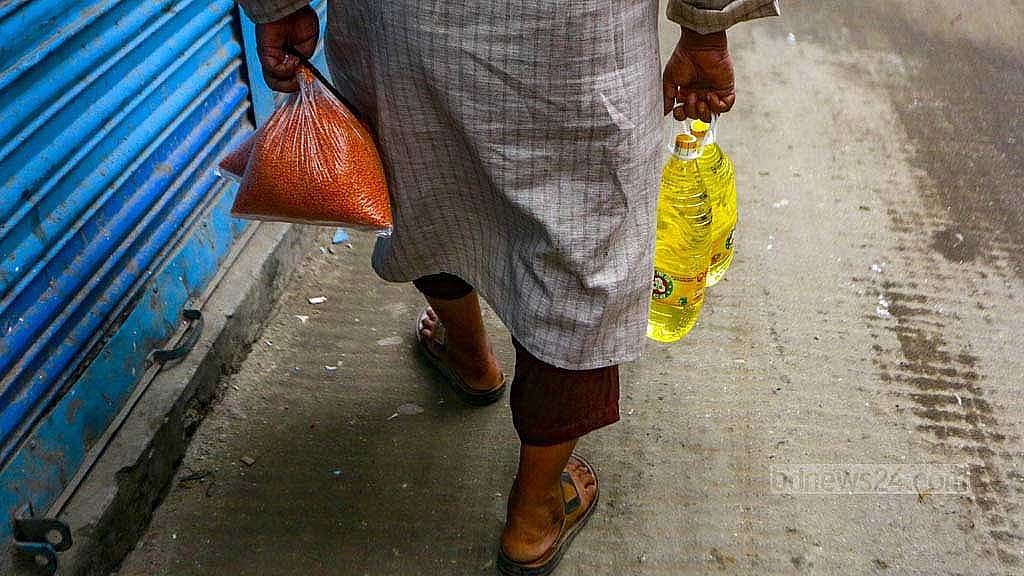
With his income shrinking, the tailor has begun buying household necessities from footpath stalls, saving a few taka where he can.
“At the start of winter, work is usually heavy. People buy new clothes. By the end of the season, it slows,” he told bdnews24.com. “This time, the work just isn’t there -- almost half of what it used to be. Life has become hard.”
He pauses, then continues, his voice dropping. “Allah feeds us with rice and lentils. People don’t let you eat. Onion and oil prices -- people raised them. Somehow we survive, but I can’t manage expenses. Bananas, milk, meat -- I can’t eat them even if I want to.”
For Mobarak and millions like him, household budgets are being pared back not by choice, but by necessity. Official data now confirms what they have felt for years: wages are failing to keep pace with inflation.
PROTEIN A LUXURY
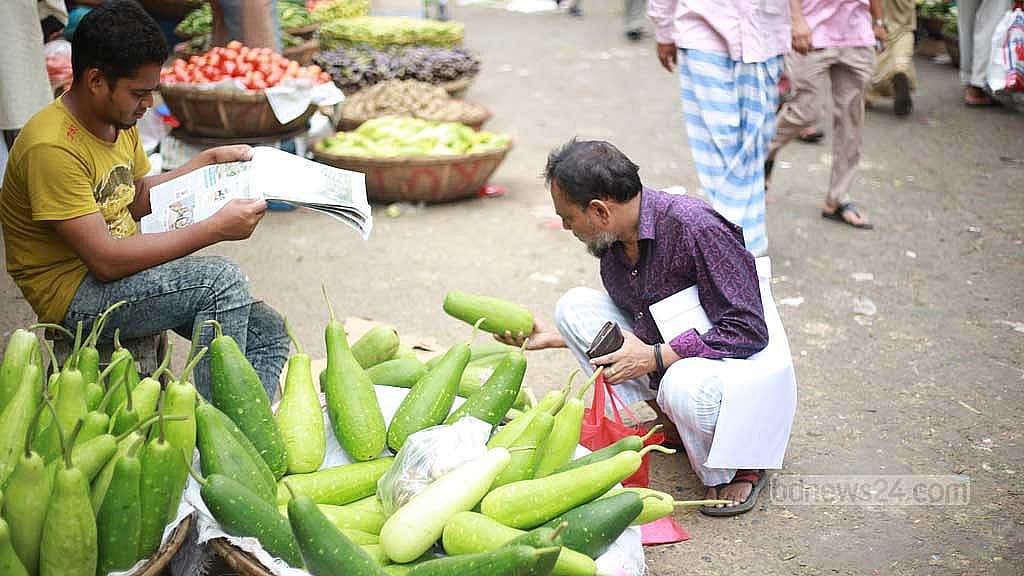
To stretch his earnings, Mobarak buys vegetables in the evening, when prices drop. “What costs Tk 40 in the morning sells for Tk 20-25 per kilogram later in the day,” he said. “That’s when I shop.”
Next to him, another tailor, Solaiman Hossain, nods in agreement. “Prices will rise -- what can we do?” he asked. “The problem is income doesn’t rise. You can’t just charge more; customers will disappear. Before, even if they didn’t have to, people would happily pay Tk 10-20 extra if they liked the work. Now they don’t.”
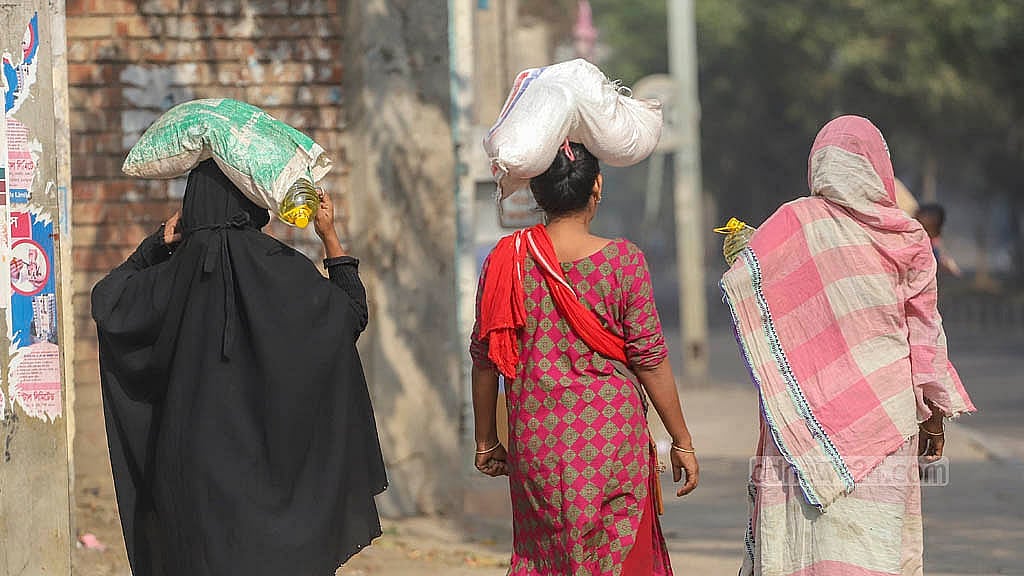
Private-sector employee Emdadul Haque Swapan has also trimmed his shopping list. “Fish is now once a week. Meat -- once, in the week I get my salary,” he said. “Beef only if guests come. We manage with chicken.”
Running a household, he explained, has become an exercise in constant adjustment. “This year, we didn’t buy winter clothes for the adults. We’ll manage with the old ones. But for the children, we had no choice -- they’ve outgrown them. I spent there, so now I’ll have to cut somewhere else.”
Even his routine snack after office hours may soon disappear, he said.
SPENDING MORE, BUYING LESS
In winter, plastic sandals sell well in Dhaka, especially among low- and fixed-income earners. But this season, Jasim Uddin, who sells sandals on a van, says customers are fewer.
“I head out around 10 or 11 in the morning,” he said. “Before, I could return by 8 or 9 at night. People would buy on their way home from work. Now sales are down, so I stay until midnight, trying to catch customers.”
Last winter, his daily sales ranged between Tk 5,000 and Tk 6,000. Now they hover around Tk 4,000-4,500.
In Motijheel, beside the Modhumita Cinema Hall, Masum Hawladar weighs out porota, vegetables and halua from a pushcart. The cheapest combination costs Tk 15. Rickshaw pullers, hawkers and day labourers from Motijheel, Paltan and Segunbagicha come here for affordable meals.
CNG autorickshaw driver Mohammad Rifat said eating at a hotel would cost at least Tk 50. “Here, you can manage with Tk 20 or 30.”
Yet even this modest trade is shrinking. “I used to sell 30 to 35 kilograms of flour a day for porota,” Masum, identified by a single name, said.
“Now it’s 20 to 25. People eat less. Pedal rickshaw pullers eat more, but now there are more battery rickshaws -- and they eat less.”
According to the Bangladesh Bureau of Statistics (BBS), food inflation rose from 7.36 percent in November to 7.71 percent in December. In practical terms, food that cost Tk 100 in December 2024 cost Tk 107.71 a year later.
Overall inflation climbed from 8.29 percent in November to 8.49 percent in December. During the same period, wage growth stood at 8.07 percent -- below inflation.
By sector, wages rose 8.16 percent in agriculture, 7.91 percent in industry and 8.24 percent in services. A year earlier, the figures were higher across the board. For 46 consecutive months, wage growth has remained well below inflation.
“That means living costs are rising faster than incomes, steadily eroding purchasing power,” said Zahid Hussain, former chief economist of the World Bank’s Dhaka office.
When cooking oil prices rise, he explained, the effect ripples outward. “On paper, it may look like Tk 9 or Tk 10 per kilogram. But economically, the impact is far greater. Everyone raises prices -- rickshaw fares, rice, hotel food.
“The sudden rise in oil and onion prices -- does it have an economic explanation? No. It’s about market structure and management, where the government still has much to do.”
WHO BEARS THE BURDEN
Former Bangladesh Institute of Development Studies (BIDS) director general Mustafa K Mujeri believes food inflation hits the poor, the newly poor and the middle class hardest.
“The poor may sometimes hold their ground,” he said, “but they can also slip back into extreme poverty.”
The middle class and salaried workers survive by cutting budgets, often delaying medical treatment. Mujeri argues that food pricing and healthcare should fall fully under government control to offer relief.
Over the past decade and a half, poverty has declined significantly in Bangladesh. But the benefits of average growth of about 6.5 percent have flowed disproportionately to the wealthy and upper middle class, according to the World Bank.
In its November report -- Bangladesh Poverty and Equity Assessment 2025 -- it said poverty and extreme poverty halved between 2010 and 2022. Living standards improved through expanded access to electricity, sanitation and education. Yet poverty reduction slowed after 2016.
Growth and employment increasingly relied on agriculture and remittances as industrialisation faltered. Between 2010 and 2022, GDP grew at an average of 6.6 percent, but poverty reduction lagged behind regional peers -- falling by just 0.9 percent compared with South Asia’s average of 1.5 percent.
During this period, 9 million people escaped extreme poverty, which fell from 12.2 percent to 5.6 percent. Moderate poverty dropped from 37.1 percent to 18.7 percent, lifting 25 million people above the poverty line. Multidimensional poverty declined from 46.8 percent to 21.3 percent.
Yet one-third of the population -- more than 60 million people -- remain at risk of falling back into poverty.

INFLATION REFUSES TO EASE
Post-pandemic import pressures depleted foreign exchange reserves, and as the taka weakened, inflation surged into double digits in September 2022. Inflation peaked at 11.66 percent in July 2024.
After the interim government lifted interest rate caps in August 2024, inflation began to ease, falling below 9 percent by June. October saw a 39-month low of 8.17 percent, but pressures have since returned.
Bangladesh Bank has pledged to keep policy tight until inflation falls to 6 percent. Lending rates now average around 12.5 percent. Yet food inflation remains stubborn.
“Interest rates alone can’t control inflation,” Mujeri said. “Without tackling syndicates in market management, there will be no benefit.”
WARNINGS
With elections due in February and Ramadan to follow, Mujeri warns that increased cash use during polls could fuel inflation, especially as rural consumption rises.
CPD honorary fellow Mustafizur Rahman said inflation may be falling statistically, but not in reality. “Inflation declining doesn’t mean actual prices are falling. It means the pace of increase has slowed.”
He called for greater transparency in markets and expanded food subsidies during periods of high inflation. “That can provide temporary relief. The permanent solution is controlling inflation and raising wages in time.”
Until the economy fully recovers, analysts see little scope for wage growth. “Without investment and jobs, how will wages rise?” analyst Zahid asked.
For Mobarak in Tikatuli, the answer is painfully simple. Prices rise. Income doesn’t. And each day, life must be stitched together, one compromise at a time.