Published : 15 Nov 2025, 04:31 AM
Updated : 21 Aug 2026, 02:44 PM


The Dhaka University Central Students’ Union (DUCSU) has announced that it will celebrate Bengali New Year at the start of Agrahayan rather than on the traditional first day of Boishakh.
The newly elected DUCSU leadership intends to organise the event on Sunday, the first day of the Bengali month of Agrahayan, breaking with a long-standing practice.
At a press conference on Friday, DUCSU leaders outlined the day-long programme, organised jointly with “Revolutionary Cultural Unity” at the university’s Faculty of Fine Arts.
DUCSU’s Literature and Culture Secretary Musaddik Ibn Ali Mohammad, explained the rationale behind marking the New Year in Agrahayan instead of Boishakh.
The four-part event will begin on Sunday morning with an art session titled “Nabanna in Colours”, continuing to 10pm.
Dhaka University authorities have long marked Pohela Boishakh with elaborate festivities to welcome the Bengali New Year, an event that has since evolved into a national cultural tradition and secured UNESCO cultural heritage recognition.
The Mongol Shobhajatra procession, originating in the 1980s from the Faculty of Fine Arts as part of a protest against military rule, received UNESCO recognition in 2016.
Each year, after the Chhayanaut performance at Ramna Batamul, the Mongol Shobhajatra begins with the national anthem in front of the Faculty of Fine Arts, drawing crowds to Shahbagh from early morning.
After the fall of the Awami League government in the July Uprising and during the 2025 interim administration, the Mongol Shobhajatra was renamed the “Barshabaran Ananda Shobhajatra”.
This year, DUCSU leaders announced plans to hold the Bengali New Year celebrations during the Nabanna season, including a procession named the “Aadi Noboborsho Ananda Jatra”, which will feature three motifs.
Explaining the historical rationale for celebrating Bengali new year in Agrahayan, Musaddik said: “New year celebrations are an integral part of indigenous cultural practice, and while it is now observed on Pohela Boishakh, it was once celebrated on Pohela Agrahayan.”
He said ff the 12 months in the Bengali calendar, 11 are named after stars. Agrahayan is the only exception, and the name carries fragments of forgotten history and memory.
He added that historians have noted ancient new year festivals in this region, such as the “Amani” or “Nabanna” celebrations on Pohela Agrahayan, which was originally a harvest festival for farmers.
“Under Emperor Akbar, the month of Boishakh was introduced as the start of the Bengali year for tax collection, but the people of Bengal did not celebrate Boishakh as the beginning of the year,” he said.
“Today’s generation is forgetting that Pohela Agrahayan was once the New Year for people of this region. To remind them of that history, we are taking the initiative to celebrate Nabanna as the original new year festival.”
Later, Musaddik said to bdnews24.com: “We are celebrating this as the ‘original’ new year. We will also celebrate the new year on Pohela Boishakh. Our aim through this is to remind people that the new year was used to be celebrated in Agrahayan.”
PROGRAMME DETAILS
According to the announcement, the event will have four segments:
The first segment is “Nabanna in Colours”, starting from 10am, where 15 renowned artists, along with current and former students of the Faculty of Fine Arts, will paint on themes of July and Nabanna.
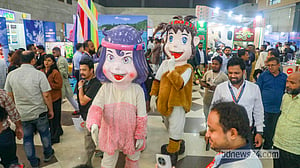
The second segment is “Aadi Noboborsho Ananda Jatra”, or the original new years parade. Presented as the highlight of the festival, the parade will include three motifs created with support from the Faculty of Fine Arts: one themed on July, one on the lives of fishermen, and one on farm life.
The third and fourth segments will feature recitation, dance, music, and magic shows by organisations affiliated with the Revolutionary Cultural Unity. After greetings are exchanged with invited guests, the event will conclude with performances by distinguished artists, including music and folk songs.