Published : 10 Oct 2025, 07:52 AM
Updated : 21 Aug 2026, 02:34 PM


As global uncertainty drives investors toward safe-haven assets, gold prices in Bangladesh have surged sharply while jewellery sales have slumped.
On Wednesday, global gold prices hit an all-time high, crossing US $4,000 per ounce for the first time in history.
In Bangladesh, the price of one bhori (11.664 grams) of 22-carat gold has risen by nearly Tk 35,000 in just a month, up almost 20 percent since August.
On Aug 30, a gram of 22-carat gold cost Tk 14,945, but by Oct 9, the price had reached Tk 17,927, an increase of Tk 2,982 or 19.95 percent.
This means each bhori of gold now costs Tk 34,782 more than a month ago.
Jewellers say no other commodity has seen such a dramatic rise anywhere in the world.
“We had to raise domestic prices to match the international market, otherwise all our gold would move out across the borders,” said one trader.
As a result, sales of gold ornaments have dropped by 40-45 percent nationwide, according to industry insiders.

WHY GOLD PRICES ARE CLIMBING
Historically, gold has served as a safe store of value in times of economic or political instability. This year alone, global gold prices have galloped about 54 percent, compared with 27 percent in 2024.
With global inflation cooling, the US Federal Reserve is widely expected to cut interest rates, weakening the US dollar. In response, several countries have shifted investments into gold to preserve profit margins.
Political turmoil in France and Japan, along with conflicts in the Middle East and Ukraine, has further fuelled investor demand for gold as a secure asset.
Many nations are also stockpiling gold to stabilise exchange rates against the dollar.
China leads the race, aggressively increasing its reserves, while India has also been boosting gold holdings, driving up costs for Bangladeshi traders importing bars and ornaments through both formal and informal routes.
SMUGGLING DOMINATES BANGLADESH’S GOLD TRADE
Almost all of the gold used in Bangladesh enters informally, much of it through smuggling, traders acknowledge.
Some gold arrives duty-free via expatriates, though those bringing larger quantities must pay Tk 5,000 per bhori in customs duty.
Masudur Rahman, chairman of the Price Determination Committee of the Bangladesh Jewellers Association (BAJUS), confirmed that much of the supply is unregulated.
“We’re secondary buyers,” he told bdnews24.com. “We purchase from those who bring in bars or sell old jewellery, then make new designs and sell them.”
Calling gold the “second currency” of the world, Masudur explained: “Everyone is buying gold because they believe the dollar will fall. That’s why prices are rising by the day. When the international rate goes up, we must follow, otherwise gold will simply leave the country.”
BAJUS and a group of traders at Dhaka’s Tanti Bazar monitor fluctuations in the dollar–gold ratio around the clock through sources like Bloomberg, the World Gold Council, and major bullion exchanges.
Local prices are then aligned with global benchmarks to avoid market chaos.
“We have no control over the price,” Masudur added. “If global rates rise, ours must too.”

JEWELLERY SALES FALL ON CAUTIOUS BUYING
Tanti Bazar in Old Dhaka, where gold bars are melted and remodelled, and the nearby Baitul Mukarram market remain the country’s main jewellery hubs.
Visits to those markets and to several upmarket stores in Gulshan showed a mixed picture. Established shops still draw regular customers, but smaller ones often see days with no sales at all.
Nure Bulbul Rony, a salesman at Ria Jewellers in Baitul Mukarram, said:“Most buyers bring in old gold and add a little more to make new designs. Those buying fresh jewellery prefer small pieces, mostly one bhori items.”
“Overall footfall is down,” he added. “We used to do business six days a week, now only those who can afford it are coming. Many think prices will rise even higher, so they buy before that happens.”
At Amin Jewellers, newly-wed Mirajul Islam was seen shopping for earrings.
“We just got married. We already have some jewellery, but as prices are soaring, we decided to buy small pieces now, cutting costs elsewhere,” he said.
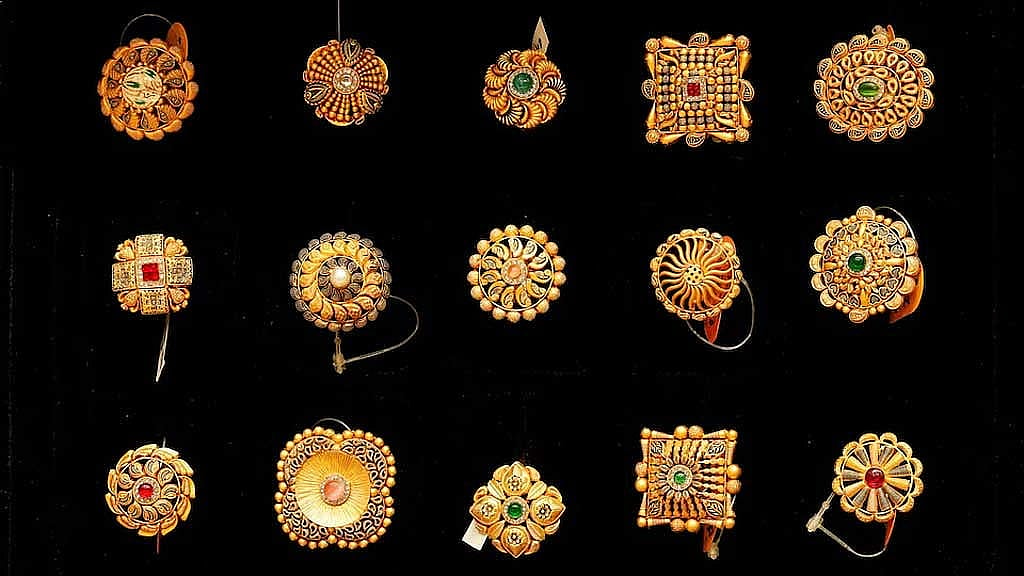
Buyers are increasingly opting for smaller ornaments, earrings, rings, nose pins, and lockets, as larger purchases become unaffordable.
Store manager Bakul Debnath said, “Sales are down by about 30 percent. If prices keep rising like this, the middle class will simply stop buying gold altogether.”
Even Mona Jewellers, a 36-year-old business, has felt the squeeze.
“Thursday evenings used to be packed before Friday weddings or family events,” said salesman Mahfuzur Rahman. “Now the shop stays empty most of the week.”
Zahidur Rahman, owner of Grameen Jewellers, added: “People are buying new jewellery but selling less. Prices keep climbing every day. Who wants to sell?
“Supply has dropped too. We’re getting fewer gold bars now. Our shops are emptying faster than they’re being restocked.”

A MARKET WITH NO OFFICIAL DATA
Dhaka’s slowdown is reflected nationwide, with traders estimating that sales outside the capital have fallen by around 40 percent.
“Even in India, sales are down by nearly 30 percent,” said BAJUS’s Masudur.
Because most gold is traded informally, neither the government, the Bangladesh Bank, nor BAJUS maintains comprehensive national statistics.
The central bank’s latest annual trade report also omitted data on gold import.
Masudur, owner of World Gold Jewellers in Gulshan, said: “We estimate annual gold consumption in Bangladesh at around 40 tonnes, but there’s no reliable data. The National Board of Revenue only collects duties on what’s sold formally.”

OUT OF REACH
As the global rally pushes prices higher, jewellers warn that gold could soon become a luxury only for the wealthy, a far cry from its traditional role in Bangladeshi weddings and family gifts.
For now, both traders and buyers can only watch as the metal once known as “liquid wealth” continues its relentless climb.