Home
+
Published : 06 Jun 2026, 10:08 AM
Bangladesh’s financial sector is currently going through a “transitional phase”, according to Md Kyser Hamid, managing director and chief executive officer of Bangladesh Finance.
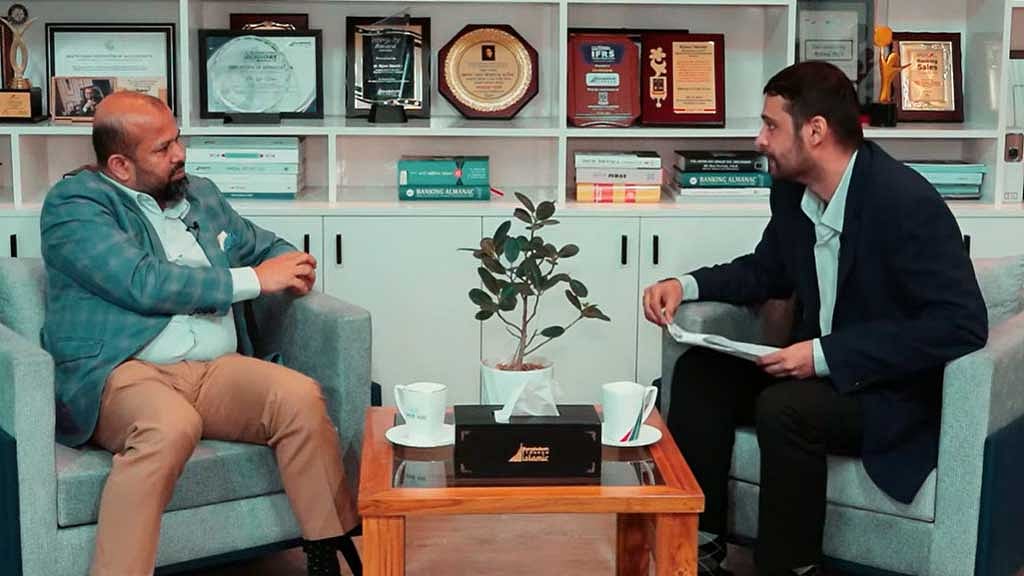
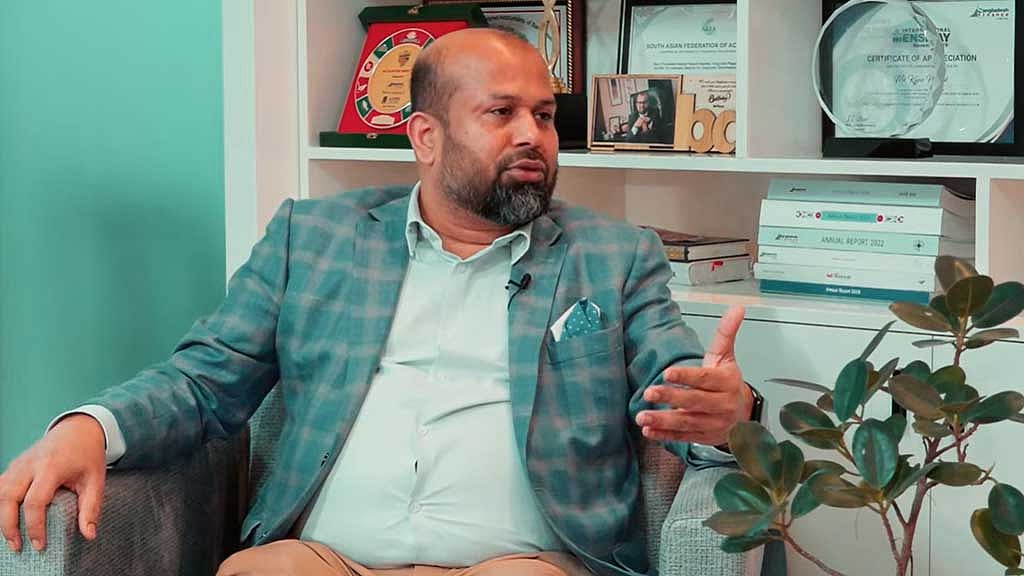
Kyser assessed the state of the financial sector on bdnews24.com's discussion programme “Chinwag with the Chiefs”.
“Different longstanding weaknesses have become increasingly visible over the past few years, and many banks and financial institutions are struggling to return depositors’ money,” he said.
He said the broad causes of the situation were poor discipline in loan distribution and high non-performing loans.
Despite the crisis, Kyser said Bangladesh Finance had managed to retain customer confidence through prudent loan management, diversified deposits and technology-driven services.
He said the company had begun reducing its dependence on large loans several years ago and increased its focus on the small and medium enterprise (SME) sector.
At the same time, it shifted from relying on a few large depositors to collecting deposits from a broad base of smaller savers, making a significant share of its deposits stable or “sticky deposits”.
More than 90 percent of deposits are now being renewed, which Kyser said reflects customer confidence.
Pointing out that SMEs contribute around 30 percent of GDP, he said the sector also plays a major role in employment generation.
According to his assessment, banks dominate large corporate financing and foreign trade, while NGOs focus on microcredit, leaving a financing gap for the emerging middle class and small and medium businesses.
Specialised financial institutions have filled this gap in many countries, and Bangladesh has similar opportunities, he added.
Digital Transformation
Highlighting technology-driven services, Kyser said Bangladesh Finance began its digital transformation nearly four years ago.
Customers across the country can now access different loan and deposit services without visiting a branch.
Credit assessment, loan approval, loan management, account opening and other customer services have been moved to digital platforms.
Kyser said the company had built an integrated platform through technological links with fintech, agritech and SME-focused firms.
The goal is to make financing easier for customers in remote areas and reduce the cost of accessing services.
He added that Bangladesh Finance is also trying to support innovative ventures by young entrepreneurs.
Digital platform-based financing has been introduced for agriculture, livestock, vehicles, mobile devices and small businesses, allowing many farmers and small entrepreneurs to obtain loans digitally without visiting branches.
Shariah-based Expansion
Bangladesh Finance is among the early non-bank financial institutions licensed to offer Shariah-based services.
Kyser said demand for such services exists across different regions of the country.
The company is gradually expanding its Shariah-based operations and plans to transform the entire business into a Shariah-based structure in phases.
Foreign Investment and Governance
On foreign investment, Kyser said investors place importance on political stability, good governance and investment security.
However, bureaucratic complexity, weaknesses in banking-sector governance and a fragile capital market remain major challenges in Bangladesh.
He said the overall banking sector’s non-performing loan ratio is close to 30 percent, but Bangladesh Finance has consistently kept its ratio below 10 percent.
Of about Tk 4.65 billion in loans disbursed over the past five years, he said, the rate of new non-performing loans has been less than 1 percent.
Loans are closely monitored from the moment they are disbursed, and an early warning system is used to identify risky loans in advance.
If loans turn non-performing, the company’s legal and asset recovery teams take the necessary action, he said.
Losses and Future Priorities
Explaining why Bangladesh Finance posted a loss in 2024, Kyser said: “This was mainly due to additional provisioning, not operational losses. During the current liquidity crisis, strengthening internal capital has been prioritised.”
Looking ahead, he said the company’s four main priorities are:
“The foundation of banking and financial services is trust. Earning and maintaining that trust is our biggest goal,” Kyser said.